


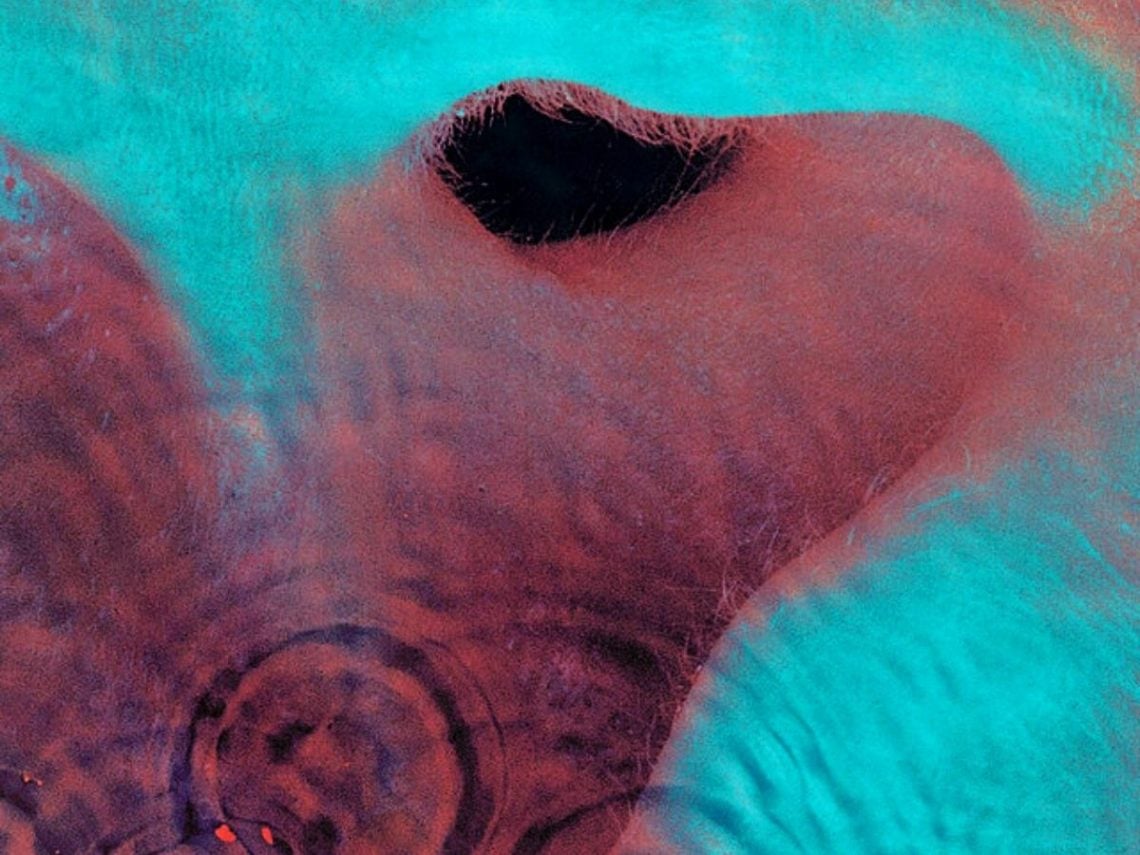
Pink Floyd – ‘Meddle’

It had been three and a half years since Pink Floyd ousted their songwriter and leader, Syd Barrett. In that time, the band put together three haphazard and highly experimental albums that failed to stumble in a cohesive direction. None of the members had found their respective voices in terms of songwriting or musical contributions, and most of their albums were either heady jams or nonsense.
But then came Meddle. Pink Floyd’s sixth studio album shows a band getting ever-closer to their real identity. There are still flukes, strange turns, unsuccessful experiments, and general zaniness to be found. But between the largely acoustic first half and the wildly ambitious second half, Meddle pushes Pink Floyd towards their most commercially and critically successful period with bubbling confidence.
All you hear in the beginning is wind. A few bass hits signal the start of ‘One of These Days’. Highlighting the band’s experimental nature, both Roger Waters and David Gilmour pick up bass guitars for a low-end jam that largely sticks to a single chord. Throughout the track, slide guitar and organ occasionally flesh out the arrangement, and once Nick Mason (in a rare lead vocal) menacingly calls out the titular threat, the song suddenly explodes into a full-on romp.
The heaviness of ‘One of These Days’ is a bit of a false flag. For the rest of side one, Pink Floyd opt to explore the calmer acoustic side of their music. ‘A Pillow of Winds’ sounds like exactly that, with woozy slide guitar reminiscent of George Harrison, the band float around a gentle Gilmour-Waters folk song. The pair are responsible for most of the music on Meddle, with the only exception being Waters’ solo credit on ‘San Tropez’.
‘Fearless’ features a looping acoustic guitar line supporting another hazy arrangement. Waters, in particular, was smoking cannabis at a steady rate during the recording of Meddle. That dreamy and slightly off-kilter atmosphere was far from the hardened cerebral psychedelic freakouts that the band had become known for, and it makes Meddle an incredibly easy listening experience. Just as the track begins to fade, a chant from Liverpool fans singing ‘You’ll Never Walk Alone’ takes over for the final minute.
To continue the relaxed feeling of side one, ‘San Tropez’ drops the listener right in the middle of a tropical paradise. As Waters lazily strums out jazz chords on an acoustic guitar, he sings about reaching for peaches and drinking champagne like a good tycoon. This tongue-in-cheek track pointed a languid finger at the bougie side of commercialism as the laid-back music simultaneously leaned towards spiritualism.
The final track on side one is one of Pink Floyd’s most bizarre. ‘Sheamus’ isn’t led by any of the band members; instead, the howls and barks of a border collie provide the direction of this brief blues number. The titular pup belonged to Steve Marriott of Humble Pie, and even though it’s clearly the worst song on the album, ‘Seamus’ at least highlights one of Pink Floyd’s most underrated traits: their humour.
Side one of Meddle serves up some perfectly enjoyable and low-key songs, but it’s just an appetizer for side two, where Pink Floyd hone in on ambitions and create a revelatory full-side composition that is as enthralling as it is exploratory. ‘Echoes’ isn’t just the best of Pink Floyd’s early use of progressive rock song structures: the song sets the band on course to their expansive future.
The tight harmony vocals between Gilmour and Richard Wright are here, as are Waters’ lyrical fascinations with empathy and the human condition. By pairing their sprawling musical ideas with actual relatable themes, Pink Floyd finally find a puposeful direction to call their own.
Between the iconic “ping” sound in the intro, the Leslie speaker-drenched instrumentation, and images of coral caves, ‘Echoes’ brings the listener out of outer space and deep beneath the ocean’s surface. Through it all, Waters puts evolution and purpose in his crosshairs, openly wondering how humans have managed to survive and thrive for this long. The answer comes in the form of compassion: “Strangers passing in the street / By chance two separate glances meet / And I am you and what I see is me / And do I take you by the hand / And lead you through the land / And help me understand the best I can.”
A descending riff leads the main verse section into a funky jam that dissipates into white noise and screeching tones. The latter is produced by Gilmour’s guitar plugged backwards into a wah-wah pedal, recreating a noise that is eerily similar to seagulls in distress. Once the nebulous middle section lifts, the “ping” returns to bring the listener back to a heightened sense of awareness. After a brief high-octane jam, ‘Echoes’ returns to its final verse before evaporating into its very own pillow of winds.
‘Echoes’ is exploration personified: a dense journey through the mysterious world just below our feet. Waters’ desire to bring the focus away from 10,000 Leagues Under the Sea and into a more humanistic and philosophical area would define the direction of Pink Floyd for the next decade. Meanwhile, the ambitious and occasionally unwieldy composition of ‘Echoes’ informs the group’s embrace of progressive rock, song suites, and epic tales.
On the whole, Meddle is largely just an excuse to get ‘Echoes’ on an LP. The songs on side one range from charming to relaxing to annoying, but none of them holds a candle to the massive impact of ‘Echoes’. If you’re in a particularly hazy mindset, Meddle can be the perfect guide throughout whatever trip you find yourself on. It’s certainly the most exciting and cohesive record that Pink Floyd had made up to that point, and the lessons learned in its making would help shape every album that the band would make after it.
