


Pillars of Influence: Five essentials that inspire Troutflies

Spending a lifetime standing at the back of local gigs in Leeds is bound to cause some degree of boredom after a while, as the same post-punk sounds get cycled through the airwaves of Hyde Park Book Club once again. Every once in a while, though, a group emerges that alters that perception indefinitely, reinstating some excitement in the scene: Troutflies are the latest to do so.
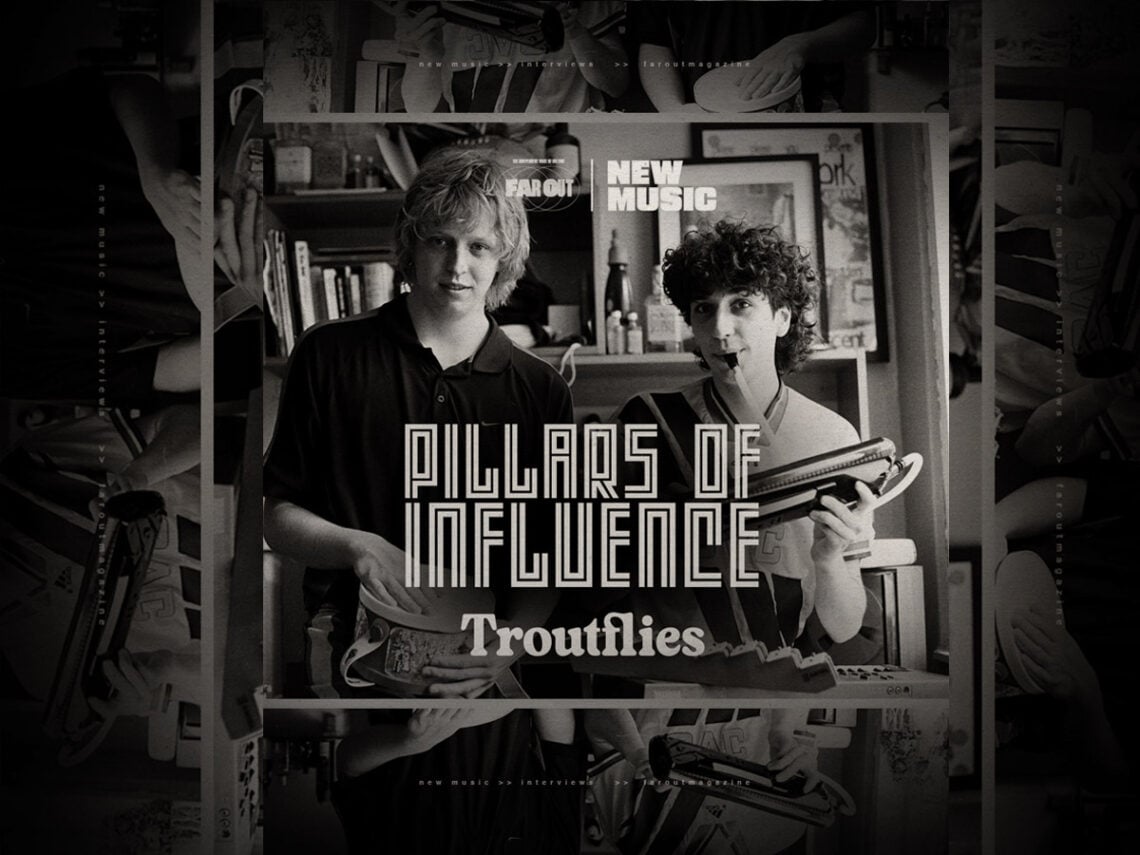
Off-beat, downbeat, and occasionally out-of-tune, Troutflies is the brainchild of Reuben Pugh, who executes the sleep-derived experimental sounds in his mind with the aid of multiple melodicas, fuzzy cassette tapes, and children’s xylophones, among various other tools. Last year, Troutflies unleashed their first full-length album, The Dancing Years, fittingly released on tape via Shooting Tzars – an invaluable cornerstone of the local music scene in Leeds and beyond.
Moving sporadically from haunting slacker indie influences to experimentation that borders on the incomprehensible, the album was never going to make it onto the mainstream airwaves. Within the realm of outsider experimental rock, though, The Dancing Years and Troutflies are right at home. Still, the band do raise certain questions, even in the most blindly accepting of audiences. Namely, where do all these disparate, experimental noises have their roots?
Typically, when encountering an up-and-coming band, it is easy to deduce their cultural touchstones. There are, for instance, a thousand modern-day post-punk outfits who are, as we speak, pillaging the basslines of Joy Division’s discography. In the case of Troutflies, though, their output may as well have arrived from a mysterious decaying cassette tape found deep in the foliage of the Yorkshire moors – totally inexplicable.
Luckily, Pugh kindly sat down with Far Out to exhume those core influences, giving a far deeper look into the inner workings of the innovative outfit and where its endearingly strange sounds come from.
It should be said, before we delve into the songwriter’s list of five influences, though, that if you were hoping for five experimental album recommendations, this is not the place. Fishing enthusiasts will also be disappointed to know that troutfly lures have no part in this story.
Five essentials that inspire Troutflies:
‘Dead Man’s Shoes’

Starting off strong with one of the greatest British films this side of the new millennium, Pugh plucks out Shane Meadows’ 2004 revenge flick Dead Man’s Shoes as a key source of inspiration for Troutflies.
At first glance, the tale of Paddy Considine mercilessly pursuing the local drug gang that tormented his disabled brother, sadistically picking off each member in increasingly violent ways, might seem a rather unlikely touchstone for the laid-back experimental sounds of Troutflies, but Pugh disagrees.
“I basically started writing for Troutflies after watching it,” the songwriter shared.
“There’s these two instrumental songs by Calexico on it,” he continued, highlighting the often-overlooked soundtrack to the film, and the essential contributions of the similarly underrated Arizona indie band. “They make me feel sick. I love that film more than any music or picture.”
Who knew that violent vindication could have such an impact on melodica-heavy experimental rock?
Mad Alvar and K1wy
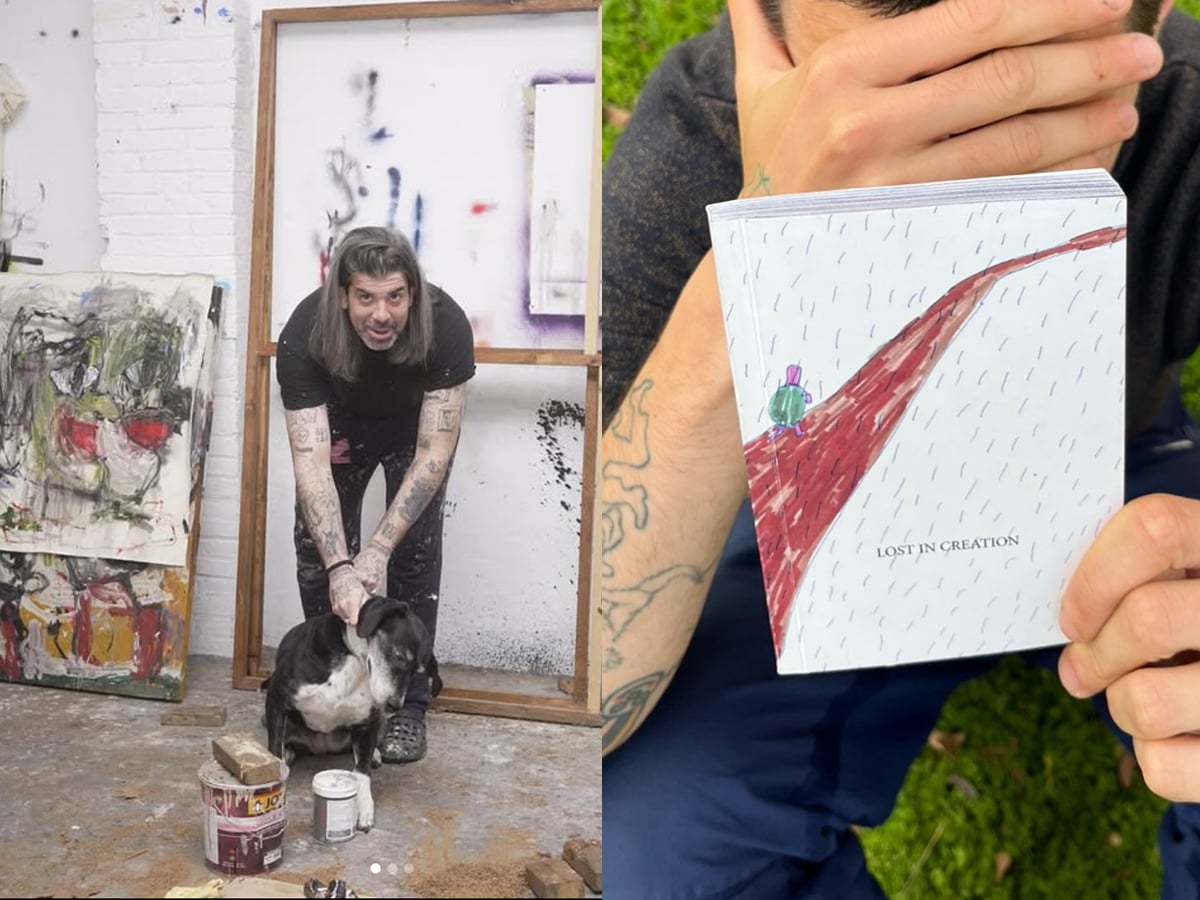
A double whammy of influences that nonetheless fall into the same distinct category, you could be forgiven for never having heard the names Mad Alvar or, indeed, K1wy. Yet, the two visual artists have certainly ingrained themselves within the realm of Troutflies.
“These are two artists I found on Instagram a while back,” Pugh explained, and a cursory glance over their respective Instagram pages goes some way to explaining Troutflies’ distinctive sound, as well as their album cover.
“There’s world building, and then there’s universe building, and there’s these Spanish freaks,” he went on, worshipping the altar of these underground, internet-based outsider artists. “I can’t even comprehend what they do,” the self-affacing Pugh continued. “Paintings, music, drawings, digital art, videos, and they all inspire me equally. They’re playful and evil, in a way I haven’t seen in any other creative practice, and really push me to try write in colour.”
Troutflies certainly evoke a similar sense of colourful innocence and mainstream alienation that those two artists capture so brilliantly. Perhaps, in some way, their output balances out the bloodthirsty nature of Dead Man’s Shoes.
Sweating
In the midst of a UK-wide heatwave, it is fair to say that many of us are growing sick of the constant, 24-hour presence of sweat. While our bodies may mean well, sweat’s biological necessity, being the cooling of the body, there inevitably comes a time when you start to think that life might be easier if you had the same condition that Prince Andrew pretended to have, and didn’t sweat at all.
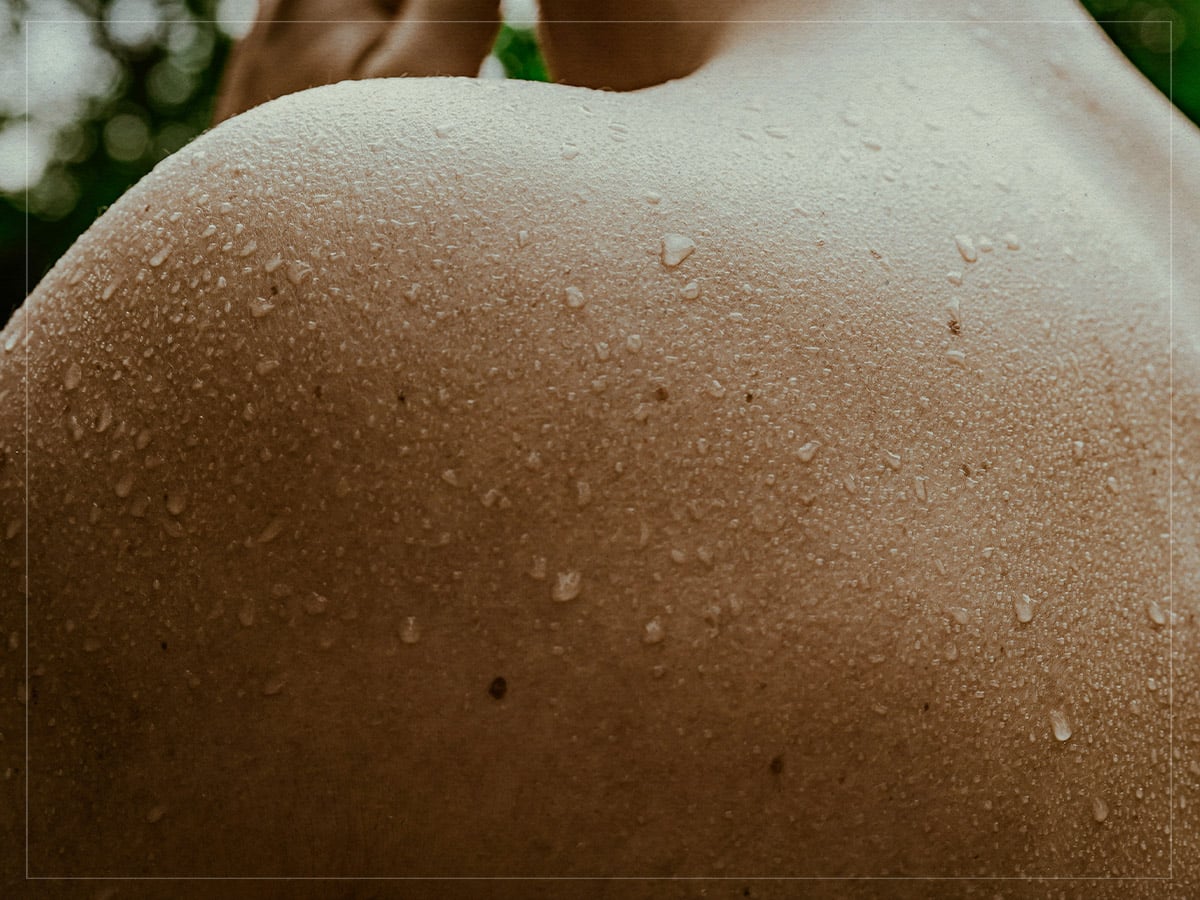
Therein lies one of many ways that Troutflies reject normality. “I sweat all the time and it’s absolutely draining, and really uncomfortable,” Pugh shared, before clarifying, “But it’s good to be uncomfortable.”
Although the songwriter didn’t expand upon exactly why being uncomfortable is essential to his artistic process, he did muddy the waters further by adding, “I sweat worse while playing live, so it’s doubly rubbish.”
For any artist, sticking rigidly to your comfort zone is never a good thing; great art is born through pain, suffering, and, at least in Troutflies’ case, sweating. Seemingly, and understandably, the sporadic experimentation of a record like The Dancing Years cannot be conjured up in a state of pure comfort and joy.
Russell Walker
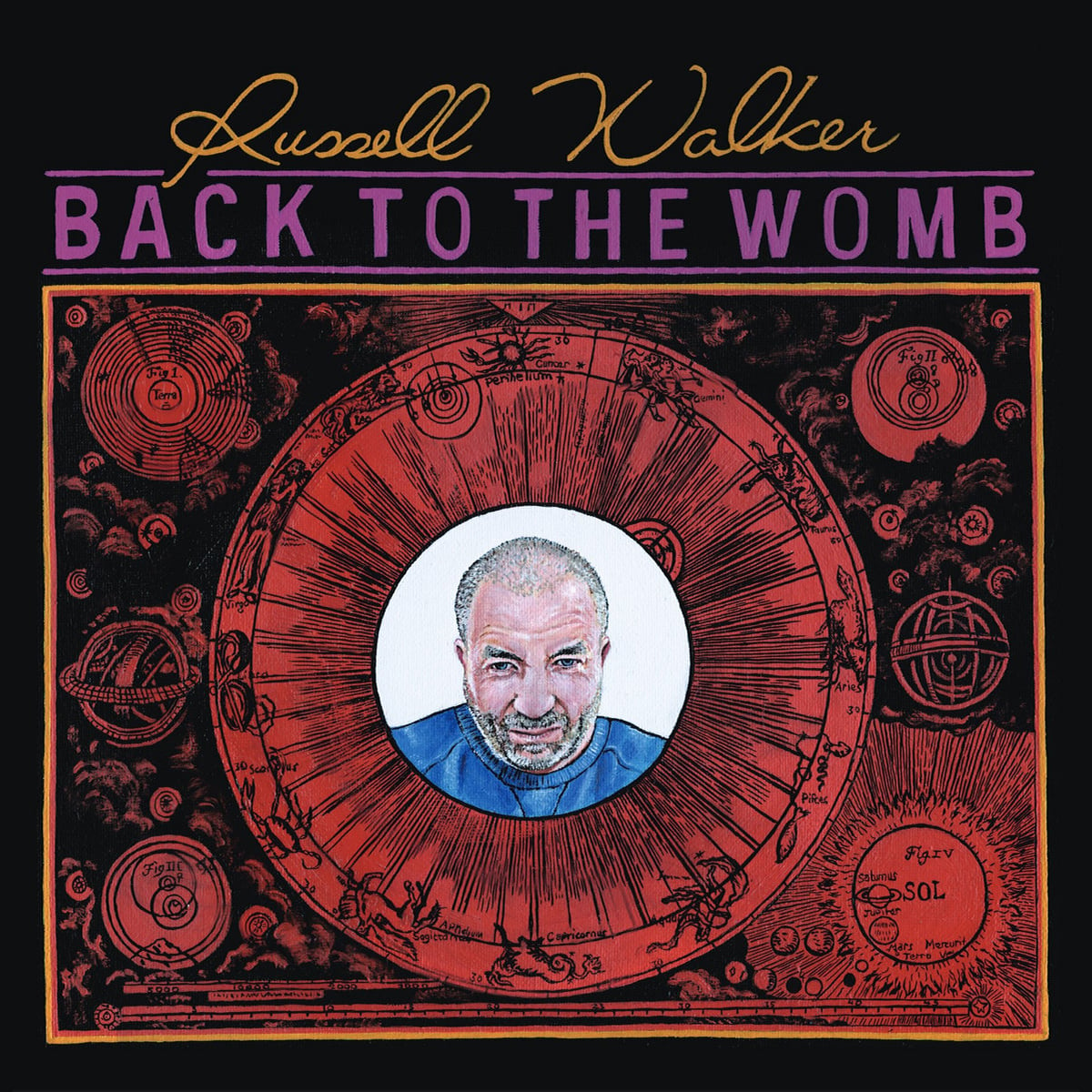
“I heard Russell Walker last year for the first time, when his solo album, Back to the Womb, came out,” Pugh recalled, highlighting his relatively newfound love of the prolific yet unfairly obscure songwriter, who has been recording with various groups and projects since way back in 2004.
Back to the Womb is his latest offering, and at 25-tracks long, it gives the audience about as flawless an introduction to his experimental composition style as can be hoped, incorporating field recordings, spoken word, tape loops, and musique concrete – it doesn’t take much to see the influence that he has since had on Troutflies’ existence.
“I looked, and he’s released about a million albums with different projects,” Pugh went on, evoking the feeling of uncovering some invaluable Rosetta Stone of experimental art. “I feel so lucky when I discover these people who just keep creating because they have to,” he shared.
For those who have never encountered Walker’s work, Pugh gives a stellar introduction to his existence: “He’s an absolutely fantastic lyricist, one of my favourites,” he explained. “[He] balances misery and humour in a way that I like.”
The songwriter delved into the kind of metaphorical comparison that, in many ways, encapsulates the appeal of both Troutflies and Russell Walker, saying, “He sounds like walking with a coat on, but it’s too warm for the coat, but you’ve got a big bag on and can’t be bothered to take it all off, so you just stay dead uncomfortable.
“He should be everyone’s hero,” the songwriter concluded.
Fairylights

What do mould-ridden university houses, B&M bargains, and Troutflies have in common, I hear you cry? The answer should be obvious; they are all indebted to fairylights.
“I go through phases of not sleeping when I have work in the morning, and when I close my eyes, I would always see fairylights,” Pugh explained.
“They come up in loads of my songs,” he continued. “Because they’re all written when I’m tired.”
Perhaps it is those fairy lights that add a sense of folklore to Troutflies’ output. Not the plasticy, LED, £5 per meter fairylights that have been keeping bargain businesses afloat for years, but rather the dancing lights in the darkness of the natural world – or, in Pugh’s case, the unshakable lights on the inside of his eyelids. Either way, the importance of those stringed-up lights cannot be overstated.
