


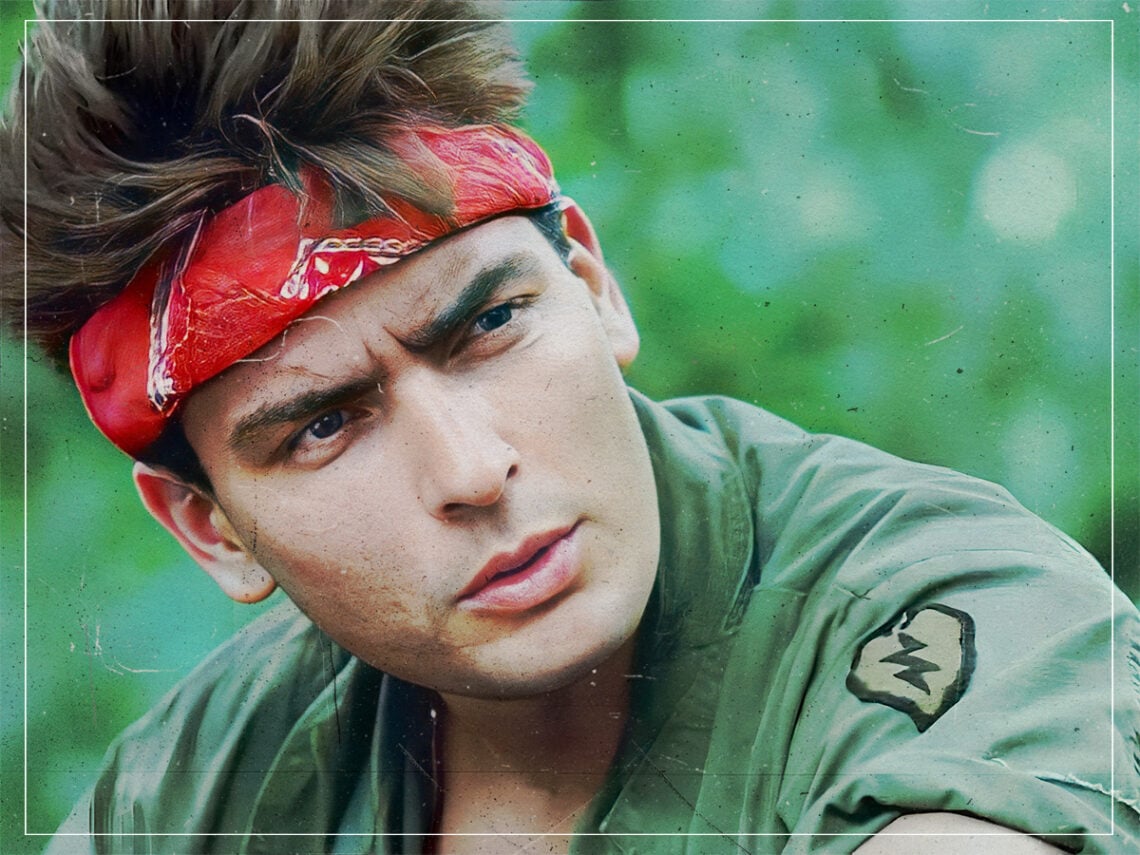
How the Philippines’ political revolution almost derailed the production of Oliver Stone’s ‘Platoon’

For filmmakers looking for exotic landscapes and stunning settings for their movies, the Philippines, a tropical archipelago in Southeast Asia, has long been a popular destination. While the country does indeed boast some of the most stunning natural backdrops and vistas, it’s also true that its longstanding and turbulent political history has provided a series of challenges for many directors who head in search of its beauty. This was discovered by Oliver Stone when he made his iconic Vietnam War movie Platoon.
Released in 1986 and starring the likes of Tom Berenger, Willem Dafoe, Charlie Sheen, Forest Whitaker and Johnny Depp, Platoon remains one of the greatest war movies ever made. Informed by Stone’s personal experience in the conflict, the film tells of a US Army volunteer making his way through the hot and humid jungles of Vietnam. At the same time, his sergeant and squad leader argue over the war’s morality amid the sheer chaos of the historical battle.
Production began in 1985, with the picturesque and lush forests of the Philippines being depicted as the dense Vietnamese jungles. However, Stone and his cast and crew had not anticipated the political revolution would soon run amok in the country, creating danger and uncertainty surrounding the future of the film’s production.
In 1986, a historic, non-violent uprising in the Philippines led to the ousting of President Ferdinand Marcos, an event that had been caused by a series of allegations of corruption and fraud, a lack of concern for human rights, and the subjugation and exploitation of Filipino citizens. The revolution soon gained traction and began to be covered by news outlets across the world.
However, this political instability soon became a threat to Platoon, and the safety of its cast and crew was no longer a certainty. The revolution had focal points in close proximity to the film’s set and shooting locations, and where Stone had once had an agreement with the Filipino military for the use of weaponry, the military suddenly had a great need for that very same equipment.
The revolution suddenly turned violent and saw outbreaks in Manila and other parts of the country. Safety and security for Stone and his team suddenly became far more important than completing his Vietnam War film. What had once been a carefully constructed plan for shooting each scene became a constantly anxious waiting game.
Locals could no longer be hired as extras as they were contending with the safety of their families, and the disruption on Platoon’s production raged on and on, with the cost of hired equipment and staff always rising. Stone was faced with either cancelling the production completely or delaying the start date, and he wisely chose the latter, given the fact that the final product came out in such glorious quality.
Eventually, production restarted, and Ferdinand Marcos’ autocracy was overthrown, with the people of the Philippines finally taking their country back, at least for a short while. “I was happy for the people in the Philippines,” Stone once told Entertainment Weekly, “But it really threatened our shoot.”
Still, Stone endured, the Philippines political revolution ended with hardly any bloodshed, and Platoon went on to become one of the greatest war movies ever made, winning four Academy Awards, including ‘Best Picture’ and ‘Best Director’ for Stone. The film still serves, though, as a reminder of the tense conflicts that can occur when artists seek out the beauty and cinematic potential of countries with turbulent political regimes, perhaps simultaneously adding to the legacy of its brilliance.
