


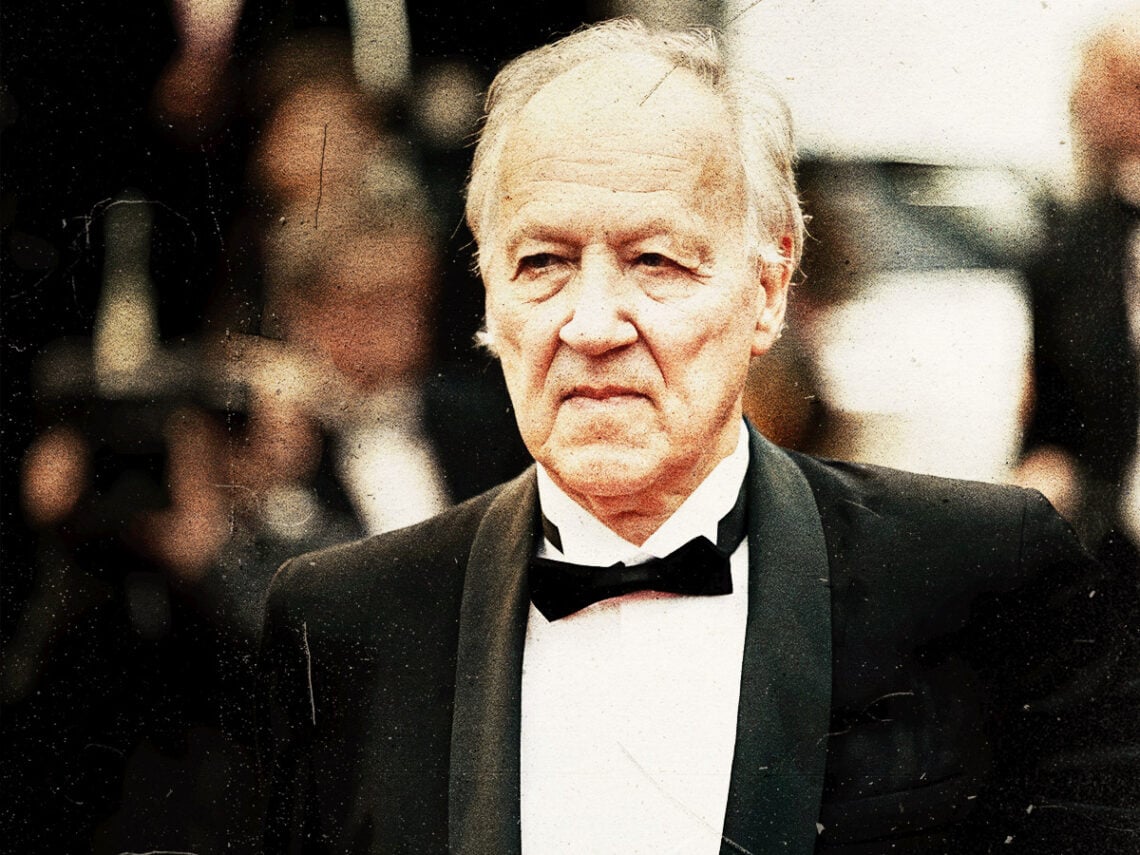
How a petty theft led Werner Herzog to begin his career as a filmmaker

There’s a deeply important existential facet to the work of Werner Herzog in the way that he manages to blend the realms of fiction cinema and documentary. Human nature has been explored in all its earnestness by Herzog, especially through characters who seem to live on the boundaries of regular everyday society.
Herzog is something of a freeform artist in the sense that he eschews the standard method of storyboarding and cemented productions in favour of improvisation. However, naturally, in Herzog’s films, his actors are put into scenarios precisely the same as the characters that they are portraying.
Amongst some of his greatest and most admired works are the likes of Aguirre, Wrath of God, Stroszek, Nosferatu the Vampyre, Fitzcarraldo, Little Dieter Needs to Fly, My Best Fiend, Grizzly Man and Bad Lieutenant: Port of Call New Orleans, showing the kind of versatility that has led to a reputation of genuine brilliance.
Like any director, though, as acclaimed as Herzog is, he had to start somewhere, and the beginnings of the German cinema icon’s professional life behind the camera can be put down to a moment in his youth. The time in question saw Herzog’s desire to get involved in the process of filmmaking erupt into a scene of criminality, although he’s reticent to admit to such a suggestion.
Herzog’s career largely began when he stole a 35mm camera from the Munich film school, although there was something in the future director’s actions that seemed to force him to do it. “I don’t consider it theft,” he had once said on the commentary for Aguirre, the Wrath of God. “It was just a necessity. I had some sort of natural right for a camera.”
Herzog set about learning the basics of filmmaking from an encyclopaedia, although his first projects, made during his final years at high school, found no production companies wanting to actually make them. In turn, Herzog took shifts as a welder, and over the next few years, he travelled somewhat aimlessly around the world, visiting Manchester, the Congo, South Sudan, Munich, and Pittsburgh.
Still, Herzog always knew that he wanted to be a director and stuck to his guns. He eventually got his shot in the 1960s, coming through with the likes of Rainer Werner Fassbinder and Wim Wenders in the New German Cinema wave, with the movies often taking on a low-budget aesthetic, similar to the French New Wave.
“Very early in life, I have understood my destiny,” Herzog had once said in an interview with Rolling Stone. “My destiny has been made known to me. And I have a duty to it. They sometimes call me ‘mad.’ But that’s just a projection of things, maybe of my leading characters, onto the person who created them. If I could be anonymous, that would be best. But I don’t care. I don’t care whether they label me. The only thing that counts is what’s up on the screen.”
That destiny goes right back to the moment Herzog stole the 35mm camera from the Munich film school. It’s strange to think of a moment of juvenile criminality inspiring one of the greatest cinematic careers of all time. Still, just like many of Herzog’s characters themselves, he was driven by forces seemingly beyond his control.
