


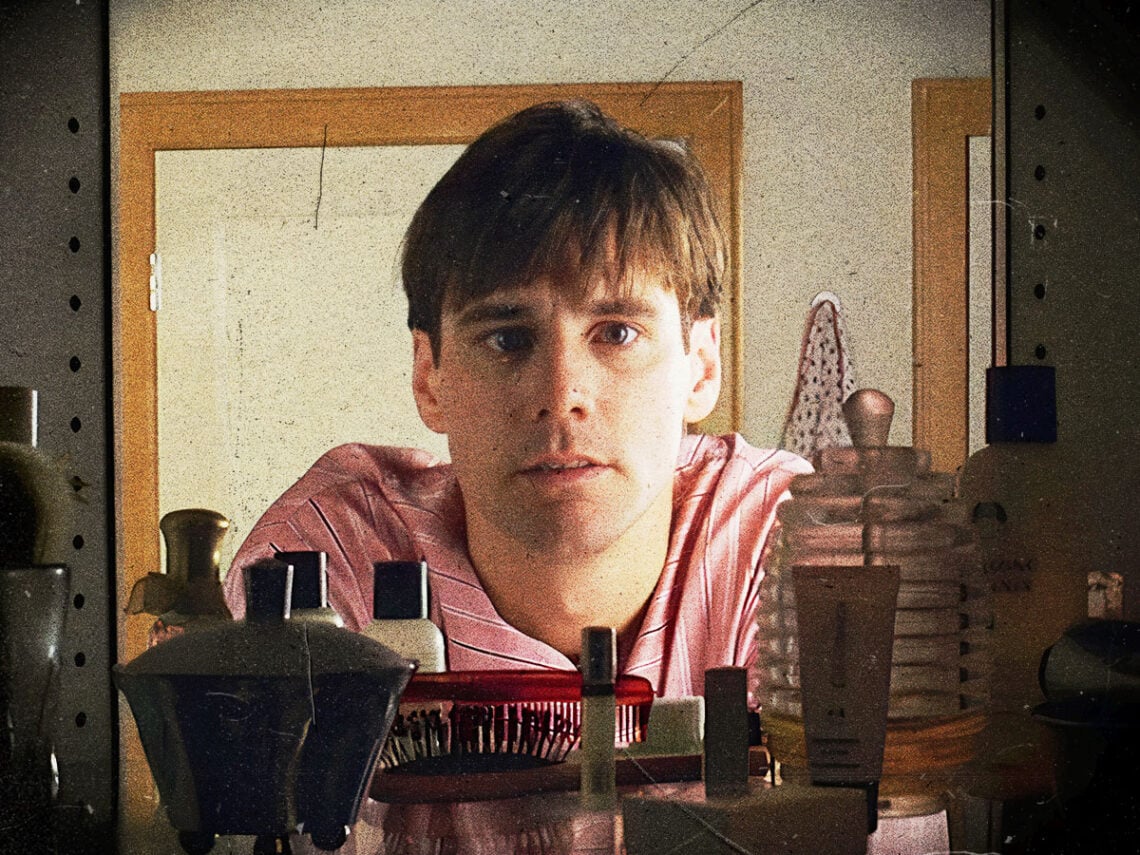
Peter Weir – ‘The Truman Show’

Some of the greatest movies of all time feature characters who blindly go about their day-to-day lives, not understanding the ugly reality that lies beneath the sheer banality of their modern existence and one of the perfect examples comes in Peter Weir’s excellent 1998 film The Truman Show, starring Jim Carrey in the lead role.
But as with many of the best films in such a category, their dramatic tension arrives when their protagonists discover that hitherto obfuscated truth and begin to question how they arrived at their false predicament in the first place. For Carrey’s Truman Burbank, that moment comes when he finds that his entire life has been a media construct, a reality TV show beyond his wildest comprehension.
We, the audience, know from the off that Truman’s reality is indeed a creation of maniacal executive producer Christof, who adopted Truman at birth after an unwanted pregnancy and made an entire TV show out of his subsequently scripted life. Fans of ‘The Truman Show’ have watched Truman grow up, attend school, suffer the slings and arrows of misfortune and even find love.
There’s an air of unreality about Truman’s Seahaven Island hometown, though, utterly perfect in every way, where he lives a seemingly flawless life. The Talking Heads lyric, “You may tell yourself, this is not my beautiful house. And you may tell yourself, this is not my beautiful wife,” comes to light on more than one occasion, though, when even the unsuspecting Truman catches wind of this beyond-faultless reality.
The extras and characters of the show, Truman’s wife Meryl and his purported best friend Marlon, for example, all behave in a manner that just does not signify true emotion, and they use every opportunity to advertise products to their audience. In ‘The Truman Show’, just about everything is for sale, after all. Truman, a perfect name, one must say, is manipulatively kept in his constructed reality by an instilled fear of water and travel, and he receives persistent messages via television and radio about the virtue of staying at home.
Quite simply, Truman’s life has become a fairy tale where the innate message is “Do not go into the woods, do not question like Alice, and do not go beyond your station”. But there’s something inside Truman, as there is within all of us, that something deeper and truer lies beyond his normal, everyday conceptions of the world around him. He somehow feels tied and stricken with the idea of travelling to Fiji with an old-classmate romance Sylvia – who once worked on the show and, after having a moral change of heart, is now part of a “Free Truman” protest group.
Finally, Truman finds that his entire world seems to be directed around him, and once he catches sight of reality, he can’t seem to let his suspicions cease. When he suddenly begins acting against his expectations, extras and characters do everything they can to get him back on track, even outright lying to him, but they can’t prevent the walls from crumbling down, and the truth is inevitably exposed.
There’s a real poignancy to Weir’s film on multiple levels. There’s a commentary on the ethical practice behind reality TV even years before controversial shows such as Big Brother found their way onto our screens. So, too, is there an anticipation of The Matrix, which arrived just a year later, in the fact that The Truman Show attempts to show that the reality of our situation is not entirely natural nor of our own choosing. There’s always a corruption of power whichever way we turn, and no facet of our lives is without intention, after all.
A claustrophobic feeling pervades The Truman Show, too, elevated by the oversaturation of just about everything, from the bright white smiles of the actors to the copybook-cut lawns, and there’s a sense that one simply cannot escape from this hellish nightmare of sheer picture postcard perfection. In many ways, that’s the worst torture of all, a life of plastic niceness, an eternal existence of unreality, which may not be all too dissimilar from the lives many of us have been living since the birth of modern consumerism, especially in countries like the United States.
In Carrey, Weir has the perfect actor to play Truman. He’s naïve to the point of pity, known previously for playing happy-go-lucky types, but there’s also a deep tragedy that arises from that very sympathy. We genuinely feel for Truman; he’s not merely a conduit for narrative advancement but is the subject of our emotional attention. In that light, perhaps Weir’s film itself is akin to the fictional reality show that Truman belongs to, creating yet another layer of Baudrillardian hyperreality.
With Carrey at the centre of the film, there will always be a light-heartedness to proceedings; he’s painfully loveable, but The Truman Show is a genuine picture of harrowing revelation. It’s a brilliance reflection on the kind of media-controlled, production-driven existence from which there appears to be no alternative; a blinding by the lights, one might say. Weir’s film may just serve as the perfect antidote to many of our contemporary ills, an expose still relevant several decades after its original release.
