


The one and only actor Stanley Kubrick was “in awe of”

“It’s all about trust and love,” Martin Scorsese said of his recurring collaborations with those in front of the camera. But before there was Martin Scorsese and Robert De Niro, and long before the advent of Quentin Tarantino and Samuel L Jackson, a cinematic duo formed that was equally as potent, if not more so, than any other Hollywood creative allies.
This partnership was between auteur Stanley Kubrick and actor Peter Sellers. Converging in the early 1960s, the two worked on a pair of enduring classic films together in the shape of Lolita and Dr. Strangelove, establishing an iconic screen partnership in the age of Lennon-McCartney.
The key to their success was that the pair complemented each other perfectly. It has even been claimed that without the presence of Sellers, two of Kubrick’s most significant contributions to popular culture would not have been so powerful. Notably, in Lolita – an adaptation of Vladimir Nabokov’s controversial 1955 novel of the same name – Sellers played both Clare Quilty and Dr Zempf in one of his greatest on-screen performances.
His flourishes in the picture were ballasted by his background in comedy, with his work in the majorly influential radio series The Goon Show shining through. In short, this surrealism made the film tick, with the precise delivery of the twist at the end largely down to his efforts.
As for Dr. Strangelove, it is arguably Sellers’ definitive performance, showcasing his comedic talents alongside his almost frightening edginess. In the satirical black comedy, he played three characters with aplomb. These are the eponymous scientist, Group Captain Lionel Mandrake and the President of the United States, Merkin Muffley. Often deemed one of the greatest films of all time, it was thanks to the presence of Sellers that Kubrick was able to convey just how absurd the world was at the height of the Cold War.
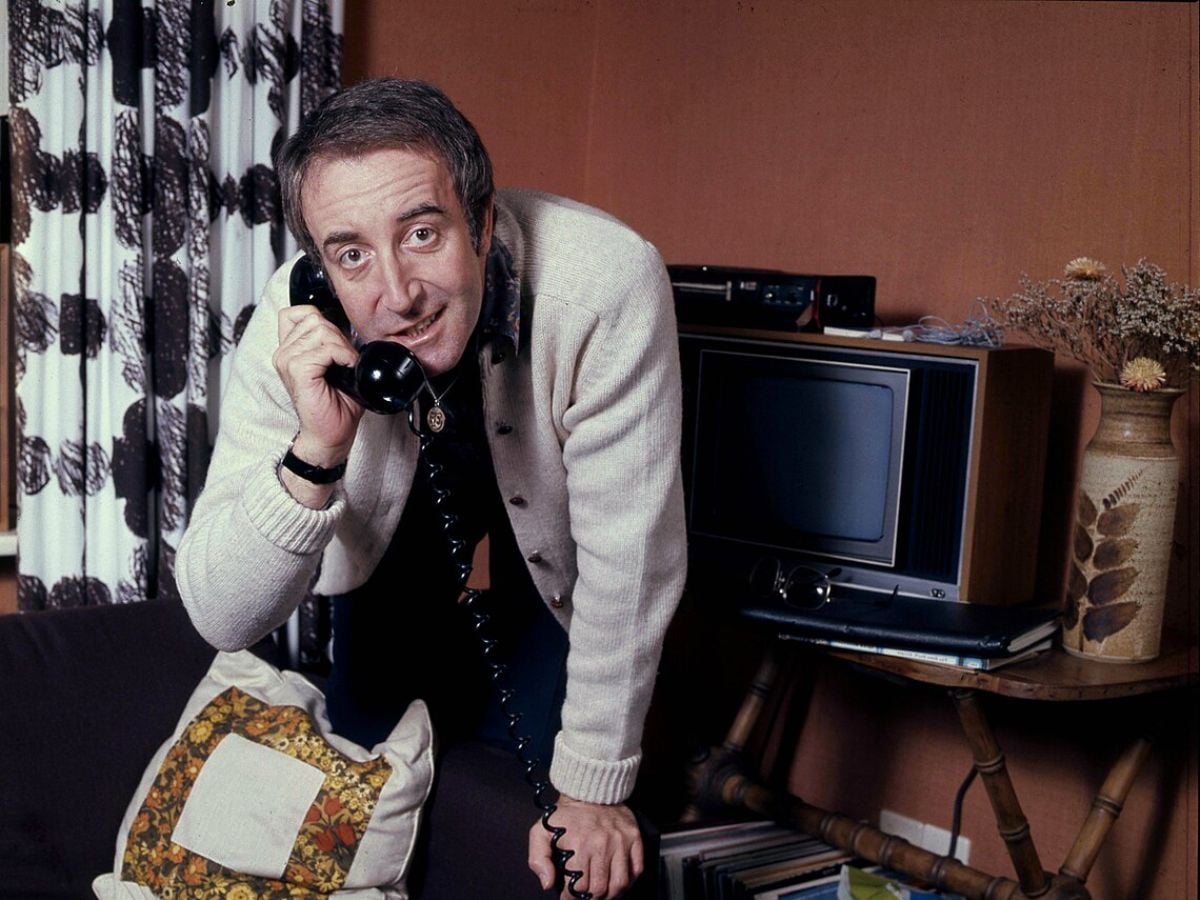
According to the late Alexander Walker, the revered biographer of both Kubrick and Sellers, one of the only actors the director was “in awe of” was the aforementioned comic loon. Given that Kubrik was all too happy to let huge names like Harvey Keitel walk out on his pictures, and tales of him pushing actors to their limits like workhorses, his “awe” at Sellers is high praise indeed.
He explained: “One of the people Stanley admired unreservedly was Peter Sellers. First of all, Peter Sellers was mad. Stanley was in awe of him. He could do things that Stanley couldn’t do, like act. Stanley couldn’t write, and he couldn’t act. He could re-write, but he could never act.”
He added that Sellers had a unique set of skills that Kubrick envied. Explaining, “He was always in awe of people who could give him performances, particularly performances that were not in the script, who could add something to a character that even Stanley had never anticipated.”
It goes without saying that if they veered from the script in an unsatisfactory way then Kubrick would cut them with a click, but Sellers routinely found magic from nowhere. As Walker continued, “Peter Sellers – because he was a comedian who had worked in radio – was great at elaborating performances, making them funnier and funnier, ad-libbing, putting in jokes, gradually spiralling off into a kind of surrealist, Goon-like, Goon Show humour.”
In many ways, he brought a refreshing sense of adventure to Kunrick’s sets that the director craved. Sellers looked at his art as play in the best possible way. As Walker adds, “It was like a jazz musician playing a riff. You couldn’t anticipate what he would do. Stanley loved that.” While there were problematic elements to this abandon, Kubrick held enough of a whip for them not to eventuate on his sets.
As Walker said: “You know, Stanley put people through 101 takes in order to get a variation in the way they played their role. With Peter Sellers, he only had to put him through three takes, and he got a different kind of interpretation every time; each one funnier.”Shedding more light on Sellers’ comedic aptitude, he recalled: “Peter could assume disguises and he could assume vocal disguises. And he could make Stanley laugh. And that was very difficult.”
That uniqueness is why the Shining director cast him thrice in the same film. While there might be much to consider in retrospect with Sellers, his talents under the gaze of Kubrick were undeniable.
