


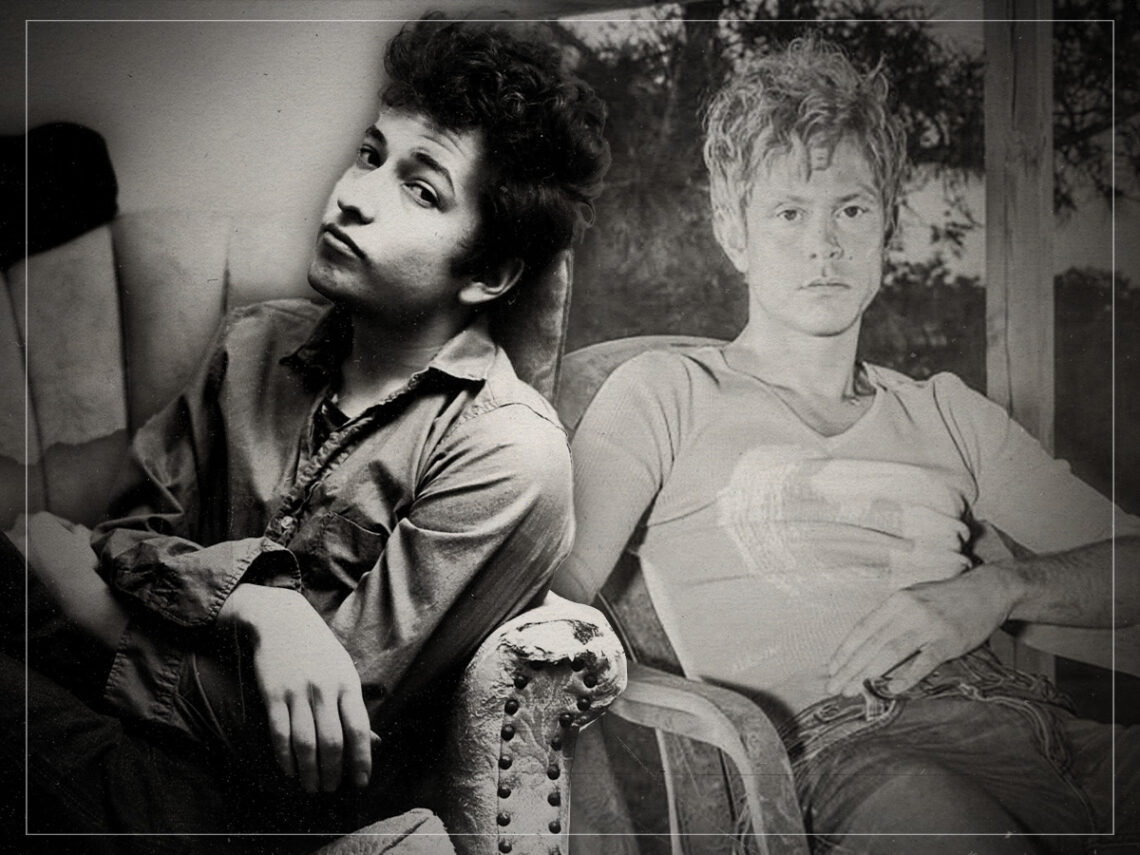
Perfume Genius’ favourite Bob Dylan song: “A really beautiful, simple hymn”

“I think people come to my music just to feel less lonely,” Perfume Genius once said. “When I write, sometimes I think, ‘What would I have liked to have heard when I was younger?’”
Speaking just before the release of his fourth studio album, 2017’s No Shape, Perfume Genius (the solo project of singer-songwriter Michael Alden Hadreas) had gained a loyal, avid fanbase in those who found solace in his vulnerable lyrical portrayals of queerness, desire, trauma and the ever-present feelings that surround personal growth.
With melodies of art pop, glam rock, indie rock and more merging together in his sounds, Hadreas carefully curates the world of Perfume Genius into one where emotions, in all of their complexity, are granted the space to be reckoned with and evolve into something greater.
As with most musicians, regardless of generational divide, Hadreas recognises the impact that the genius of Bob Dylan has had on the singer-songwriter tradition. For many, Dylan did not just write his own songs and perform them; he completely reimagined the way that songs could be written and communicated, no mere performer but rather a cultural icon who truly became synonymous with his music – despite the carefully curated mystique that continues to surround him.
Selecting a favourite Dylan song for Stereogum, commemorating the musician’s 80th birthday, Hadreas chose ‘Oh, Sister’ from the 1976 album Desire. Born in the interim of Dylan’s legendary Rolling Thunder Revue tours and primarily written with co-writer Jacques Levy (a collaborator of Roger McGuinn’s), Desire’s result bears a darkness that seeps through each song.
“I sing ‘Oh, Sister’ at home all the time,” Hadreas admits. “The lyrics can function in many different ways depending on what’s needed.”
Indeed, the song can take on many lives, depending on one’s point of view. On one end of the spectrum, Dylan’s song is a ballad to a sister, begging for compassion and comfort in the wake of her silence. “We grew up together from the cradle to the grave,” he cries, with a call to a God-like figure: “We died and were reborn and then mysteriously saved.”
Dylan invokes God in another potential interpretation of ‘Oh, Sister’, considered through a romantic lens. The opening lines of “Oh, sister, when I come to lie in your arms / You should not treat me like a stranger” become a lovesick plea, with Dylan likening the relationship to a divine calling. Another interpretation suggests that Dylan is responding to radical feminists of the 1970s, asking for a resolution with lines such as, “Oh, sister, am I not a brother to you? / And one deserving of affection?”
With haunting backing vocals from Emmylou Harris, her voice trailing just behind Dylan’s, ‘Oh, Sister’ becomes a sort of call-and-response, an echo of a love – whether that be romantic or platonic – that strives to persist.
“Mostly I think of it as a really beautiful, simple hymn of forgiveness and care,” Hadreas posits. “It could also be a cheeky love song, where he is using God as a way to get in. Those sort of temper each other, making me able to connect to each idea more.”
Hadreas also notes the literal craft of ‘Oh, Sister’ as part of its appeal. “Just the math of it is really satisfying too, every word is perfectly placed and fully resonates,” he explains. “It kind of has whatever weight you give it, which is always true, but the song feels specifically built that way.”

Never Miss A Tale
The Far Out Bob Dylan Newsletter
All the latest stories about Bob Dylan from the independent voice of culture.
Straight to your inbox.