


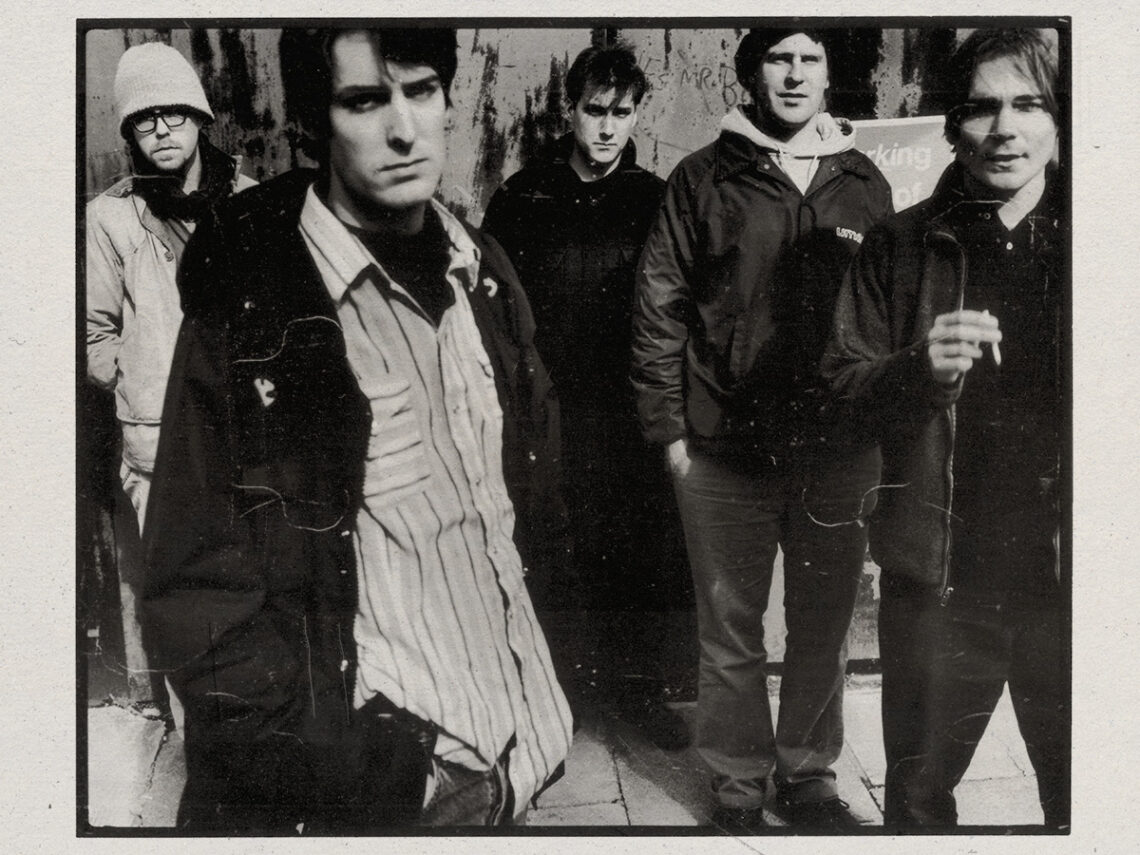
“Young partiers at dawn”: the strange Pavement lyric Stephen Malkmus was never proud of

Despite being one of the more enigmatic bands resigned mainly to cultlike spaces, Pavement attracted widespread attention by placing authenticity at the centre of everything they did. Though never really one to ever give the game away, Stephen Malkmus always offered glimpses into who he is, who he used to be, and what motivates him—saying just enough without giving too much away.
Aside from the obvious reasons for their enigma, Pavement always exuded a mysterious disposition because of their overt nonchalance. There is a lot to be said about Malkmus’ talent, including how he always says a lot without saying too much, mainly due to his penchant for converging abstract poetry with relatable bluntness, but he always carries himself with a certain casual aura, emitting a go-with-the-flow attitude that isn’t so commonplace in indie rock circles.
However, this reserved quality rarely, if ever, comes across as indifference. Rather, Malkmus exudes a certain quiet confidence that not only appears admirable but places an intriguing barrier between the art and the artist, allowing fans to interpret anything they wish when listening to the music. Sometimes, this sense of je ne sais quoi stems from the singer’s ability to seek comfort in his obliviousness, knowing that the right people will resonate at the right time if it’s meant to be.
Take ‘Harness Your Hopes’, for instance. An unsuspecting hit that was intended to be a B-side, Malkmus never anticipated the song’s success or the fact it would become subject to Tiktokification over two decades after its initial release, but he knew that the song would appear niche and land among the ears of those who understood his personal flavour of humour. As he explained to BBC, “That’s the kind of thing you write when you’re feeling cocky, and you think it’s a B-side.”
Not everything Malkmus does is meticulously planned out, despite everything about his personality and mannerisms pointing to the opposite. In fact, beyond the serendipitous hits, sometimes he looks back on melodies, arrangements, or lyrics and feels confused about why he made the choices he did, questioning why they felt right at the time. For ‘Silence Kid’, the musician included one of the band’s more far-out musings, which he now looks back on and fails to see the artistic advantage he once viewed way back when.
The line, “Ecstasy feels so warm inside ’til five hours later I’m chewin’, screwin’ myself with my hand,” isn’t one of Malkmus’ favourites, likely because he wasn’t writing from personal experience. While explaining to NME why he isn’t proud of the lyric, he said: “[I was] just speaking for the common man. I was embodying the state of mind and worldview of many young partiers at dawn.” The lyric doesn’t necessarily feel out of place, but it is slightly strange when viewing it alongside Malkmus’ usual off-kilter execution.
This is especially peculiar in the broader context of Crooked Rain, Crooked Rain—this appears to be Pavement’s more accessible sounds, but songs like ‘Silence Kid’ prove that resting on your laurels never bodes well when it comes to this band. That said, even in his most distant, Malkmus approaches musical creativity nonlinearly, consistently coasting the line between self-reflection and broader storytelling. As a result, the band will always incorporate their signature enigmatic charm, no matter where or how inspiration strikes.
