


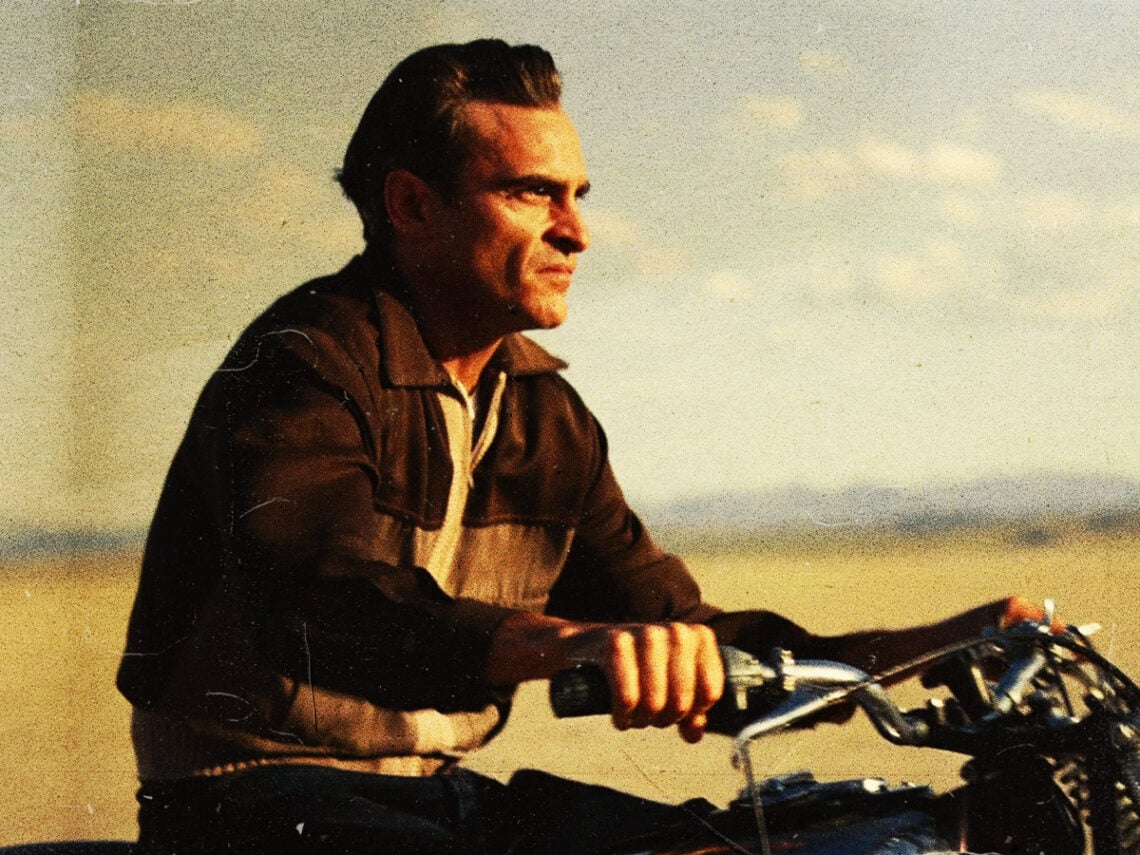
Paul Thomas Anderson – ‘The Master’

In 2007, Paul Thomas Anderson released one of the greatest films of all time in the shape of There Will Be Blood. Following its universal acclaim, all eyes turned to Anderson’s next effort, although it took some five years to arrive on screen. The big question was whether Anderson’s sixth feature-length movie, The Master, could live up to its predecessor’s excellence.
The answer turned out to be a resounding yes. The Master stars Joaquin Phoenix, Philip Seymour Hoffman and Amy Adams as part of a superb cast brimming with talent and an undoubted dedication to their craft. Phoenix performs Freddie Quell, a World War II Navy veteran in the throes of severe PTSD.
We open by seeing the sheer masculine loneliness of a life at sea, worsened by the scars of warfare. Freddie humps away at a female figure made out of the sand while his crewmates get drunk and masturbate into the sea, showing Anderson’s keen attention to intelligently relevant symbolism.
Upon returning to home shores, though, the end-of-war party is over, and Freddie struggles greatly to adapt to civilian life in the late 1940s. He’s prone to outbursts of violence and loses his jobs both as a hand on a Californian farm and as a photographer in a department store. Quite simply, Freddie Quell is a man lost, a should-be hero without cause or purpose.
However, there may just be salvation on offer for someone like Freddie if he can give himself up to a greater power than himself and suspend the cynicism that afflicts so many of us. He stumbles upon a cultish movement known only as The Cause aboard a yacht on the San Francisco docks, with a great philosophical leader, Lancaster Dodd (Hoffman), at its head. Dodd and The Cause are clearly based on the life and work of L. Ron Hubbard and the Church of Scientology, as Hoffman plays the role with effortless ease.
Upon entering the “processing” phase of the movement – suddenly a reluctant follower – Freddie finds that some of his ailing trauma is alleviated and begins to believe that Dodd may just be speaking the truth. Dodd also claims that he has met Freddie in a previous life, and we audience members are wont to believe him. However, like many of the cults of the real world, Dodd faces criticism from both within his sect and from the wider world.
The narrative really focuses on whether one can indeed come to terms with their true self and, in turn, master it, or whether each of us must live according to the behest and mercy of an external “master”, forever living as a mere disciple of someone else’s beliefs. Simultaneously, though, we explore the dangers of evangelical preaching when it is married to a steadfast sense of entrepreneurialism, as in the case of Dodd and undoubtedly so many others.
Phoenix gives the performance of a lifetime, clearly inspired by Daniel Day-Lewis in There Will Be Blood, given the license to improvise and create Freddie as he wishes, and the result is startling in its brilliance. He is quietly processing one moment, then erupts into a fit of uncontrolled anger the next.
Equally impressive is Hoffman, who portrays the charisma expected of a cult leader as though he had been doing it his entire life. Dodd delivers rousing speeches to his followers, loses his cool after desperately trying to retain it, and ultimately gives the impression that he really does believe in his own preaching and so too cares about the well-being of Freddie, so much so that perhaps we just about begin to believe him also.
Once again, Radiohead’s Johnny Greenwood is on hand to provide the perfect mixture of tension and release at just the right moments with his wonderful score – of equal admiration to his work on There Will Be Blood. The film is shot on 65mm stock, and the result is a glimpse into post-war America with a co-existent feeling of authenticity and unreality, much like the work of Dodd himself.
The Master is a reflection on masculinity and trauma, the desperate attempts to cover them up, and belief and spirituality. It might not quite stand as tall as Anderson’s masterful previous effort, but it certainly comes close. Anderson’s sixth film is an intoxicating work that calls us forth to long for our redemption and salvation as much as we hope its characters can find their own.
