


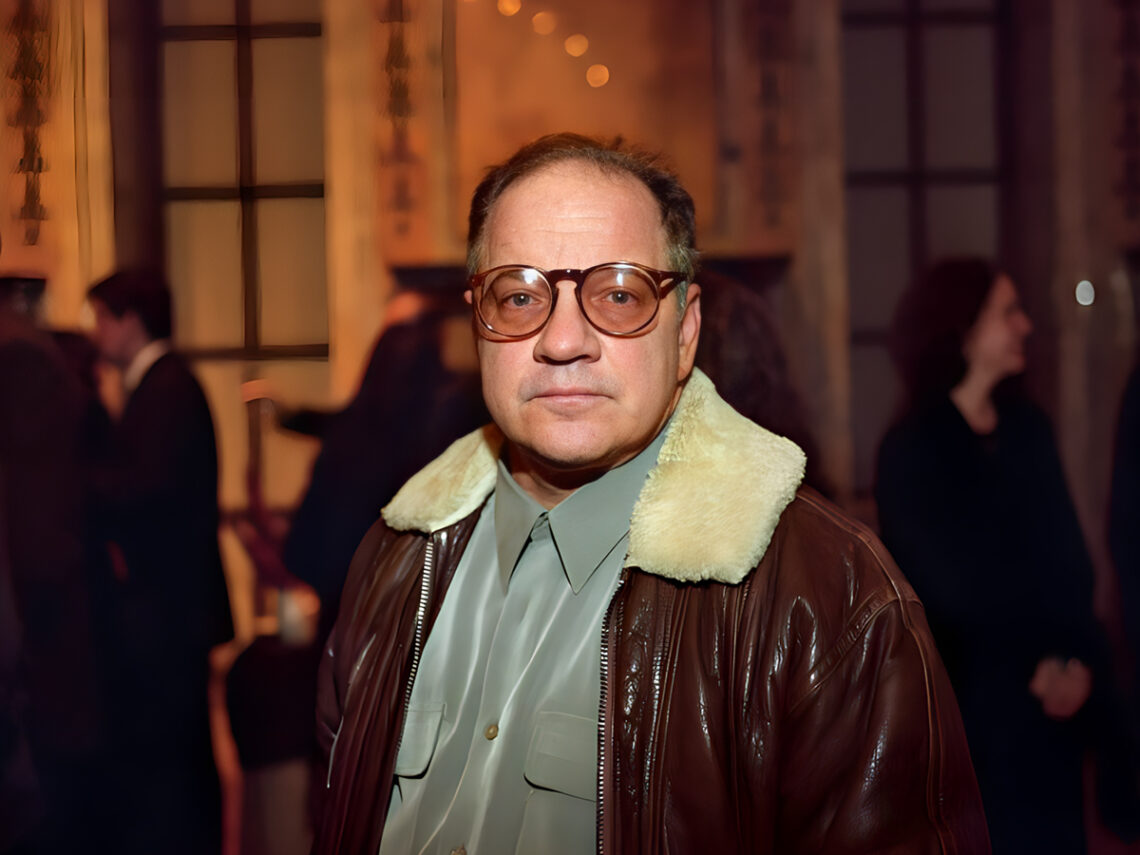
Paul Schrader names the “lone star” of the New Hollywood movement

Like all eras of cinema, the New Hollywood movement is hard to define. The most agreed-upon start date for the epoch is the mid-1960s when movies like Bonnie and Clyde and The Graduate changed what was acceptable to show on the screen. This was the era that killed the studio system and put the director at the forefront. It fundamentally changed the way in which films are made and the people who became famous because of them.
Many notable directors came to fruition during this period. George Lucas, Steven Spielberg, and Martin Scorsese are some of the more prominent examples, but cult favourites like Robert Altman, Brian De Palma, and John Carpenter also found success at this time. However, according to someone who was there, there’s only one name worth mentioning.
Paul Schrader, meanwhile, made his name in the New Hollywood days as a screenwriter, working alongside Scorsese on the likes of Taxi Driver and Raging Bull. He made his own directorial debut in 1978 with Blue Collar and has since directed over a dozen other movies.
In 2024, he reflected on his early days with Collider. “The generation before us was coming out of live television,” he said, name-dropping Sydney Pollack and John Frankenheimer. “We were coming out of film school. Francis [Ford Coppola] went to UCLA, I went to UCLA, Marty [Scorsese] went to NYU, and Stephen [Spielberg] went down to San Diego. We’re all film buffs, and all we really thought about was film. We didn’t really relate to theatre and literature, we just related to film.”
While going down memory lane, he heaped praise on John Cassavetes for his work in revolutionising independent film production. “John was the first one who really started saying, ‘You can make your own films. You can make them cheap enough. You can make them,’” he recalled. “So Cassavetes was more the lone star for that generation. [Jean-Luc] Godard was the stylistic lone star, but Cassavetes was a financial lone star.”
Cassavetes was a Greek-American director and actor who made his debut in 1959 with the movie Shadows. His most famous works include Faces, Gloria, and A Woman Under the Influence. He frequently collaborated with his wife, the actor Gena Rowlands, who often gave him her best performances. Though he never won an Oscar, he was nominated for ‘Best Director’ for A Woman Under the Influence, and Gloria took the Golden Lion at the 1980 Venice Film Festival.
As well as the past, Schrader was also asked about the present, particularly what he thought of the state of modern filmmaking. “It’s certainly not a matter of talent. There are just as many talented filmmakers and actors as there ever were,” he reassuringly stated. “I think it’s a matter of audiences. Your audiences are not quite the same. I use the analogy of the lobby and the hotel. Culture used to be like a big hotel, and everybody would come out of their rooms and meet in the lobby and talk about, ‘What’s happening? What movies have you seen? What books have you read?’ Now, they just stay in their room.”
Schrader’s most recent movie, Oh, Canada, chronicles the final days of a terminally ill documentary maker. Leonard Fife, played by Richard Gere in the present day and Jacob Elordi in flashbacks, agrees to have his death captured by a film crew but struggles to discern fact from fiction when recounting his life.
