


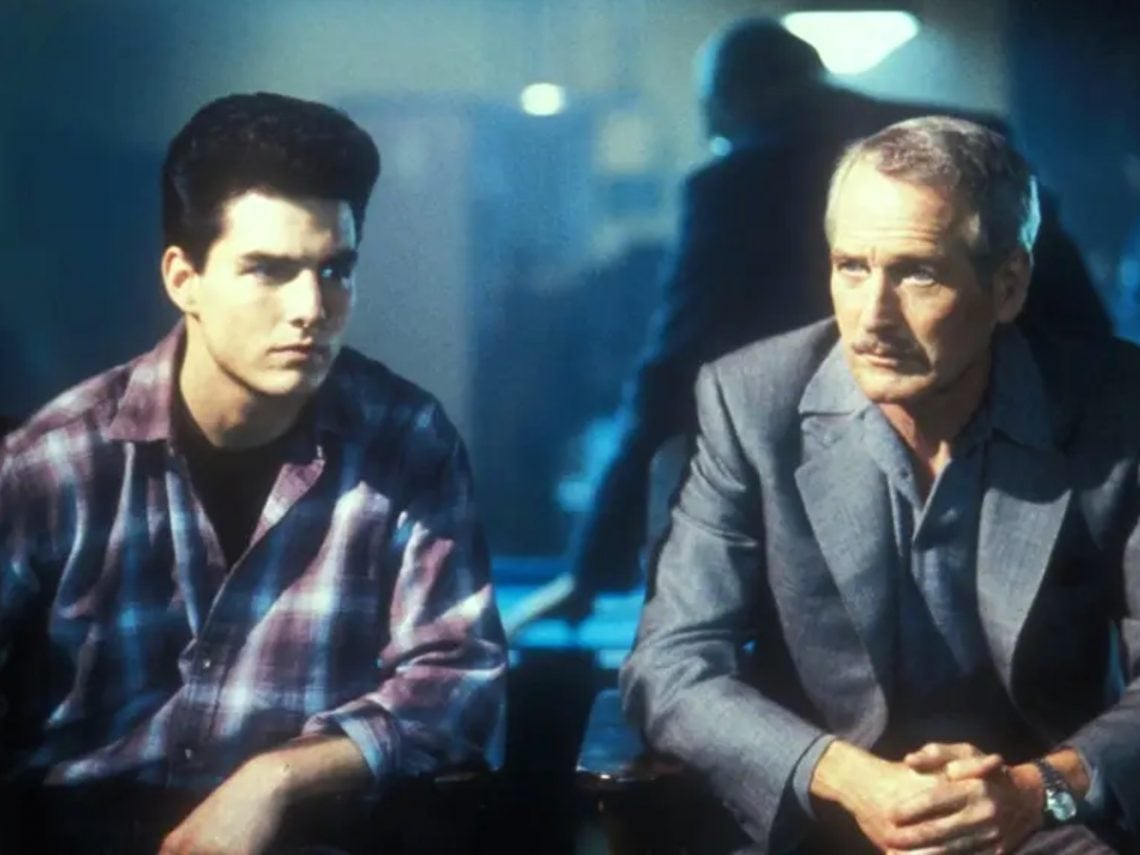
The Paul Newman advice that became the making of Tom Cruise

Early in his career, Paul Newman became a bridge between old and New Hollywood. Having signed a contract with one of the major studios in the early 1950s and starred in a Biblical epic (which he immediately disavowed), he easily made the transition to the younger, brasher, more renegade films of the New Hollywood movement in the ’70s as if he was born to make them.
Perhaps because he was slightly older than many of the other actors who dominated the scene at the time, such as Jack Nicholson, Robert Redford, and Dennis Hopper, Newman ended up being cast in a series of mentorship roles. In Butch Cassidy and the Sundance Kid, The Sting, and Slap Shot, he played an older brother figure to slightly younger characters, never veering into a paternalistic role but always offering some kind of wisdom.
For most actors, having Newman as a mentor would be a dream come true, and in the ’80s, Tom Cruise hit the jackpot both on and off screen. Their on-screen pairing came in 1986’s The Color of Money, in which Newman proved that he could bridge an even wider Hollywood generational gap by reprising his role as pool master ‘Fast Eddie’ Felson from 1961’s The Hustler alongside up-and-coming star Cruise.
In the movie, the young actor plays Fast Eddie’s sidekick, who helps the original hustler get back into the game. Although they start as allies, their clashing styles eventually turn them into opponents. The younger actor had been trying to work with Newman for years despite having only a few film credits to his name. In 1984, he got to meet his hero during an audition for the drama Harry & Son. He didn’t get the part, but he did remember feeling reassured by the older actor’s easy manner and friendliness. On the set of The Color of Money, he finally got to get close to Newman and learned some valuable lessons on fame and fulfillment.
Speaking of the experience in 2008, Cruise reflected on how he learned to balance his real life with the public’s perception of him. “I’ve always had to deal with that,” he said. “Certainly it’s been accelerated, because, just the way the media and the internet is. Right from the beginning with Risky Business, I remember talking with Paul Newman, he said to me, ‘Look, you’ve just got to live your life the best you can.’ But look, I’ve got to prioritise because I have a family. I have a life. You have to just adjust. The basics of what I do, making movies and my love of film, that hasn’t changed. It’s just grown.”
Newman’s advice came at a crucial moment for Cruise. The same year that The Color of Money was released, Top Gun hit theatres and changed the young actor’s life forever. Although he’s known for his complicated personal life and affiliation with the fringes of Scientology, Cruise has also maintained a pretty stellar track record as a movie star.
Not only does he regularly put his life on the line for the job, but he’s also played an instrumental role in keeping Hollywood afloat through financial doldrums with movies like Top Gun: Maverick and the never-ending Mission: Impossible franchise. Steven Spielberg even thanked the actor in 2023, saying he “saved Hollywood’s ass” and potentially even theatrical distribution as a whole.
