


Hear Me Out: ‘Paul McCartney is dead’ was a marketing psyop

In 1966, The Beatles were “having a bit of a setback”.
“It wasn’t generally known that their general popularity seemed to be a little bit on the wane,” George Martin continued. But behind closed doors, “Brian Epstein was very worried about it indeed.” It seems incredulous that they could’ve been toppled from their pedestal, one that remains unprecedented to this day, but plenty of other bands had hit lofty heights and disappeared before them.
This was a primary concern for the Fab Four when they touched down at JFK Airport just two years earlier. “We had originally feared,” Paul McCartney expressed in 1964: Eyes of the Storm, that they would “just fizzle out as many groups do”. For proof of that, you only have to look as far as their main rivals.
The Dave Clark Five had a whopping 18 consecutive US top 20 singles between ‘64 and ‘67, but now they’re largely viewed as a footnote of the era. Similarly, Herman’s Hermits also had an impressive 18 top 40s in just four years. Thankfully, The Beatles had Derek Taylor at their disposal, the world’s leading ‘press man’, to ward off obscurity with his cunning marketing schemes. But was his most effective stunt one that he could never take credit for?
Paul Is Dead
The February 1967 edition of The Beatles Book Monthly, a fan run newsletter, contained the following statement under the heading ‘FALSE RUMOURS’, unassigned to any author, reading: “The 7th January was very icy, with dangerous conditions on the M1 motorway, linking London with the Midlands, and towards the end of the day, a rumour swept London that Paul McCartney had been killed in a car crash on the M1.”
The statement continues: “But, of course, there was absolutely no truth in it at all, as The Beatles’ Press Officer found out when he telephoned Paul’s St John’s Wood home and was answered by Paul himself with his black Mini Cooper safely locked up in the garage.” While the Mini in question had, indeed, been involved in an accident on the 7th, McCartney wasn’t even driving it at the time, and it was far from fatal.
But here’s what’s interesting: this statement dispelling the ‘rumours’ is also the first publicised documentation of any reputed ‘rumours’ whatsoever. No known contemporary newspaper article from January 1967 has yet surfaced reporting the supposed speculation itself. The inaugural print mention of what would become ‘Paul Is Dead’ is a The Beatles Book Monthly statement explaining that Paul Isn’t Dead.
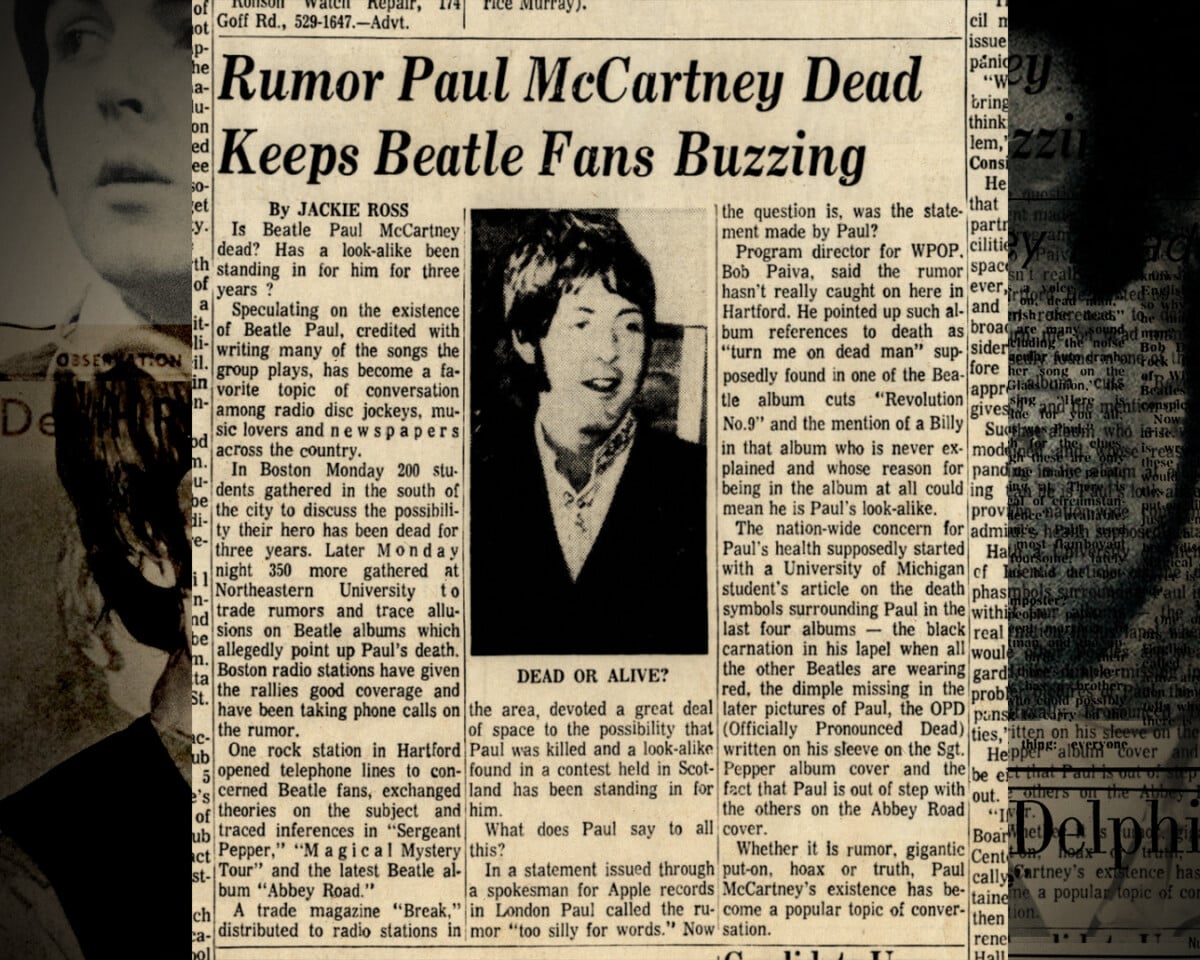
While the mention is slight, no larger than the adjacent section about the boys growing moustaches, its inclusion at all is rather curious. Even if there had been chatter in certain London circles, if the hubbub had failed to garner any mainstream documentation, even by the uber salacious ‘60s tabloids hungry for Beatles stories, then why dismiss it?
Of course, the band and their trusted press officers would say that they weren’t dismissing it. The BBM was a fan-led publication after all, and it could easily be claimed that the anonymous author made the statement without their prior knowledge. But that’s not true. There had to be prior knowledge: who rang the person who rang McCartney to find out he and his mini were safely at home?
Well, as it happens, The Beatles Book Monthly wasn’t really a fan-run newsletter at all. It was an officially authorised publication launched under Epstein’s organisation, and it operated as just another arm of The Beatles’ publicity apparatus. Moreover, every Beatles fan reading this ‘False Rumour’ at home would’ve known that the publicist calling McCartney was undoubtedly Tony Barrow.
That raises the question: Why was The Beatles’ head press officer ostensibly addressing a rumour that apparently left virtually no trace anywhere else? It’s like arriving at a police station before a crime has even been reported and saying, ‘Oh, by the way, that burnt our Ford Fiesta in Holt’s Yard has nothing to do with me’. With that sort of claim, it seems natural that an investigation is bound to follow.
Taylor, Barrow, and the team would’ve certainly known this. One of the oldest maxims in PR history is the ‘Oxygen of Publicity’ principle. You don’t add fuel to something unless it serves you. Rumours die unless authority figures validate them, and the Paul Is Dead claim was nowhere near the level of hubbub where intervention was necessary.
So, even if we suppose that a few hundred people were whispering about it in the pub, why tell around 400,000 subscribers? The band’s most feverish fans, no less, hungry for hot gossip?
Well, maybe that’s precisely why they deputised the alleged rumour in print. The press office, and Sean O’Mahony as editor, knew that it was a story that would engage fans at a time when the band were in need of renewed interest.
While the story wouldn’t take off in any meaningful way until 1969, when American college radio was awash with ‘clues’, it is hard to ignore the fact that the first initial kernel came to the fore in a covertly official Beatles publication.
It’s not that the BBM team purposefully engineered the whole charade – given the hassle that it has caused McCartney over the years, he’d likely be irate if that was the case – but more so that they continually pushed thousands of titbits to enthused fans over the years, hoping to keep them hooked and fill a magazine in the process.
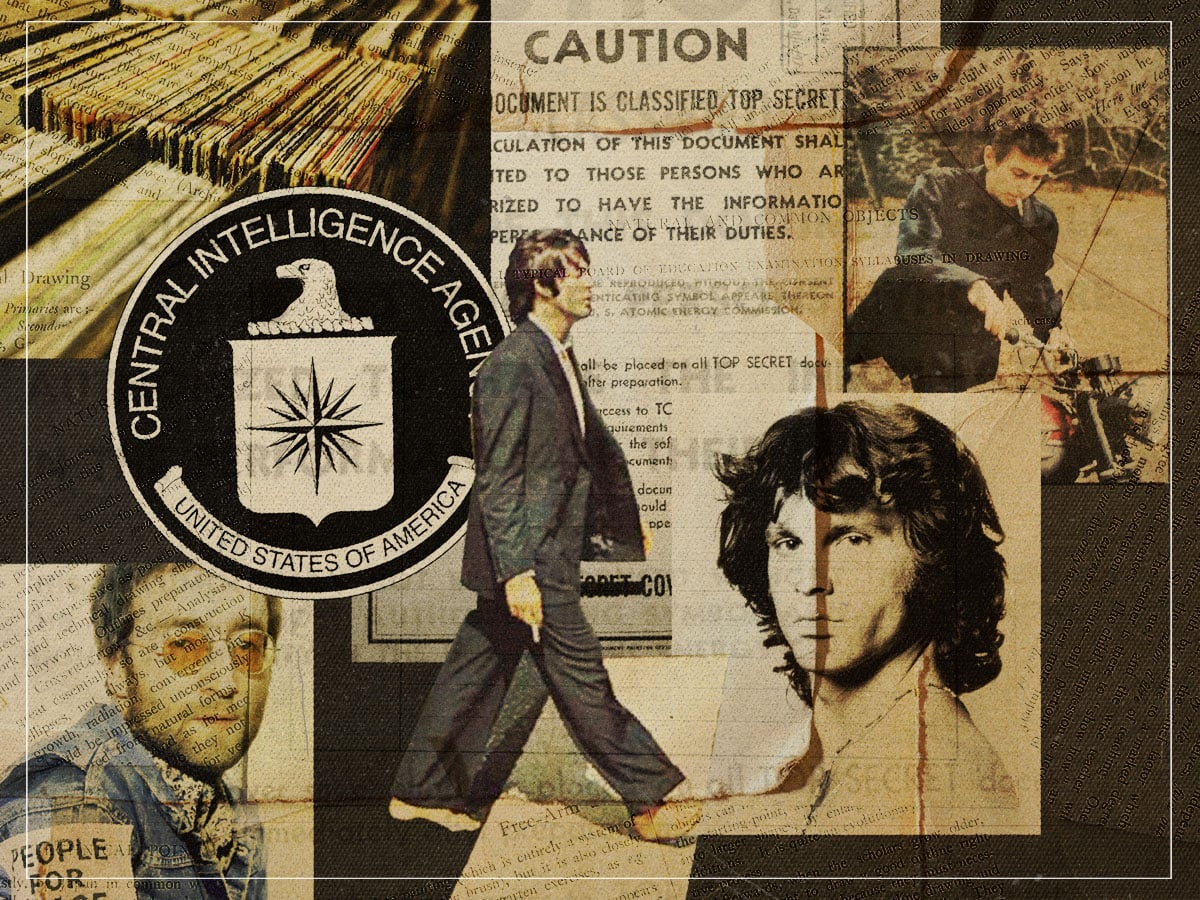
It just so happened that one conspiratorially-leaning entry into the tome eventually caught on. By and large, it caught on because conspiracies were running rampant in culture in an age of justified paranoia. After all, the FBI had whole dossiers on John Lennon, actively angling to have him deported.
Moreover, Phil Ochs was also surveilled so intensely by the same organisation that his paranoia drove him to suicide ten years after he famously declared, “I’m a folk singer for the FBI”. The Black Panthers had nearly as many informants in their ranks as they did members. Jerry Garcia often discussed how he could spot countless feds floating around in their circle from a mile off. And the very campuses where McCartney’s Mini mishap took on a life of its own were scattered with ‘disrupters’ hired by the FBI.
Conspiracies were, understandably, all the rage. Now, inadvertently or otherwise, The Beatles had given rise to one of their own. And like everything that the band and their organisation touched, it was a timeless one to boot.

Never Miss A Beat
The Far Out Beatles Newsletter
All the latest stories about The Beatles from the independent voice of culture.
Straight to your inbox.