


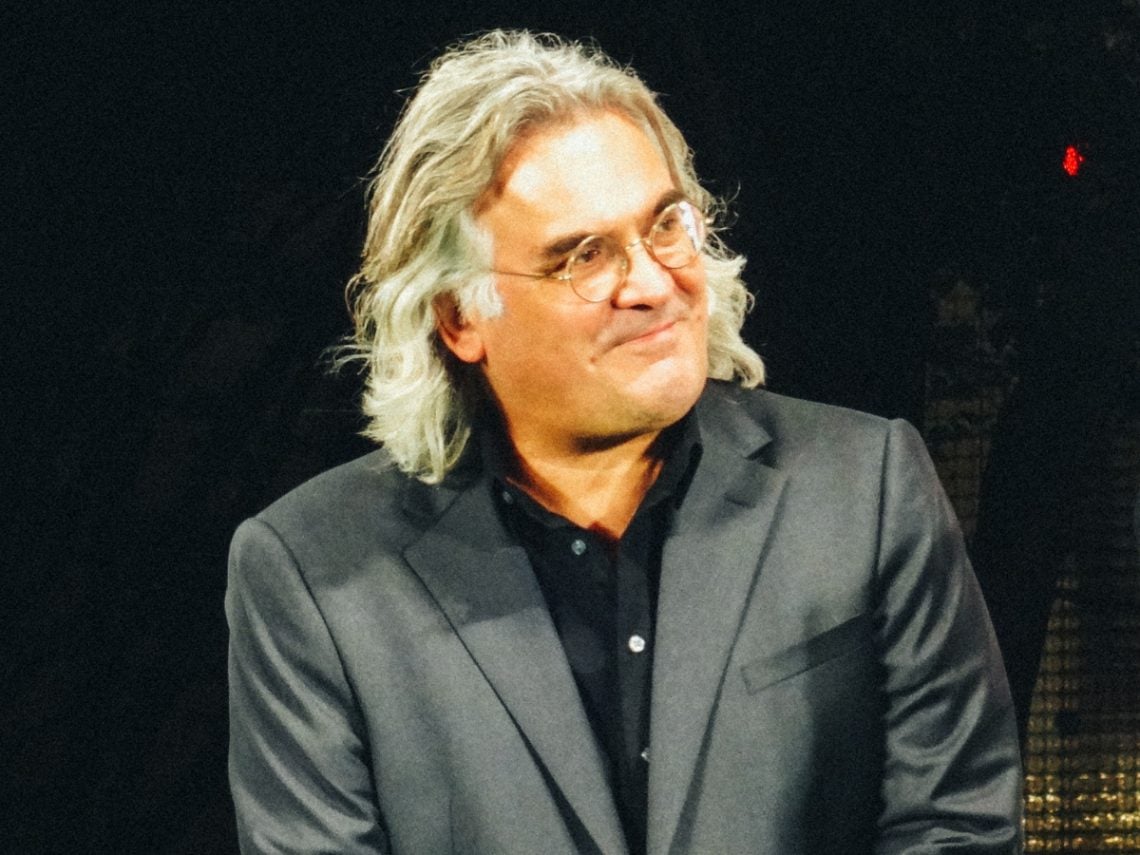
Paul Greengrass explains how he found his cinematic style: “Instinct will lead you”

Paul Greengrass‘ 2002 film Bloody Sunday explored the 1972 shootings in Northern Ireland and drew critical acclaim for the English director. From there, Greengrass directed the Bourne trilogy starring Matt Damon, for which he won a Best Director BAFTA and received an Academy Award nomination for the same recognition.
Greengrass’ cinematic style is defined by shaky and disorienting camera work, which heightens the tension of his film. During a Reddit AMA session, the director admitted that his style is most likely down to the fact that in his early days as a filmmaker, he was making documentaries that employed handheld cameras. “In my 20s, I made documentaries, and I was taught to shoot using zoom lenses, and often shot in places that were dangerous, and you didn’t have time to put the camera on legs. It had to be on your shoulder or in your hand,” Greengrass wrote.
He added: “Later, when I started making movies, I learnt to shoot in the classical style with dolly and tracks, etcetera, but I always felt like I was wearing a suit at a wedding. It just wasn’t me. So in my 40s, I went back to shooting movies like I used to shoot documentaries, and that’s when everything seemed to fall into place.”
The most vital thing for Greengrass, though, when it comes to providing advice to budding filmmakers, is “finding where to put the camera”. He then notes the distinction between having a director’s technique and an innate instinct. “The technique will lead you to shoot towards depth, shoot towards light, or shoot in a way that reveals the action of the scene in a fluid and organic way,” Greengrass said. “The instinct will lead you to put the camera where it is the most dramatic participant in the scene.”
From there, Greengrass further elaborated on the innate talent that certain directors have and their unique vision of style. He claims that style is “something that comes from inside of yourself; in other words, it’s connected to your point of view. And having a strong and committed point of view is at the heart of filmmaking.”
The director admits that there are some unique filmmakers who “have such given genius that their point of view is there from the outset.” Still, many others “slowly achieve a more fixed point of view through the process of making films, through trial and error, through finding out what works and what doesn’t, and above all, through maturity.”
