


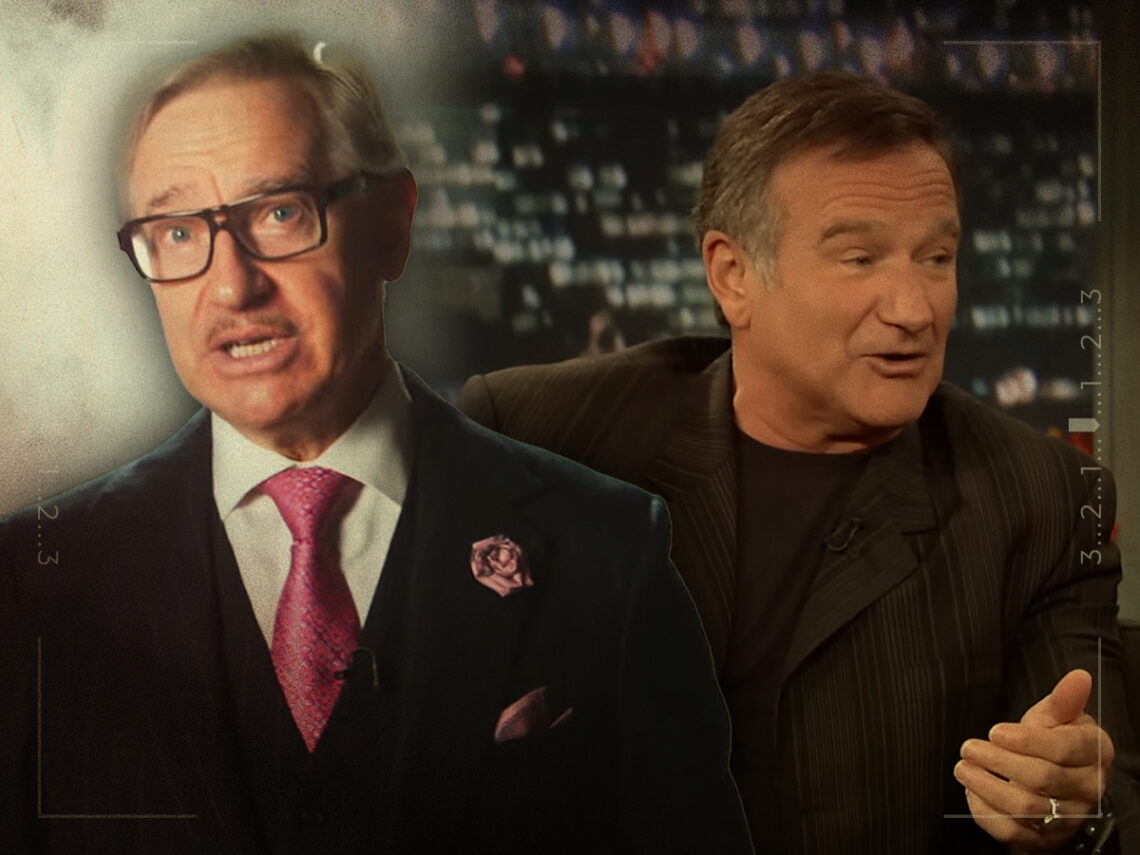
Paul Feig blamed Robin Williams for sabotaging his comedy career: “A couple of times”

The pipeline from stand-up comedy to the silver screen has launched countless careers, including Robin Williams‘, but it’s not often that a comic finds their true calling behind the camera.
For decades, the performers who cut their teeth on the stage have tried their luck on the big screen, and when they succeed, they really succeed. In addition to Williams, you can add Richard Pryor, Eddie Murphy, Jim Carrey, Adam Sandler, Steve Martin, and Jamie Foxx to that list, and that’s barely scratching the surface.
It’s a natural evolution, with many making a stop-off on Saturday Night Live along the way, but very rarely will an aspiring comedian realise they’ve been in the wrong business all along. It hasn’t happened often, and it sounds as though Paul Feig has Williams to thank, at least partially, after some early experiences that showed him just how cutthroat the stand-up circuit could be.
Having tried to ply his trade as a comic and actor in the 1980s and 1990s, Feig made his directorial debut on the short-lived cult classic TV series, Freaks & Geeks, which he also created. Since then, he hasn’t looked back, with his filmography extending to Arrested Development, The Office, Bridesmaids, The Heat, and The Housemaid, earning billions of dollars at the box office.
“I mean, yeah, I got sabotaged by Robin Williams a couple of times when I finally got to be a performer at The Improv,” Feig recalled. “I still wasn’t one of the main guys. So you’d kind of have a later spot. I remember once, it was my time to get up, and there was a full audience. I was so excited, and they come up like, ‘Oh, Robin Williams just wants to get up and do a quick set first.'”
That alleged quick set lasted an hour, and by the time it was finally Feig’s moment to shine, “everybody left, except for one woman who was waiting for her husband to come back from the bathroom.” There’s a certain etiquette on the stand-up scene that people are expected to adhere to, but Williams wasn’t really known for playing by the rules.
Multiple comedians have accused him of stealing their material and then trying to pay them off after he’d used it, and even though he was one of its most famous practitioners and a Hollywood superstar who commanded millions per picture, some of his peers viewed him as a joke thief, first and foremost.
At least he didn’t nick any of Feig’s material, even if he did hold him back. He’d made it to The Improv, and he had a 15-minute set ready to go, only for Williams to show up unannounced, be given priority, and then spend four times as long rattling off jokes. Since he was so famous, the audience assumed he was the headliner, so they all fucked off and left the future director playing to an almost empty house.
In the end, it doesn’t really matter, since Feig’s stand-up career didn’t end up consuming his life. He found his calling behind the camera, but he still hasn’t forgotten how he was sabotaged by an icon.
