


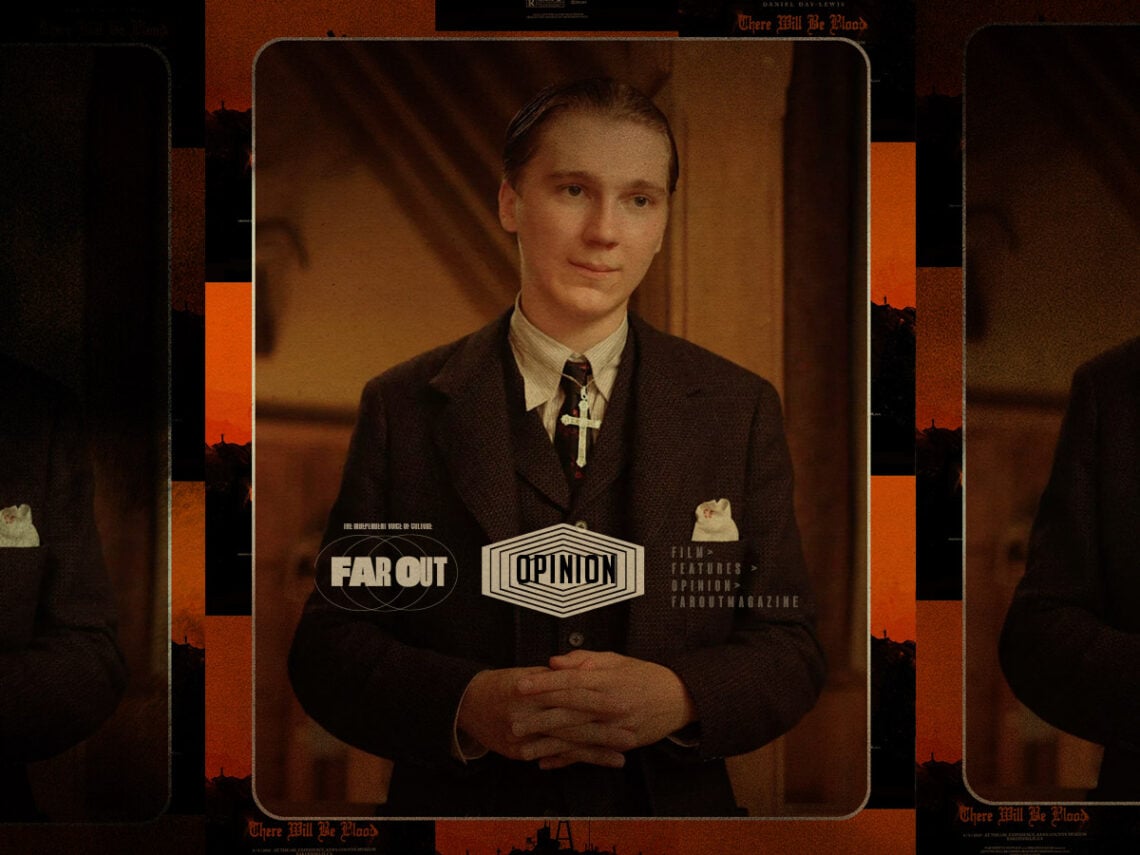
Hear Me Out: Paul Dano is the best thing about ‘There Will Be Blood’ and Quentin Tarantino is missing the point

“There Will Be Blood would stand a good chance of being #1 or #2 if it didn’t have a big, giant flaw in it,” Quentin Tarantino says when appraising the Paul Thomas Anderson picture as his fifth favourite of the 21st century, in a recent episode of the Bret Easton Ellis podcast. “The flaw is Paul Dano,” he says, before dramatically missing the point of the whole movie.
“It’s supposed to be a two-hander,” he quips, then opines that Dano is simply too “weak” to stand up to the might of Daniel Day-Lewis. His error is obvious: the whole point of the film is that Dano’s character (Paul / Eli Sunday) is too weak to stand up to Day-Lewis’ character (Daniel Plainview). A genuine two-hander would rewrite the whole subtext of the story.
The film, and the book (Oil!) before it, plainly depict Plainview as an almost superhuman symbol of frontier capitalism. Within the first five minutes – Tarantino’s favourite sequence, no less – he hauls himself out of mine shaft with shattered legs and crawls across a desert expanse with no assistance.
It is, frankly, starkly unrealistic that he would survive. But he has been possessed by capitalism’s gleaming promise. A glint of silver is enough to see him through his superheroic ordeal. He isn’t a man, but rather a sinister symbol and an origin story from then on. These lands and everything in them will be greedily drained like a milkshake by an unstoppable, powerful, post-human force, no matter the cost.
Sunday, on the other hand, is a daft little worm, clinging to some crooked old-hat metaphysics that seems genuinely perverse. He is not a sexy, Sauron-like beast of these lands set to go blow-for-blow in a grand cinematic battle. He is the wasp that blights the picnic of Plainview’s abundant feast.
Dano brilliantly portrays this pesky insignificance. In fact, the way he seems to irritate Tarantino is a perfect indictment of his skill. He irritates everyone who has ever watched There Will Be Blood. The guy is a grotesque little freak, not someone the American public is ever meant to root for, regardless of how despicable the overriding alternative is. He is meant to irk and infuriate and feel like a wet-blanket before Day-Lewis’ prowess and command.

He is a mountain that capitalism must struggle to climb until it wears it down to something it can walk all over, never intended to be a fortress locked in an even battle. That’s a difficult role to emotively embody – a far harder one than Lewis’, you might argue – and Dano does it perfectly. He makes it the uneven two-hander it has to be.
It’s the war of the old world against the new: the new has to triumph with mighty aplomb over the “weak”, otherwise the triumphant American Dream of today would be one ‘marred’ by socialism and cultural sects rather than the notion that the nation exists under the singular banner that you can drink any milkshake you please if you try hard enough.
And the drinking of the milkshake is an apt analogy: the staged dialectic battle of capitalism and religion is a struggle where one simply empties the other. The all-American drink is now gobbled up by the oil baron, not the pastor. If the old world wants a sip, then it has to comply or die. And you see that in the shivering enervation of Dano’s portrayal. He seems to get smaller with each passing frame.
He embodies this erosion right up until his quivering defeat. As Upton Sinclair writes in Oil!, the book the film is based on, “In truth, the land of the pilgrim’s pride no longer existed; in its place was the land of the millionaire’s glory.” Even though Plainview’s victory comes at great cost and moral bankruptcy, it has to be unequivocal. It has to make the Sunday clan look “weak” and defeated. Morally, it has to have Tarantino wish that Dano’s fight was stronger. But Day-Lewis has to dominate. This isn’t fucking Rocky IV.
If Tarantino had his way with the movie and the pouting Austin Butler was the opposing force to Day-Lewis, it might have made for a better poster and carried the dramatic shoot-out sensibility of an old western, but its subtext and meaning would be null and void.
This seems symbolic of the difference between Anderson and Tarantino as directors. I like Tarantino (I particularly liked him in my early 20s during the care-free 2000s, read into that what you will); his films are funny, good-looking, and entertaining. But to use There Will Be Blood as an apt analogy, he’s more concerned with the drama on the surface than the riches that lie beneath it.

Never Miss A Take
The Far Out Quentin Tarantino Newsletter
All the latest Quentin Tarantino content from the independent voice of culture.
Straight to your inbox.