


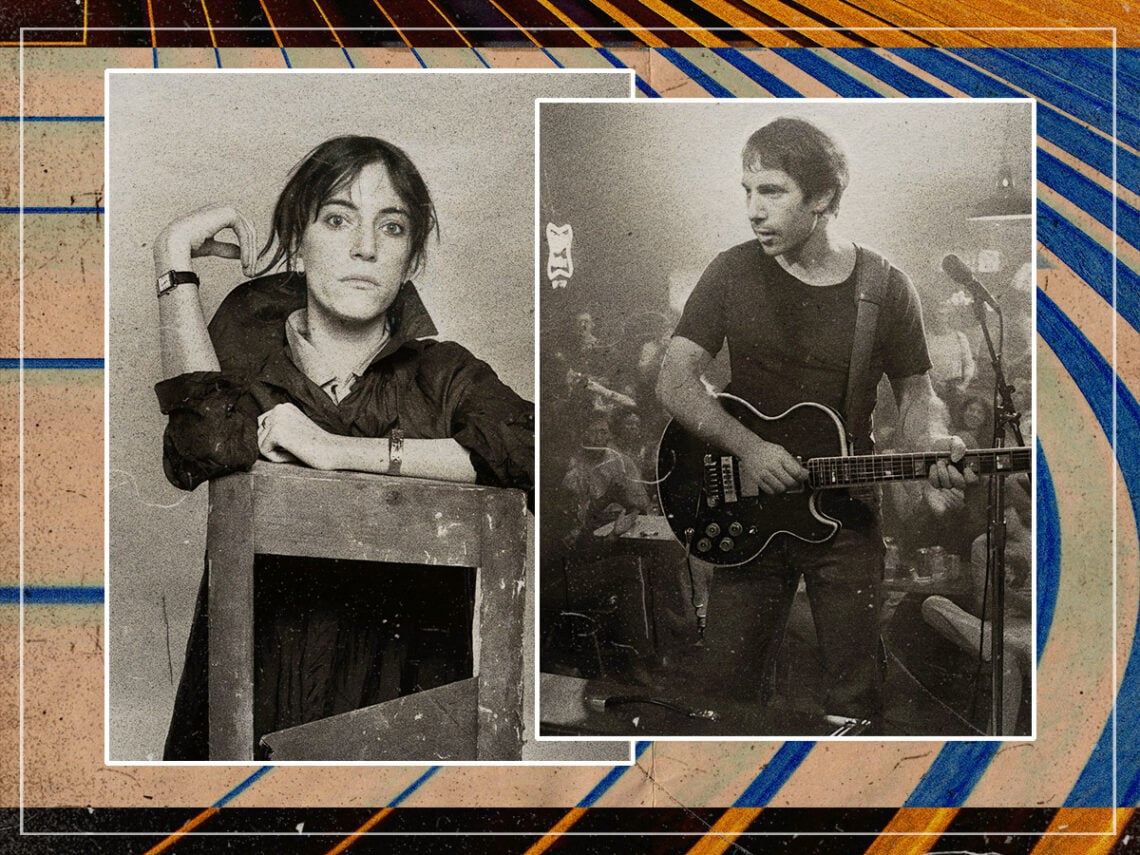
Patti Smith’s scathing view on Paul Simon

In 2013, Paul Simon and Patti Smith fittingly came together to say goodbye to their friend Lou Reed. This trio seems to capture a swathe of New York’s unique literary lyricism. There is poetry to be found in the hard-knock streets of the Big Apple, and with the exception of maybe Gil Scott-Heron, you’d struggle to find any songwriters who coaxed the soot-covered sonnets lingering in the concrete jungle better.
This makes it all the more surprising that Smith has never been a fan of Simon’s work, especially when she even covered one of his efforts for her 2007 LP, Twelve. Nevertheless, she boldly voiced her view to CP, stating: “Paul Simon – I don’t even like Paul Simon. I could be extremely negative about what I think about Simon & Garfunkel songs. I just don’t like them.”
Despite this, she figured that there was one track by Simon that still resonated enough with modern times for her to tackle it. “But [‘The Boy in the Bubble’],” she continued. “I thought, lyrically speaks of our present condition, so that’s why I did it. I laid aside my feelings about Paul Simon songs and did the song because I thought the lyrics said something important.”
Taken from his seventh album, 1986’s classic Graceland, the song charts the highs and lows of modern life and the disposition this whirlwind casts upon all of us. The song includes the only lyric that Simon retained from his South African trip that garnered the music of Graceland: “The way the camera follows us in slo-mo, the way we look to us all.” In an age where everything is documented and blown up to be huge, does it diminish the humanity in society?
This was the sentiment that Smith thought had gained credence in 2007, but weirdly, it is the only track from Simon that she thought was worth its salt. While he is often cited as one of the finest songwriters of all time by many, he often proves divisive among his peers. As Joni Mitchell said when pondering whether she ever took any influence from him: “No. Paul Simon started piling up a lot of words, more than the bar could handle, and I stopped!” she declared with a laugh. “If that’s what it sounds like. I better cut that out. [Further laughter erupts.]”
However, Smith’s hero, Bob Dylan, happily crowned Simon “one of the preeminent songwriters of the times”. Perhaps most puzzling about his divisive capacity is simply how pleasant and carefully crafted his music seems. Maybe therein lies the truth of it: there is a perception that his matured and honed style lacks the visceral edge of impassioned immediacy for those who crave something atavistic in their music like Smith.
