


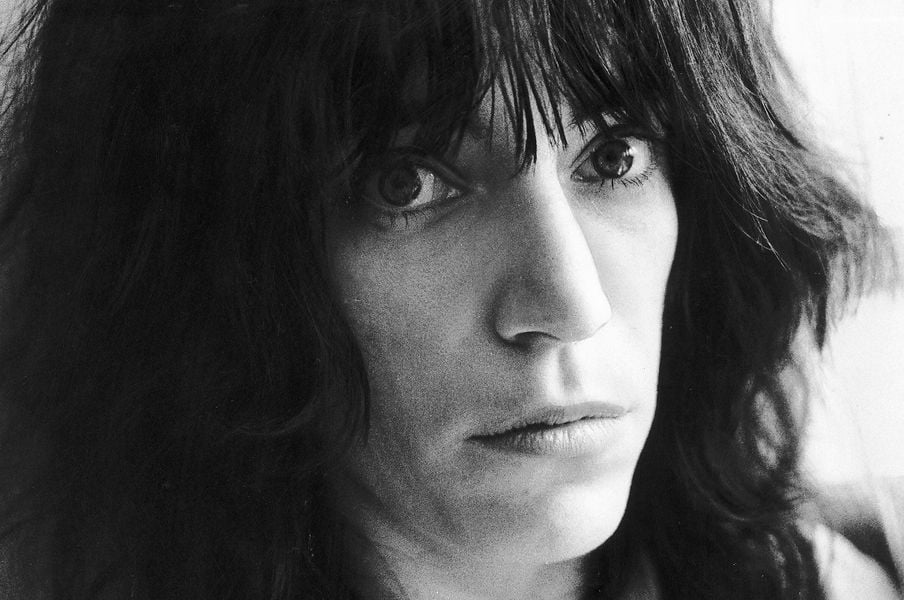
Patti Smith explains why she’s never been a “punk”

Patti Smith is widely known as The Godmother of Punk, and it’s a crown that has been placed comfortably atop her head for decades — the only slight complication with the tag is that Smith doesn’t see herself as a punk.
Her arresting sound isn’t particularly punk; one play through of Horses will guarantee that. Nor is her attitude off-stage, operating more like a high priestess of rock poetry. The label arrived at her door because the immediacy of her message was an integral part of the genre when it rose from the grime of New York City. Even in a divided world, an endearment of Patti Smith is a welcomed commonality.
The original so-called punk poet has ferociously stamped her footprints on the history of popular culture, and you don’t get heralded as The Godmother of Punk without righteous grounds. Although this is an appellation befitting her majesty, it’s not one that she believes is wholly accurate.
Ever since she moved to New York chasing a dream as a teenager who initially worked at Scribner’s Book Store to facilitate the lifestyle she moonlit as on an evening. Smith has lived through the evolving world of rock ‘n’ roll and witnessed it at its candid best as well as its darkest hour.
Despite living through unspeakable tragedies, Smith has never let anything dampen her spirits. Her love of music is what dragged her to New York as a teenager, and it is what keeps her artistic desire ticking over half a century later, but is she really The Godmother of Punk? She certainly doesn’t think so.
“I’ve been called the ‘princess of piss’, ‘the keeper of the phlegm’, ‘the wild mustang of rock ‘n’ roll’,” she told the BBC’s, Greg Kot. “But I was not really a punk, and my band was never a punk rock band.”
“I felt that our cultural voice, which was so magnificent through the late ’60s and early ’70s, was faltering,” she continued, “and there was the rise of stadium rock and glam rock and all of these different things and I felt like somebody had to save it. I didn’t think that it would be me, but I thought I could play a role. I had a strong sense of myself, and I came to say, ‘Here I am’. I’m speaking to those like me, the disenfranchised, the mavericks. ‘Don’t lose heart, don’t give up’.”
Meanwhile, speaking to Forbes in 2018, Smith again refuted claims that she shared the same nihilist attitudes of acts like the Sex Pistols and admitted she’s never had the typical punk mindset. “I think that’s true of many people,” she said in regards to how our beliefs change over the years. Adding: “Myself, I didn’t have a punk ethos philosophy. I’ve never been a negative person; I’m not a nihilist or anything.
“All the work that I get involved with has always been for building our cultural voice, rebuilding our world, building communications. As far as not caring, I’m sure it was a reaction to things around them. But I’ve never had that. I’m pretty much the way I’ve always been, just obviously happily evolving.”
Throughout her career, Smith has evolved yet consistently stayed faithful to herself. Her authenticity is what attracted her to the rowdy regulars at CBGBs, and it’s the same characteristic which endears her to pontifical crowds at literary festivals across the world.
Punk is not something you can feign, and Smith never wore the uniform or acted in the archetypal manner you’d expect from an alleged ‘punk’. She’s never needed to do any of those things to gain her credentials because her anti-establishment streak is inherent in her DNA — whether Smith refuses to acknowledge it or not. It’s there, and it’s fuelled her into a counter-culture iconoclast.
