


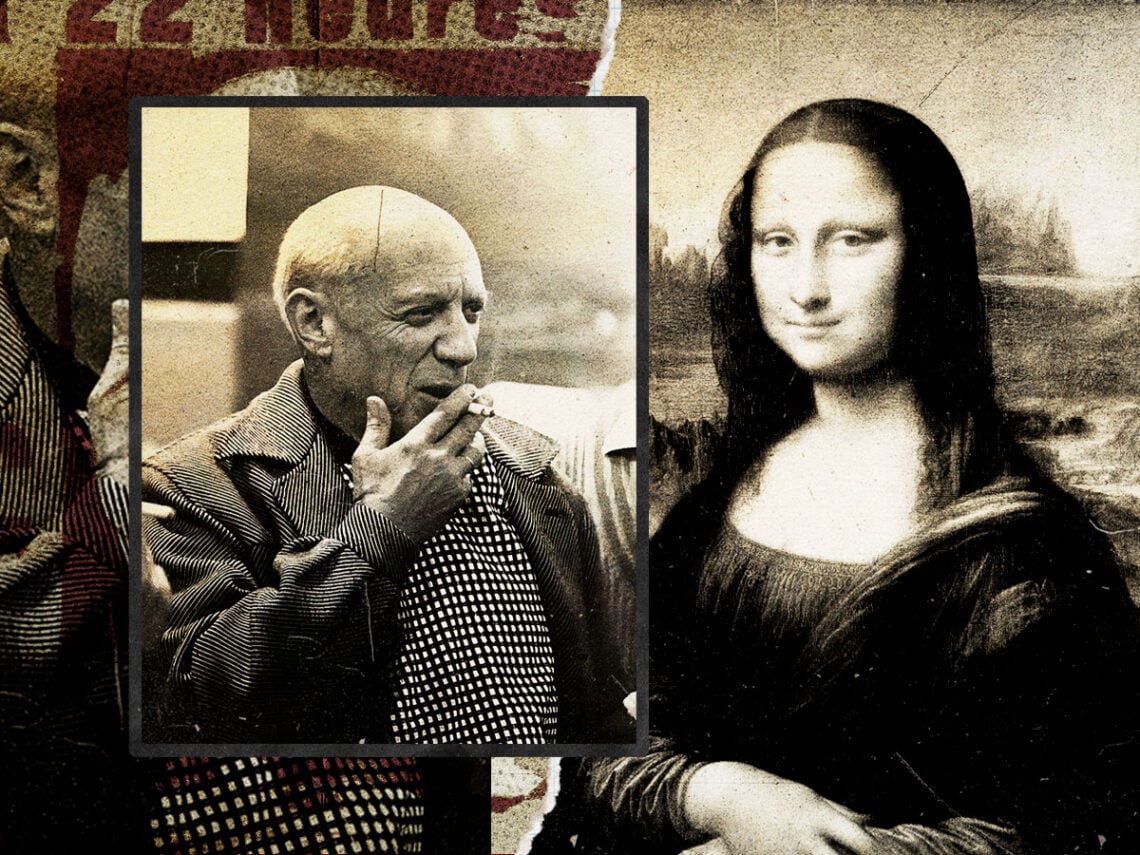
How Pablo Picasso became a suspect in the theft of the ‘Mona Lisa’

Among the most influential figures of the 20th century, it would be a gross understatement to say that Pablo Picasso changed art forever. He did so much more. Known for his incredibly unique experiments with aesthetic frameworks and the concept of space, Picasso’s style has its fair share of critics, but nobody can deny the impact it had on the art world. In more ways than one, Picasso’s art transformed how we perceive the world.
Picasso’s legacy is obviously tied to the numerous masterpieces he made over the course of his prolific career, but it’s also linked to one other famous work of art – the ‘Mona Lisa’. On August 21st, 1911, a thief escaped with the priceless piece, leading to widespread chaos and pandemonium. While the Paris-Journal posted a reward of 50,000 francs for the return of the ‘Mona Lisa’, the authorities drafted a list of potential suspects.
On that list, Picasso’s name ranked quite high. During that period, the painter was quite close to other influential pioneers in the art world like André Breton and Guillaume Apollinaire, forming a formidable intellectual centre within the European landscape. While those unfamiliar with the details of the case might find it surprising, Picasso had actually been involved in art theft before and had paid a thief to steal Iberian sculptures from the Louvre.
After the news of the Mona Lisa’s theft broke out, Apollinaire became anxious about all the stolen artefacts they had in their possession and requested Picasso and his lover, Fernande Olivier, to return to Paris. According to Norman Mailer, who covered the incident, Apollinaire and Picasso made up plans to flee the country together, but it didn’t work out.
Mailer quoted Olivier: “I can see them both: contrite children, stunned by fear and making plans to flee the country. They decided to get rid of the compromising objects immediately. Finally, they had made up their minds to go out that night and throw the suitcase containing the sculptures into the Seine—they left on foot about midnight, carrying the suitcases.
“They returned at two in the morning, absolutely dog-tired. They still had the suitcases and its contents. They had wandered up and down, unable to deliver themselves of their parcel. They thought they were being followed. Their imaginations dreamed up a thousand possible occurrences, each more fantastic than the last.”
Due to the conflicting accounts and the various elements involved in the case, Apollinaire became a prime target for the police. When he was pressurised by the authorities, the poet implicated Picasso, which is how he got roped into one of the most famous art heists in history. In the courtroom, the artist’s demeanour completely changed, and he claimed that he didn’t know the Iberian statues were stolen and insisted that he had no connection to the case.
In his anger, he also declared that he didn’t know Apollinaire at all. Years later, during a conversation with Gilbert Prouteau, Picasso admitted: “When the judge asked me: ‘Do you know this gentleman?’…I answered: ‘I have never seen this man.’ I saw Guillaume’s expression change. The blood ebbed from his face. I am still ashamed.”
