


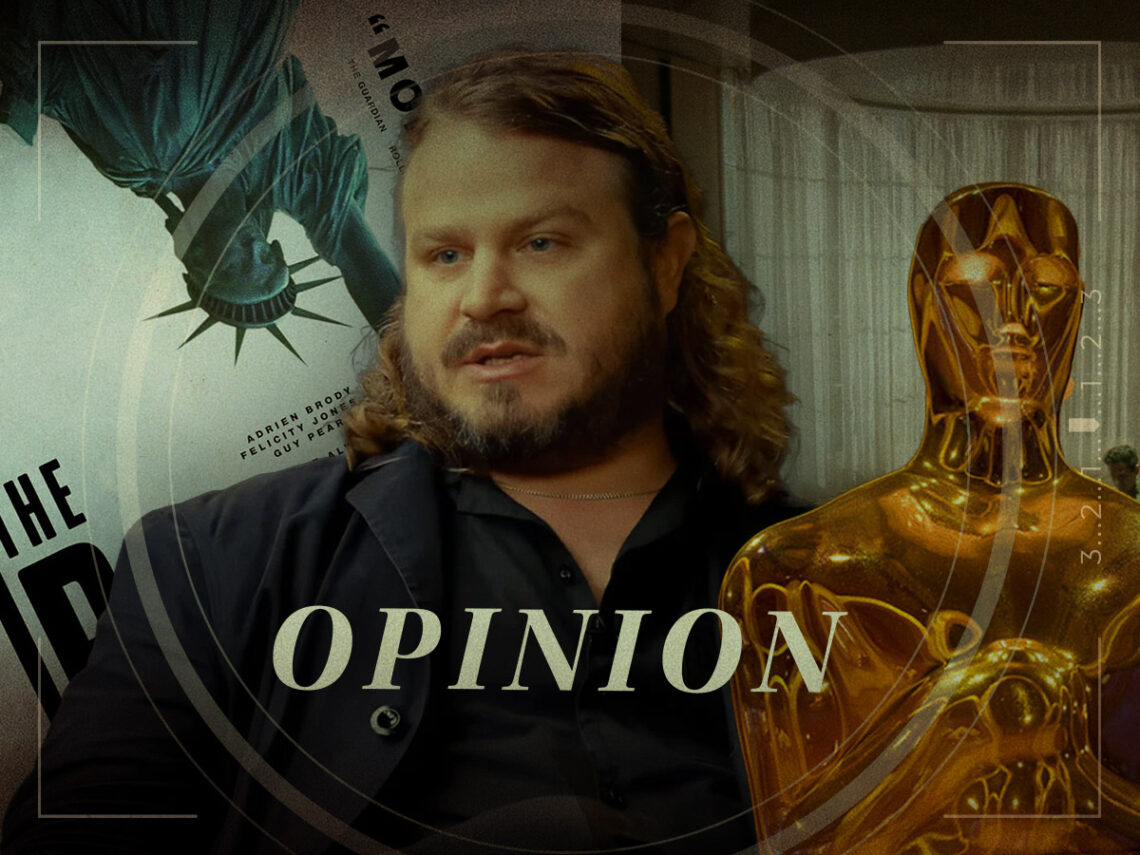
Oscars 2025: Brady Corbet must win ‘Best Director’

This awards season has been one of the most unpredictable in years. With every preliminary awards show, the frontrunners for the Oscars seem to shift. Emilia Pérez, which earned 13 Academy Award nominations, faced a swift fall from grace after old racist and Islamophobic social media posts from its star resurfaced. Demi Moore and Mikey Madison appear tied for ‘Best Actress’, while Adrien Brody was the frontrunner for ‘Best Actor’—only for Timothée Chalamet to take home the SAG Award, the most reliable indicator for the Oscar.
When it comes to ‘Best Director’, the field is stacked. Sean Baker for Anora, Brady Corbet for The Brutalist, James Mangold for A Complete Unknown, Jacques Audiard for Emilia Pérez, and Coralie Fargeat for The Substance make up the list, but despite the excellent work from all of them, Corbet is the one who most deserves the award. At just 36, he has not just created an astonishing work of cinema but done so on a budget that seems impossible for a project of that scale.
The Brutalist is a sweeping, three-and-a-half-hour historical drama about architect and Holocaust survivor László Tóth, who arrives in the US to start his life from scratch. He earns the patronage of a wealthy businessman, played by Guy Pearce, and finds himself in a struggle between artistic integrity, his mercurial benefactor, and the weight of unfathomable trauma.
Corbet wrote the script with his partner, Mona Fastvold, around 2018. After the film was greenlit and scheduled to begin shooting in 2021, multiple delays occurred due to the Covid-19 pandemic, as well as deaths and pregnancies within the cast’s families. But the delays were just part of the struggle.
During an interview with Variety, Corbet talked about making a movie on such a grand scale with a budget of less than $10million. “We cut every corner we could to make sure that every single cent was on screen,” he said. “It was a Herculean effort, and I wouldn’t recommend it to anyone because it was just years and years of essentially working for free.” Despite the challenge, however, he insisted that he didn’t actually want a bigger budget.
“I never thought, ‘I wish I had $30m more’,” he said. “There’s a lot of strings that come with that kind of money. It invites lots of opinions. You have all these executives who don’t trust the director and bury them in notes. What you get is something antiseptic that lacks a signature. It’s the difference between a bowl from Crate & Barrel and a wabi-sabi ceramic.”
This statement is the heart of The Brutalist’s triumph. It feels as if it were created from a fresh, creative spirit. Its plot doesn’t plod from cliché to cliché. It takes its time. It unfolds organically, like a revelation. There is a mastery in its pacing that contradicts the usual rules of storytelling.
Corbet also chose to shoot the film in VistaVision, in which the film stock runs horizontally through the camera, leading to a wider aspect ratio and higher resolution due to the larger image area per frame. It was developed in the 1950s, which made it a contemporary innovation of the period depicted in the film, but it was also an aesthetic choice. Because it can contain so much in the frame, it allowed for the buildings in the movie to be shown in their entirety while still focusing on a human figure.
“For a film about architecture, it just was sort of a no-brainer,” Corbet said. “But to try to explain that to dozens if not hundreds of potential investors who just don’t have that much context for that decision.”
It’s one thing to make a film on your own terms, but it’s another to justify it with the result. Corbet more than demonstrates why sticking to his vision at the sacrifice of a bigger budget was not just the right decision for the film but the decision that allowed The Brutalist to become a modern masterpiece.
Whether or not the Academy recognises his extraordinary feat on Sunday, Corbet has set a bold precedent of artistic integrity in an industry that, as the Marvel Cinematic Universe demonstrates, is facing the crippling consequences of selling its soul to Wall Street.
