


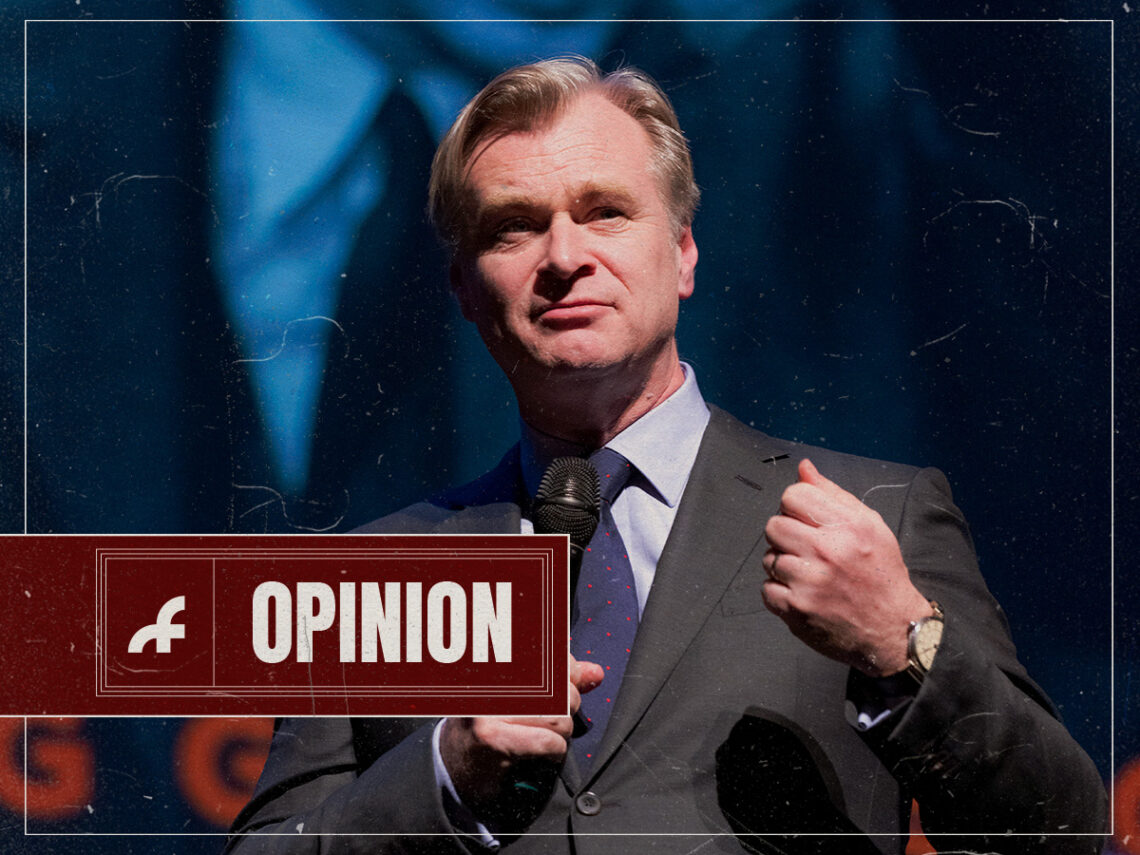
Oscars 2024: If Christopher Nolan’s ‘Oppenheimer’ doesn’t win ‘Best Picture’ he only has himself to blame

Even though Christopher Nolan’s Oppenheimer is the runaway favourite to take home the ‘Best Picture’ trophy at the upcoming Academy Awards, nothing is set in stone until its name is read aloud onstage at the ceremony.
It would be viewed as a major upset if it didn’t happen, though, but it’s not as if the Oscars hasn’t thrown up its fair share of shocks over the decades. Were another title to emerge victorious, then in a roundabout way, the filmmaker has nobody else to blame but himself for the increased volume of competition.
Although it fluctuated in the early years, from 1944 onwards, the Oscars settled into a rhythm of five nominees for virtually every major category, which remains true to this day. However, 55 years of tradition was suddenly upended in 2009, when the Academy announced the ‘Best Picture’ field would expand from a definitive five to a list of nominees to a roster that stretched as far as ten.
The official statement from the organisation didn’t offer an explanation beyond “the Academy is returning to some of its earlier roots when a wider field competed for the top award of the year,” but it was hidden in plain sight that one of the biggest – if not the single most notable – driving force behind such a major alteration was Nolan’s The Dark Knight.
The official party line was that “having ten ‘Best Picture’ nominees is going to allow Academy voters to “recognise and include some of the fantastic movies that often show up in the other Oscar categories but have been squeezed out of the race for the top prize,” but the president of the Academy of Motion Picture Arts and Sciences was a little less vague.
When pressed by the New York Times to explain why the ‘Best Picture’ field had suddenly been expanded after more than half a century of restricting itself to five nominees, Sid Ganis held his hands up and admitted: “I would not be telling you the truth if I said the words Dark Knight did not come up.”
Nolan’s epic comic book adaptation was undoubtedly one of the most acclaimed releases of 2008, and while it did secure eight Oscar nominations, Heath Ledger’s posthumous win for ‘Best Supporting Actor’ was its only nod in one of the major categories. It was viewed as a massive snub that The Dark Knight had been overlooked for ‘Best Picture’ and even ‘Best Director’, which ensured that whether the Academy wanted it to or not, the expansion was colloquially dubbed as ‘the Dark Knight rule’ from then on out.
An argument could be made that Inception wouldn’t have snagged a ‘Best Picture’ nomination were it not for the changes, with Dunkirk becoming Nolan’s second feature to find itself in the running for the most vaunted prize Hollywood has to offer — all the signs are pointing on third time marking the charm.
It seems highly unlikely that Oppenheimer won’t win the prize on the night. But if it doesn’t, having to contend with nine other top-tier films instead of four is a problem that Nolan unintentionally created for himself when The Dark Knight being shunned led to the ‘Best Picture’ race getting more open and more hotly-contested than it had been for over 50 years.
