


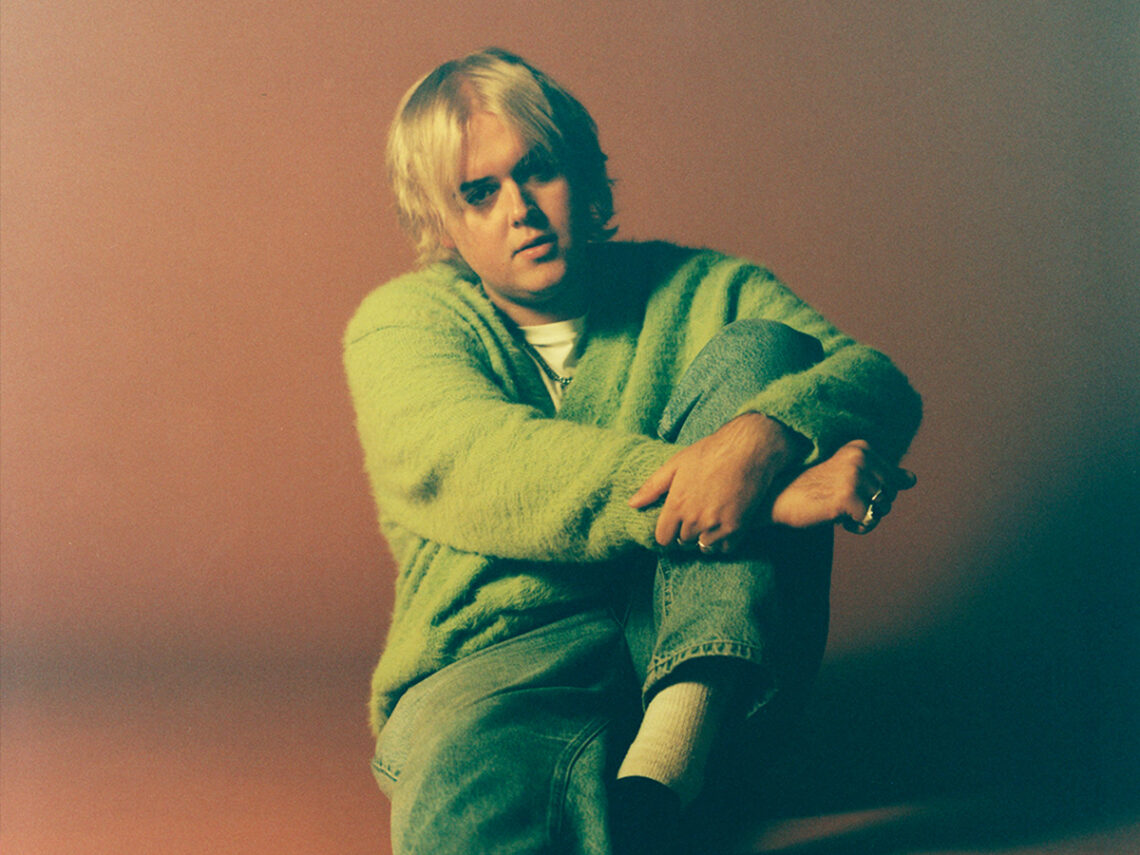
Oscar Lang – ‘Look Now’ album review: a breakup record with no bite

Multi-instrumentalist Oscar Lang has released his latest album, Look Now, via Dirty Hit. The record was created while Lang was navigating a breakup with his childhood sweetheart, but sonically, it lacks the emotional bite you’d expect from its subject matter.
Look Now follows from Lang’s 2021 album, Chew the Scenery, which combined optimistic open-string guitar work with fuzzy psychedelia and featured the summery hit, ’21st Century Hobby’. Musically, the record was fairly straightforward psych-inspired indie, though there were moments of excitement. On Look Now, he abandons any sense of experimentation in favour of simple, piano-driven pop tracks with swelling strings and juvenile lyrics.
The opening track, ‘A Song About Me’, sets the scene for the album with Lang’s sweet, inoffensive vocals, soaring orchestration and joyous piano. It’s a breakup album, but, tonally, it couldn’t be happier. Lang explained the track, dubbing it “a breakup song that is honest and open but self-aware”, inspired by the likes of Carly Simon’s ‘You’re So Vain’ and Sara Bareilles’ ‘Love Song’.
He continued: “A break-up song for all the people that have had their hearts broken, it’s got a bit of bite but at the end of the day means well. I took influence for the sound from classic songwriters like Billy Joel, Paul McCartney and mixed them with a bit of ’90s Britpop a la Verve and Oasis.” The influences he cites can be felt – at its climax, ‘A Song About Me’ channels ‘Hey Jude’ rather directly.
Still, the track doesn’t quite contain the needle Lang was striving for. The lyrics are at odds with the instrumentation, but it lacks the bold counterpoint of Bareilles singing: “I’m not gonna write you a love song cause you asked for it”. Instead, Lang’s lyrics are melancholic, and the tonal juxtaposition doesn’t quite work when he’s happily singing, “Now I feel cut in half, I’ve become another person”. It becomes jarring rather than a postmodernist mark of emotional contrast.
The vintage influence of the likes of Billy Joel and Elton John can also be found on ‘Crawl’, which features a bouncy piano melody, but the first shred of real emotion on the record only comes with track four, ‘Leave Me Alone’. The song begins as a ballad, with just Lang’s vocals and keys. He describes a feeling of exhaustion we’ve all felt, lamenting, “Still tired from the day shift and you’re sat there saying, ‘God, I wish that I was home’”. It’s a lyrical high point on the album and the first time that the sound matches the subject matter.
Lang continues this high with the bruising ‘Blow Ur Cash’. The song is a welcome change of pace, from the use of expletives to a cash register sound sample. It follows Lang as he spends recklessly to escape his feelings, singing, “Buying everything makes me fucking feel good”. Taking a break from the warm intimacy of his soft piano pop, the track is the most sonically and lyrically harsh, which also makes it the most relatable. A pitched-up voice encourages Lang’s self-destructive behaviours, urging, “Spend your money cause we ain’t got that much time”.
The album’s remaining run returns to Lang’s familiar home: the piano. ‘Take Me Apart’ is cute, warm and intimate, still fairly simple, but some slight dissonance makes it more interesting than its counterparts, which is indicative of the sameness that hamstrings the LP.
‘One Foot First’ is the album’s most youthful track, imagining the reality of childhood threats to run away from home. He follows named characters in their escapes: “Oliver’s trembling in his fingers, but mum made his favourite meatball dinner”. It’s a nice idea, but something is missing in the writing. It feels underdeveloped and simple but not quite witty enough to justify it being so.
The closing track, ‘When You Were A Child’, includes the only external feature on the album, with vocals contributed by New Zealand singer-songwriter Molly Payton. The song seems to present an alternative viewpoint to its preceding track, singing of the difficulties of growing up compared to the ease of childhood. It layers two simple piano lines with a drum machine, but they don’t quite slot together just right.
For a breakup album, there’s a distinct lack of heartache to be found on Look Now. In fact, the record’s finest moment comes when Lang abandons all talk of his lost love in favour of blowing cash. It’s too safe. It’s not quite bold or juxtapositional enough to make a mark, nor does it lean enough into the hurt of heartbreak. Between the chosen genre, the clean-cut production, and Lang’s often distant, underdeveloped lyricism, the record unfortunately falls flat.

Never Miss A Beat
The Far Out New Music Newsletter
All the latest New Music from the independent voice of culture.
Straight to your inbox.