


Reconfiguring The Beatles on LSD: How Os Mutantes fused psychedelia and radicalism to create a masterpiece

As the 1960s was a decade of unfettered experimentation, the world saw a host of prominent bands emerge with a range of unique sounds. One of the most distinctive was Brazilian rockers and Tropicália stalwarts, Os Mutantes. Bridging the freak-out psychedelia of Jimi Hendrix and the experimental pop of The Beatles with traditional Brazilian music, there is no outfit like them, with their self-titled 1968 debut, Os Mutantes, a masterpiece. It’s heady at points, creepy at others, and a symbolic triumph in the face of great adversity – Brazil’s military dictatorship. It is also one of the most outlandish albums in existence, but there’s a method to its madness; unadulterated radicalism.
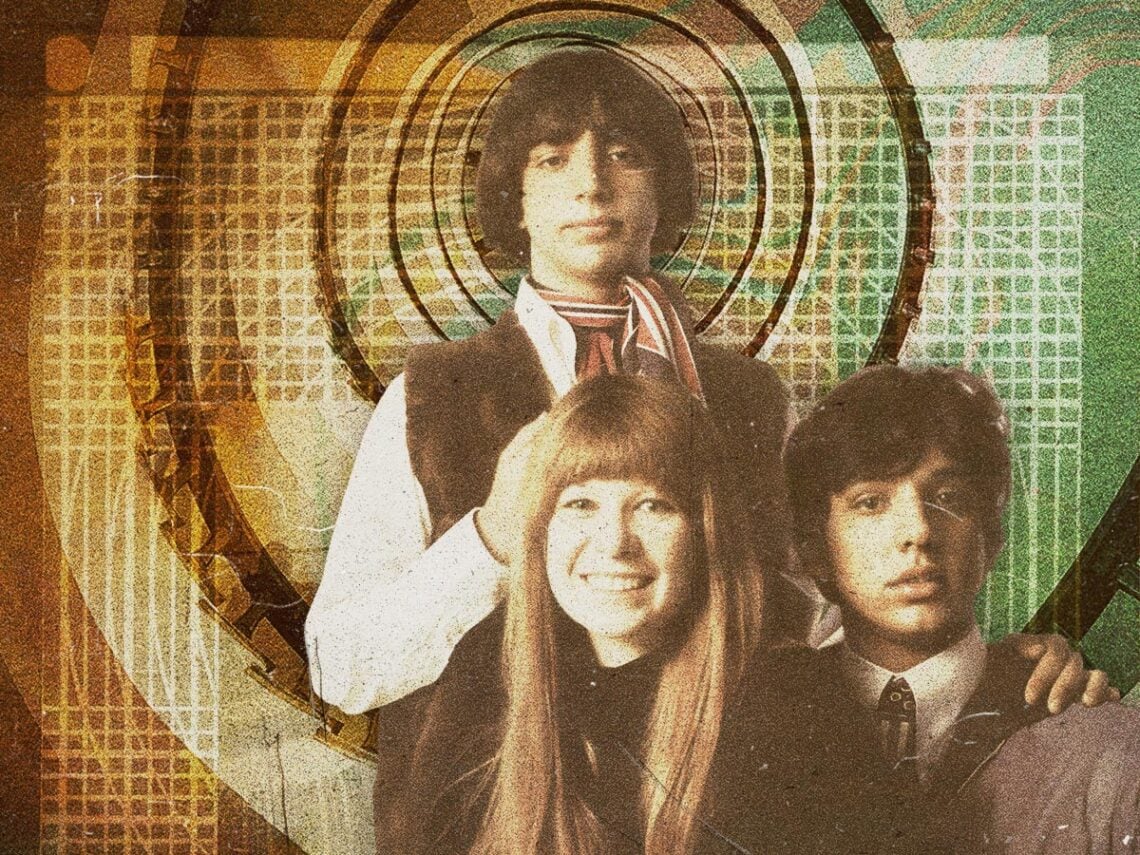
Os Mutantes were formed in 1966 by teenage brothers Arnaldo and Sergio Dias Baptista, alongside the former’s girlfriend, Rita Lee. They quickly rose to be hailed as Brazil’s most boundary-pushing band, brought into the inner circle of the avant-garde Tropicália movement by co-founder Gilberto Gil. Being in the right place at the right time, this occurred via a connection to composer Rogério Duprat in 1967. Notably, after that seminal meeting, Os Mutantes became something of a backing group for the country’s radical scene, performing and recording with a host of artists during this period, including Gil and the movement’s other founder, Caetano Veloso.
However, the military government arrested and exiled Gil and Veloso in early 1969. With the band also threatened by the powers that be at the time and LSD starting to take its toll, their career would begin to take a different trajectory, with them flirting with progressive rock at the dawn of the next decade. Fallouts and a changing cast of members would then colour their careers. Still, despite this, the group mostly maintained a quality that many fail to do in the face of such odds. 1970’s third album, A Divina Comédia ou Ando Meio Desligado, is well worth anyone’s time.
Whilst there was still much brilliance to come, the album that stands out in the oeuvre of Os Mutantes is their debut. Musically and symbolically, it contains a pulp that should be deemed right up there with the works of other ‘Western’ musicians hailed as being at the forefront of the era’s boundary-pushing, taboo-busting spirit.
Whilst the record could be dismissed on first listen as just another kooky offering from the 1960s, part of its brilliance is that its weirdness had an objective. Here, the surreal and bizarre were weaponised to rebel against the country’s conservative and repressive political regime. Duly, this means that some of the album’s wilder cuts, such as ‘A Minha Menina’ and ‘Adeus, Maria Fulô’, are not just symptomatic of the time’s contrived artistic ridiculousness. There’s authentic power and genius at play. It puts a lot of the sounds of Haight-Ashbury to shame. It makes you wonder if ‘Western’ psychedelia was truly politicised, it might have had better longevity, but alas, they weren’t staring egregious political repression in the face.
“When we were kids we had to face in Brazil a lot of serious repression and we were under severe military government—a lot of people being killed, a lot of people tortured; it was heavy, very heavy. And nasty,” Sergio Dias explained to Impose. “But when you are a kid you have this thing, this war inside, this delight of going against whoever says that you can’t. And we were damn lucky that they didn’t arrest us or torture us or do anything like that because we probably would have lost faith.”
“Our whole thing was playing pranks and defying authority, but you had to be careful in those days because friends were disappearing or being forced into exile, and the cops would often come in and bust up our shows,” Lee said elsewhere. “We had to be creative but evasive to avoid the repression, and so we’d tell each other, ‘Let’s make this song complicated so that nobody understands it’.” There’s no wonder, then, that Os Mutantes enjoyed winding up audiences so much during this period and why a certain Kurt Cobain found solace in the record and their work.

Another remarkable aspect of Os Mutantes is the trio’s age when it was released. Arnaldo was 20, and his younger brother was 18, with Lee the oldest at just 21. This seems an unfeasible reality when listening to the album’s majesty, from the songwriting to experimental studio techniques, not to mention the rugged depth of the Baptista’s vocals.
Take the enchanting lullaby of track three, ‘O Relógio’. This is as moving and innovative as anything on The Velvet Underground & Nico, an album largely deemed one of the most groundbreaking of the period. For instance, the way the frenzied middle section gives way to the central harp-driven part as if segueing from a nightmare to a dream, is excellent. The vocal melody is also a thing of beauty. Lee sounds like a less tone-deaf Nico.
There’s a story that says the band were greatly impacted by the reverse delay on The Beatles’ ‘Tomorrow Never Knows’ from Revolver. Yet, I doubt any of them could have foreseen just how pioneering their debut would be, with it doing things that even the Liverpool band would have been proud of at the zenith of their LSD-driven days. Just examining it on a less forensic level, the decision to bridge Anglopop with the native sounds of their country was a masterstroke. Because of this, the likes of ‘Adeus, Maria Fulô’, ‘Ave Ghenis Khan’ and ‘Bat Macumba’, are some of the most inherently psychedelic pieces of the era.
Augmenting this sentiment is that the unconventional refinement of Os Mutantes was achieved by almost pure authenticity, being a young rebel in Brazil during a particularly dark time. Whilst The Beatles and Jimi Hendrix might have wildly influenced them, what they did with the raw materials has allowed this record to withstand the test of time. This is a large part of why they are so revered.
Interestingly, the album’s opener, ‘Panis et Circensis’, is perhaps the most complete piece Os Mutantes ever released, with it a pure statement of intent. A whimsical critique of Brazil’s military rule, with the title translating to “bread and circuses” (although misspelt), it exhibits the band’s perceptiveness, with them criticising the government to a military fanfare-like melody. This is them to a tee. Musical brilliance fused with an ironic, sneering form of radicalism that stands out within the country’s Tropicália movement.
In a testament to the group, the song even became the Tropicália movement’s sonic manifesto, lending its name to the 1968 compilation Tropicália: ou Panis et Circensis, which featured cuts from Veloso and Gil. For three young adults, that’s not bad going.
