


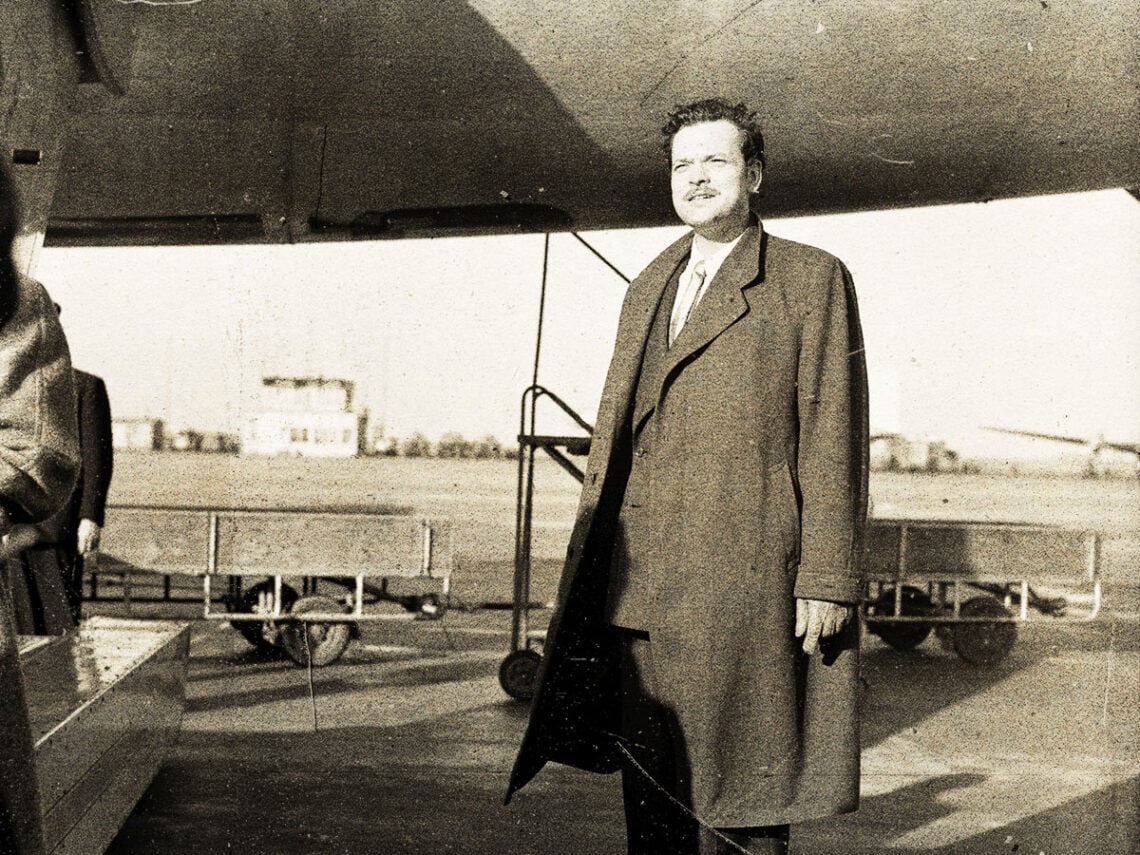
How “the greatest cameraman who ever lived” helped Orson Welles forge a legacy

Orson Welles, a titan of 20th-century cinema, carved a niche for himself through audacity, innovation, and an unparalleled vision. From his theatrical exploits to his legendary radio broadcasts, Welles consistently defied convention. Yet, it was his 1941 magnum opus, Citizen Kane, that marked his everlasting imprint on film history.
While a testament to Welles’ genius, this cinematic triumph owes much of its visual brilliance to another virtuoso, a figure whom Welles lauded as instrumental to his directorial journey.
In a candid conversation on The Dick Cavett Show in 1970, Welles delved into the creative process behind Citizen Kane and how he embarked on his cinematic journey and made such a masterpiece at just 26 years old. Asked by the host, Dick Cavett, how he achieved such groundbreaking filmmaking feats at that young an age, Welles responded: “Well, you know, from just sheer dumbness. You’re sure it’s going to be good, to be great – it’s just ignorance.”
As a director who emerged when cinema was already an established medium and dominated chiefly by much older filmmakers, it has always been important to Welles to democratise the movie-making process. “The whole ‘bag’ of movies can be learned in about a day and a half. I kid you not,” he affirmed. However, there was a guiding force: a genius who collaborated with Welles on his debut venture and helped instil his sense of creative innovation.
Enter Greg Toland, the cinematographer extraordinaire. With credits on cinematic milestones such as The Grapes of Wrath, The Long Voyage Home, and The Best Years of Our Lives, Toland was renowned for his fearless experimentation and vision. In Citizen Kane, he innovatively utilised deep focus, a technique where the foreground and background remained crystal-clear.
The film also showcased his penchant for dramatic low-angle shots, offering audiences a fresh perspective and amplifying narrative depth. Yet, it wasn’t just about technique for Toland; it was about harnessing these methods to propel the story forward, providing Citizen Kane with its iconic aesthetic and ensuring its enduring legacy as an indelible masterpiece.
After reflecting on Toland’s influence, Welles continued, “I had in my first picture, Citizen Kane, the greatest cameraman who ever lived: it was Greg Toland.” Touching on how the cinematographer was drawn to his naivety and directorial greenness, Welles explained, “He came to my office and said, ‘I want to work on your picture because you’ve never made a picture. And you don’t know what cannot be done.’ There’s nothing to it. He gave me those ‘day and a half’ lessons.”
As Citizen Kane stands as a beacon of cinematic innovation, it’s not merely a tribute to the genius of Welles but also a celebration of Toland’s trailblazing artistry. Their collaborative spirit, founded on mutual respect and the desire to push boundaries, encapsulated a golden era of filmmaking.
Today, as cinephiles revere Welles for his monumental contributions, it’s essential to toast Toland, the “greatest cameraman who ever lived,” the unsung hero behind Welles’ luminary vision.
