


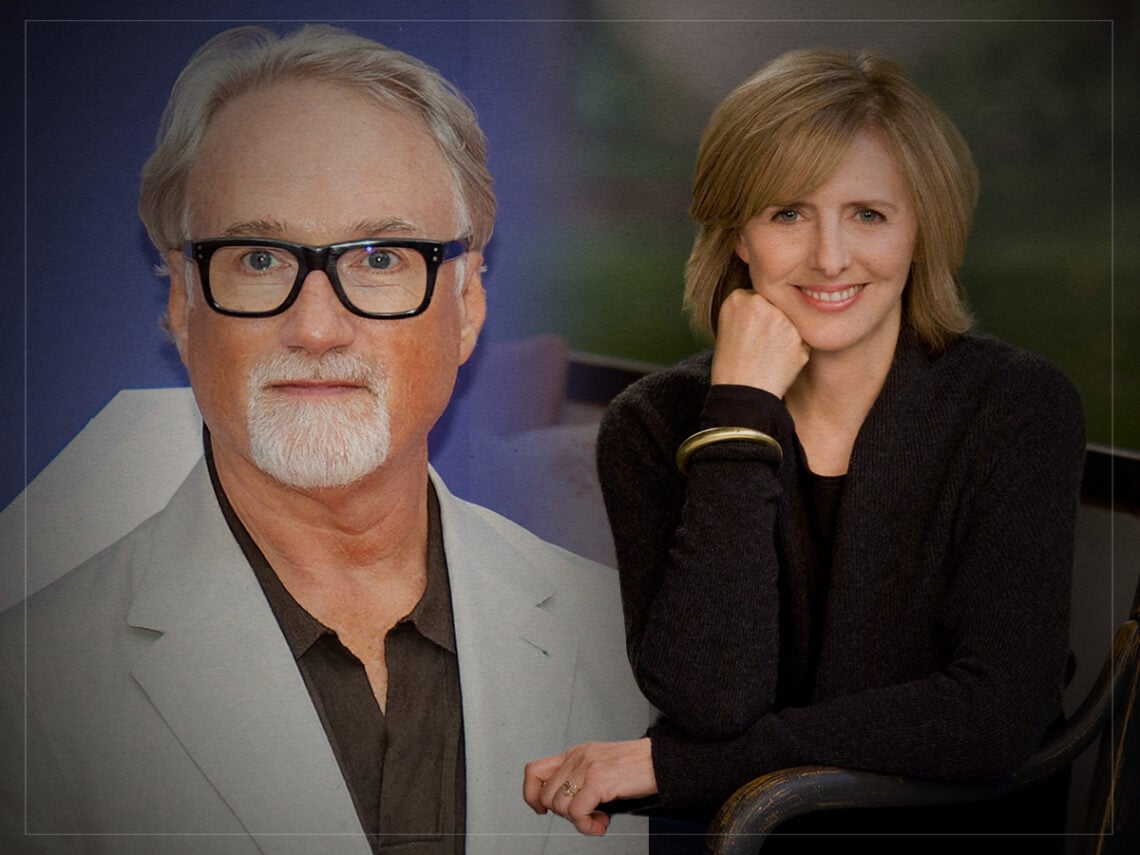
The only thing Nancy Meyers and David Fincher have in common: “She’s kind of known for that”

If you ask any cinephile worth their salt, they’ll name David Fincher as one of the greatest filmmakers of all time, who makes very serious movies for very serious people.
A meticulous stickler for detail with tons of technical knowledge and a knack for crafting tension, many of his films have appeared in lists celebrating the finest achievements in all of cinema, and far on the absolute opposite end of the spectrum of taut films is Nancy Meyers.
After breaking into Hollywood as a scriptwriter on projects like Private Benjamin and the Father of the Bride duology, Meyers got to direct for the first time in 1998, a remake of The Parent Trap, and it was off to the races from there. Since her collaboration with Lindsay Lohan, Meyer went on to establish herself as one of the most commercially viable directors on Hollywood’s payroll, wearing many hats of romcom queen, an Oscar nominee, and an all-too-rare female success story behind the camera, marking her just as iconic as Fincher, albeit for very different reasons.
Hence, nobody in their right minds would put the guy who made Fight Club up against the woman who made The Intern, and if that’s the case, then Cameron Diaz must have lost it because, during a roundtable discussion on Meyer’s work for Vulture, Diaz, who worked with the director on The Holiday, revealed an unlikely link between the two.
“Nancy likes to do a lot of takes,” she revealed, “She’s kind of known for that. That’s all day long. Her coming over and being, ‘I like that. Just a little bit more like this, and let me see it again’. So you go in there, and you try to do it exactly the same, up to the moment that she wants it different. And then you try to give her that difference, and then she’ll come back like, ‘That was great. So do it exactly that way again’.”
Anyone who knows anything about Fincher’s work can appreciate why this anecdote is relevant. He is an absolute madman when it comes to shooting scenes multiple times, such that, during the production of Zodiac, some scenes would take up to 90 different attempts before he was happy. Jake Gyllenhaal got so fed up with this that he vowed never to work with Fincher again, and that’s not even the worst example of his meticulousness.
On the other end, Meyer is just as dedicated to detail as her more celebrated colleague, which raises the question of why she’s not held up as one of the finest directors of her time. Unfortunately, the answer is a grimly familiar one, which is that Fincher’s movies deal with more traditionally masculine topics of cops, serial killers, businessmen, whereas Meyer focuses on more light-hearted, traditionally female-oriented stories.
As has been the case for decades, this sort of fare is deemed ‘lesser’ than its more ‘serious’ contemporaries, as the world we live in sees it more impressive to invest time and effort into a biopic about Mark Zuckerberg than a sex comedy.
If Meyer had chosen to focus her career on making the same kind of movies as Fincher, there’s every chance we could be discussing them in the same breath, but, as it stands, their numerous similarities remain hidden below the surface of misogyny.
