


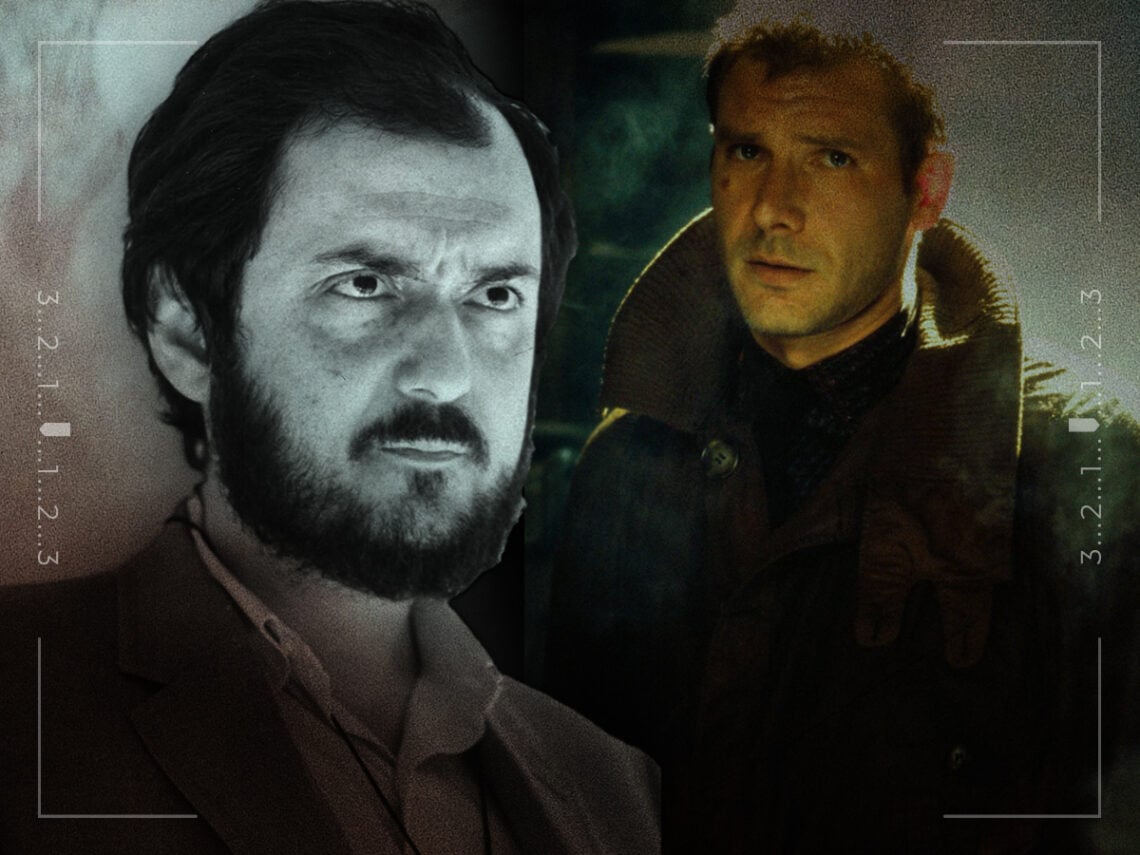
The one and only reason Stanley Kubrick loathed ‘Blade Runner’: “Why do they think it matters?”

With 2001: A Space Odyssey, Stanley Kubrick directed one of the greatest and most influential sci-fi movies in history. One of the many filmmakers he inspired was Ridley Scott, who went one better and helmed two of the greatest and most influential sci-fi movies ever made in Alien and Blade Runner.
There’s barely an auteur in the business who hasn’t cited Kubrick as one of their most important touchstones, and he even did Scott a favour in his hour of need. Even though the two had never spoken before, the latter reached out and asked his idol for a favour when his dystopian masterpiece was in post-production.
After the studio had demanded that Blade Runner end on a note more definitive than Harrison Ford’s Rick Deckard spotting an origami unicorn to create a sense of ambiguity. Scott’s biggest issue was that he’d already shot the thing, and after settling on Deckard and Sean Young’s Rachael making their getaway, he got more than he bargained for.
Knowing that Kubrick had pulled the highly Kubrickian trick of capturing a ludicrous amount of helicopter footage for The Shining, Scott asked if he could borrow the unused reels. In another classic Kubrickian move, he complied by shipping over thousands of feet of film that ran for around 17 hours.
Ironically, the Gladiator and American Gangster architect removed it from his director’s cut, but not many directors can say they were able to convince Kubrick to do them a solid. Naturally, he was curious to see what Blade Runner looked like in its final form, and he wasn’t exactly overwhelmed by the end result.
“About AI, Stanley once said a really interesting thing to me, which is: he hated Blade Runner,” Sarah Maitland revealed, the writer who briefly worked with Kubrick on his long-gestating sci-fi project in the mid-1990s. “And the reason why he hated Blade Runner was because he said that more than half the film was taken up trying to find out whether the woman is a replicant or not.”
“He kept saying, ‘Well, if they can’t tell, why do they think it matters? There is nothing in that film that suggests for one second why it should matter,” she explained. According to Kubrick, it was “seriously undermining of progress to suggest that it mattered so much; that all lives had to be given over to finding out whether people were real or not real.”
The innovator and occasional tyrant “thought that was preposterous because there wasn’t a difference” and that “what we make through intelligence needn’t be other than what we make through sex, through reproduction.” Not to try and say that one of the best to ever wield the megaphone, and a filmmaker who helped push cinema forward by several leaps and bounds, missed the point of Blade Runner, but didn’t he kind of miss the point of Blade Runner?
That’s Kubrick in a nutshell, though; he absolutely adored White Men Can’t Jump, but all he needed was one reason to decide that he despised one of the finest features of all time.
