


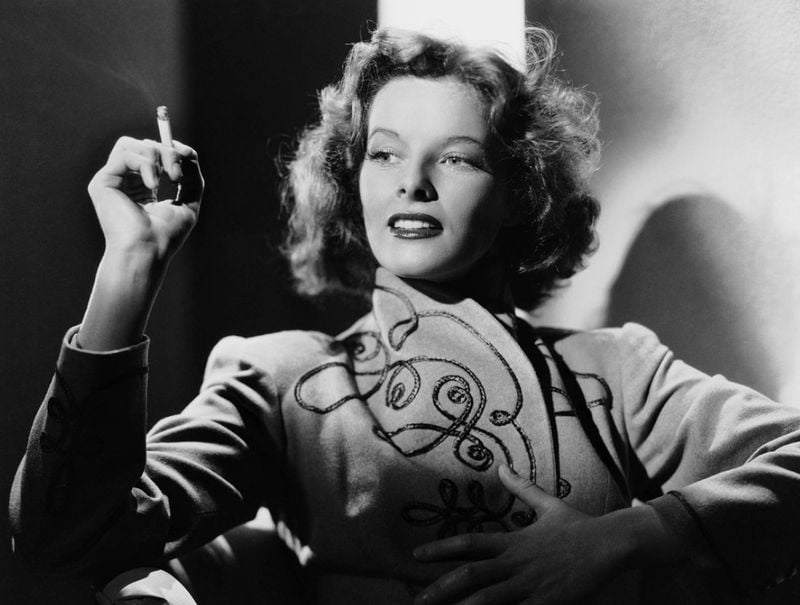
The only movie Katharine Hepburn was fired from: “I thought of suing them”

If Katharine Hepburn signed on to make a movie, most of the people involved would have done everything in their power to make sure she stayed on the project. She still holds the record for most Academy Awards for acting (she won four) and is still regarded as one of the greatest actors of all time. Her career spanned six decades, from the 1930s to the 1990s, and most filmmakers would have cut off an arm in order to make a movie with her.
It wasn’t as if she had a terrible reputation, either. Sure, she was known for being a bit of a taskmaster. She was determined, forthright, and sometimes argumentative, but she was always committed to her work above all else. She wasn’t the kind of actor who would show up late, throw a tantrum over the size of her dressing room, or demand four-hour lunches. Her work ethic was the stuff of legend.
However, in the 1970s, long before she retired and even before she won her final Oscar, Hepburn was booted off a film that she’d spent months working on. George Cukor, the director who made 10 movies with her, including The Philadelphia Story, gave her a copy of Graham Greene’s 1969 novel Travels with My Aunt. It follows a retired bank manager who travels across Europe with his profoundly unconventional Aunt Augusta, getting caught up in criminal activity along the way.
Hepburn read it several times before deciding it was a good fit. Eventually, she ended up writing most of the script, too. It was the perfect project for her. She was a famous eccentric. She and Cukor had worked nearly a dozen times together over the course of four decades. She was invested enough in the story to put her own time and creativity into the script phase. What could go wrong?
What went wrong was the head of MGM, James T Aubrey Jr. He didn’t like the screenplay Hepburn had written, and he thought she was too old to play Aunt Augusta. When he took her off the project, he said it was because she refused to turn up to work, which was news to Hepburn. She had, after all, been working on the script for months, and the film hadn’t even gone into production.
“I would never refuse to work ten days before a picture was scheduled to start,” she fumed. “I would consider that an outrage.”
“I thought of suing them because I don’t feel things like that should be allowed to happen. The script was practically all mine. Cut to hash, but practically all mine.” In the end, however, she decided against taking legal action. She claimed that she had spent sixteen hours a day on the script for eight months and had received no money for her efforts. She didn’t even receive a writing credit because she wasn’t a member of the Writer’s Guild of America.
In the end, though, the thing that irked her most was Aubrey’s spelling. “The only thing that he did that really offended me was to write me a letter to KathErine,” she said. “I thought the least he could do when he fired me was to spell my name right.”
It was Maggie Smith who got the part of Augusta when all was said and done, and she even earned an Oscar nomination for it. But it was probably in Hepburn’s best interest that she didn’t win the role. The film earned tepid reviews and has not gone down in history as one of Smith’s or Cukor’s most memorable works. It’s telling the official trailer for the film featured footage from several of the director’s films with Hepburn.
