


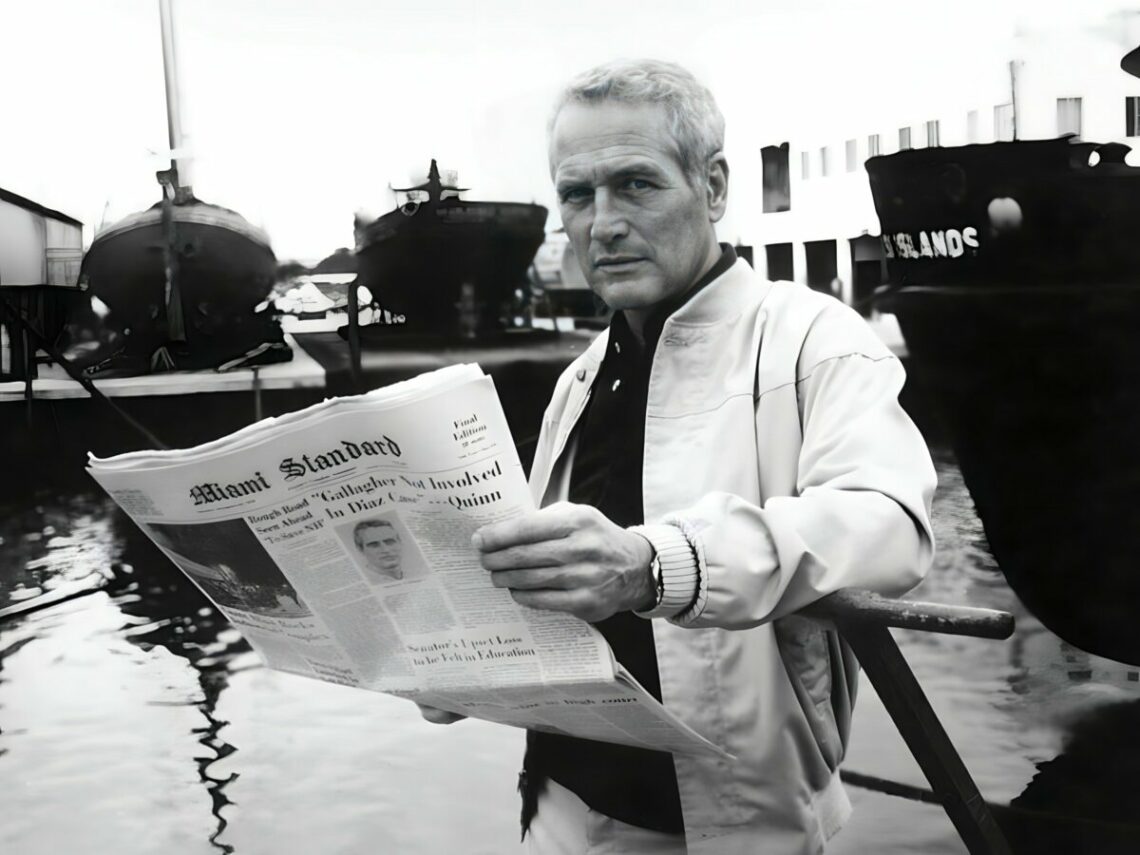
The only director who “intimidated” Paul Newman: “One feels uneasiness around genius”

One of the worst things an actor can do is let a director know they’re feeling intimidated, especially if the filmmaker in question has a reputation for ruling their set with an iron fist. Paul Newman was hardly shy and retiring, but even he was trepidatious in the face of an all-time great.
If anything, it’s an impressive and unique distinction to hold. Newman wasn’t only one of his era’s finest actors, biggest stars, and most bankable draws, but he was also an experienced director and producer in his own right, who’d spent most of his career working alongside the best of the best on both sides of the camera.
He’d even managed to get along with the infamous Otto Preminger, despite calling him a “fascist asshole,” and he stood his ground against the often-overbearing Alfred Hitchcock. Arthur Penn, Robert Rossen, Sidney Lumet, Martin Scorsese, James Ivory, Robert Altman, and Sydney Pollack were all big personalities, too, but Newman didn’t bow down to any of them.
That was understandable, because he was Paul Newman. In some cases, it was the other way around, and directors tiptoed their way around the star, knowing how outspoken he could be when he disagreed with anything they had to say. When he crossed paths with John Huston, though, it was love at first sight.
They collaborated twice in quick succession under very different circumstances on 1972’s western dramedy The Life and Times of Judge Roy Bean and the following year’s espionage thriller The Mackintosh Man, but the mutual appreciation was palpable from the start, with Newman describing Huston as “mystical, magical, something undefinable.”
Those feelings were reciprocated, with the director saying that he could “find no flaw, no fault in him, as an actor or as a man.” Based on how highly they spoke of each other, it’s easy to imagine that Newman saw them as equals, especially in the early ’70s when their careers were heading in opposite directions.
That wasn’t the case, with the blue-eyed bastion of cinematic excellence confessing that he was overawed in Huston’s presence. “One always feels a certain sense of uneasiness around a man of genius,” he said. “I was intimidated.” Michael Caine is also one of the best actors of Newman’s generation, and he literally compared him to a deity, so it’s not a shock to find out he wasn’t alone in holding him on a higher plane.
It didn’t matter what Newman had achieved or how he was viewed within the industry; Huston’s reputation preceded him and then some. Again, that’s fair when he won two Academy Awards, was nominated 14 times, won a trio of Golden Globes, and helmed some of the greatest movies ever made, and inspired everyone from Steven Spielberg and Martin Scorsese to Clint Eastwood and Paul Thomas Anderson.
Newman was a big deal, and he knew he was a big deal, but when he was confronted with a “genius” like Huston, he didn’t see them as peers, regardless of how much they enjoyed each other’s company.
