


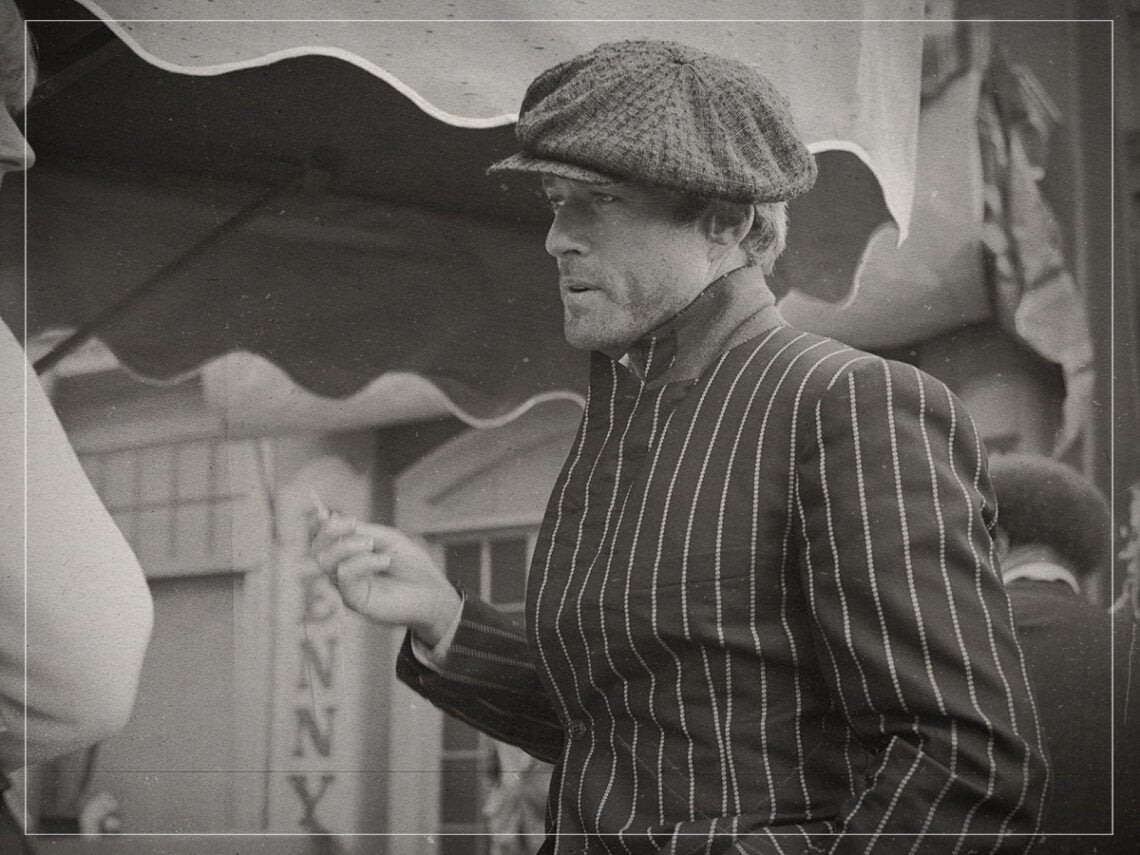
The one thing Robert Redford hated about acting: “It’s been a frustration all his life”

In Hollywood, there is often an unwritten distinction between different kinds of actors. It’s the kind of imaginary line drawn by critics, fans, and even some people in the industry that acts as shorthand for describing the various roles on offer for actors. However, while some stars fall neatly on either side of the line, others are much more challenging to categorise, and this can become a frustration for these stars.
After all, this unspoken perception can dramatically affect the kinds of parts actors are considered for – and it’s a limitation Robert Redford hated for his entire career.
When Redford first burst into the public consciousness with 1968’s Butch Cassidy and the Sundance Kid, his startling good looks and rugged charisma marked him out as the next big leading man in Hollywood. He soon became one of the most talented A-list stars in the game, having played roles in movies like The Sting, All The President’s Men, and Three Days of the Condor. However, over the years, in the eyes of many cinemagoers, Redford became synonymous with one particular kind of role: the romantic lead. In films like Barefoot in the Park, The Way We Were, Out of Africa, Havana and Legal Eagles, Redford established himself as the sensitive yet strong lead that all women wanted, and all men wanted to be.
There was only one problem with this scenario: Redford thought of himself as a character actor and always bristled that his good looks tended to overshadow his acting abilities in specific roles. In 1990, an agitated Redford told Deseret News, “I’ve always felt that almost every part I’ve played has been a character part. I mean, I look at it that way. I can’t help how I look or how I seem to people.”
Redford’s good friend and close collaborator Sydney Pollack agreed with him, pointing out how the handsome young actor didn’t start out playing parts that traded on his good looks. “He began by playing nut cases – psychotics, Nazis – and that’s how we all heard about him in New York, this terrific new character actor,” revealed Pollack. “Then he became this kind of romantic icon, if you will.”
But what exactly is a “character actor”? While there’s no official definition, the term generally refers to actors who play eccentric, unusual, or distinctive roles. These are often portrayed by chameleonic performers capable of inhabiting a wide range of personalities. In contrast, leading roles are typically associated with more traditionally handsome, less unconventional actors whose parts are less focused on transformation. However, whether this distinction holds true in practice has long been a subject of debate.
Regardless, Pollack—who directed Redford in seven movies—theorised that he has always been a character actor at his core, but his undeniable good looks meant Hollywood would forever try to fit him into the leading man mould. “It’s been a frustration for him all of his life, in a way,” he mused.
In truth, Redford is far from the only leading man who feels like he is cursed with a photogenic face. Johnny Depp, George Clooney, and Brad Pitt have spent large portions of their careers doing everything they can to bury their natural good looks under makeup, wacky costumes, dirty hair, and strange moustaches/beards, simply because they want to be taken more seriously as actors.
It’s all very strange, too, because if you think about it, there really shouldn’t be any reason that a good-looking person couldn’t play a “character” role if they have the acting chops. Similarly, there’s never been anything stopping someone classically viewed as a character actor – Dustin Hoffman, Paul Giamatti, Gary Oldman – from taking lead roles.
In the end, the leading man/character actor divide is probably given more weight in Hollywood than it should be afforded, so it’s no wonder it frustrated Redford so much.
