


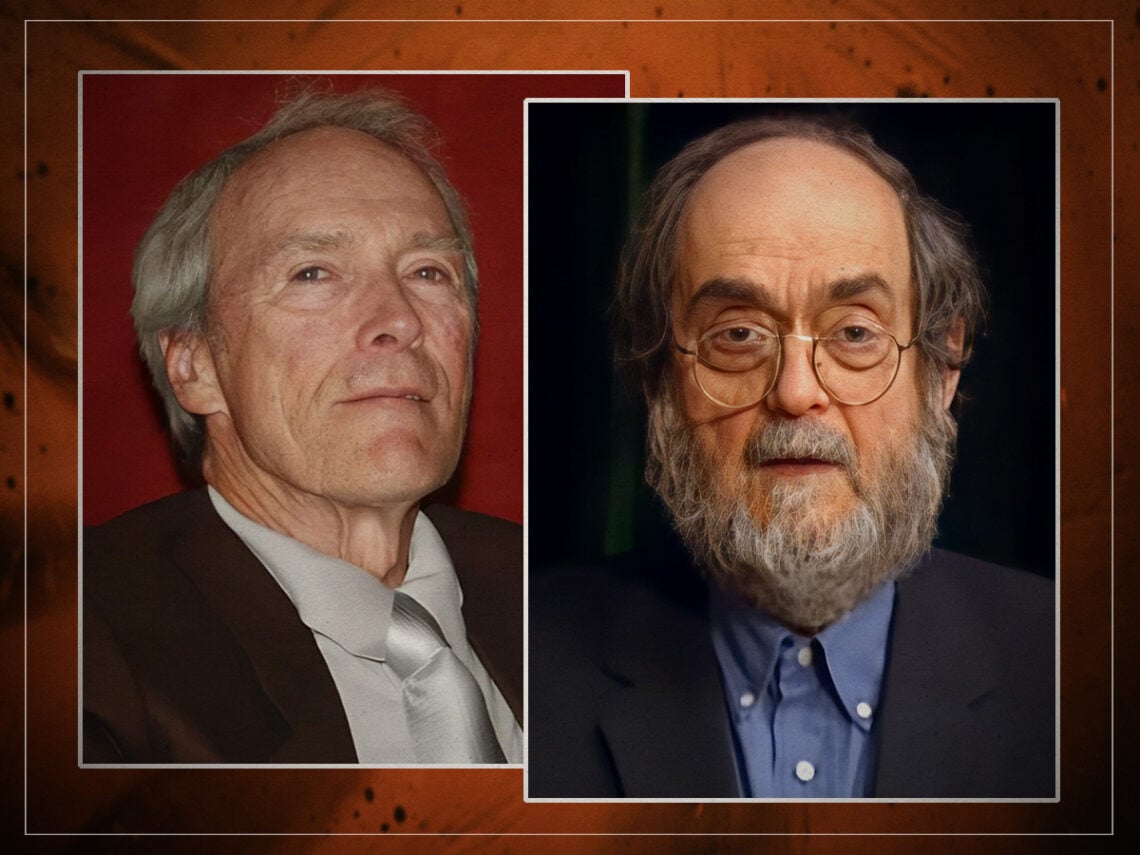
The one thing Clint Eastwood always hated about Stanley Kubrick: “Well, what the hell”

Stanley Kubrick and Clint Eastwood were two of the industry’s most famous directors who spent decades working in the industry at the same time, which is about the only thing they have in common.
The former was the studious, cerebral, and painstaking auteur who developed projects for years, ruled his set with an iron fist, and quickly became known for his attention to detail, technological innovations, and constant desire to achieve the closest thing to cinematic perfection that he could manage.
That’s not to suggest Eastwood didn’t tick some of those boxes, but he was an entirely different kind of filmmaker. Unfussy, efficient, and always delivering his productions on time and on budget, he weaved through multiple genres and could crank out several films in the time it took Kubrick to make one.
Eastwood’s feature-length directorial debut Play Misty for Me and Kubrick’s A Clockwork Orange were released weeks apart in late 1971, but by the time the latter’s follow-up, Barry Lyndon, premiered in December 1975, Eastwood had already helmed High Plains Drifter, Breezy, and The Eiger Sanction, as well as notching three acting-only gigs.
By the time The Shining landed on the big screen in May 1980, Eastwood had added The Outlaw Josey Wales, The Gauntlet, and Bronco Billy to his behind-the-camera collection, with the acting superstar and now-established director constantly making hay while the sun was shining.
Obviously, quantity doesn’t equal quality, and it’s fair to say that Barry Lyndon and The Shining were better than almost anything Eastwood was putting out, although Josey Wales is a stone-cold classic. Kubrick’s chilling psychological horror is one of the genre’s all-time greats, even if Stephen King isn’t the only famous name who hated it.
Eastwood wasn’t won over by Jack Nicholson’s descent into madness at the Overlook Hotel, openly savaging The Shining for being marketed as the scariest movie ever made when he didn’t think it was remotely qualified to carry the branding. That wasn’t his only issue with Kubrick’s oeuvre, though, and the bugbear makes perfect sense to anyone who knows the way he operates.
Shooting dozens upon dozens of takes is Eastwood’s idea of a nightmare, with the fast-paced director preferring to do two at the absolute maximum. After catching wind of Kubrick filming the same scene over 50 times in The Shining, he ranted to Paul Nelson about how detrimental it can be to the cast.
“I never saw so many good actors, really good performers you’ve seen in many, many films, all these people who are old pros, come off so stiff,” he remarked of The Shining. “I have to assume that they were just beaten down by the whole overall thing.”
Eastwood even suggested that Kubrick’s penchant for running his ensemble into the ground with a ludicrous number of takes was a financially motivated decision driven by his theory that the brains behind 2001: A Space Odyssey was getting paid extra for falling behind.
“I think he was on overage there, on salary, and he was probably figuring, ‘Well, what the hell, I’m making a fortune on this one,'” he mused. “Probably, if you went back and assembled the film with all the first and second takes, the actors would be tremendous. They’d probably all have a lot more energy.”
That didn’t sound like Kubrick, but it was the best Eastwood could come up with to explain his need to use an unnecessary amount of celluloid.

Never Miss A Tale
The Far Out Clint Eastwood Newsletter
All the latest stories about Clint Eastwood from the independent voice of culture.
Straight to your inbox.