


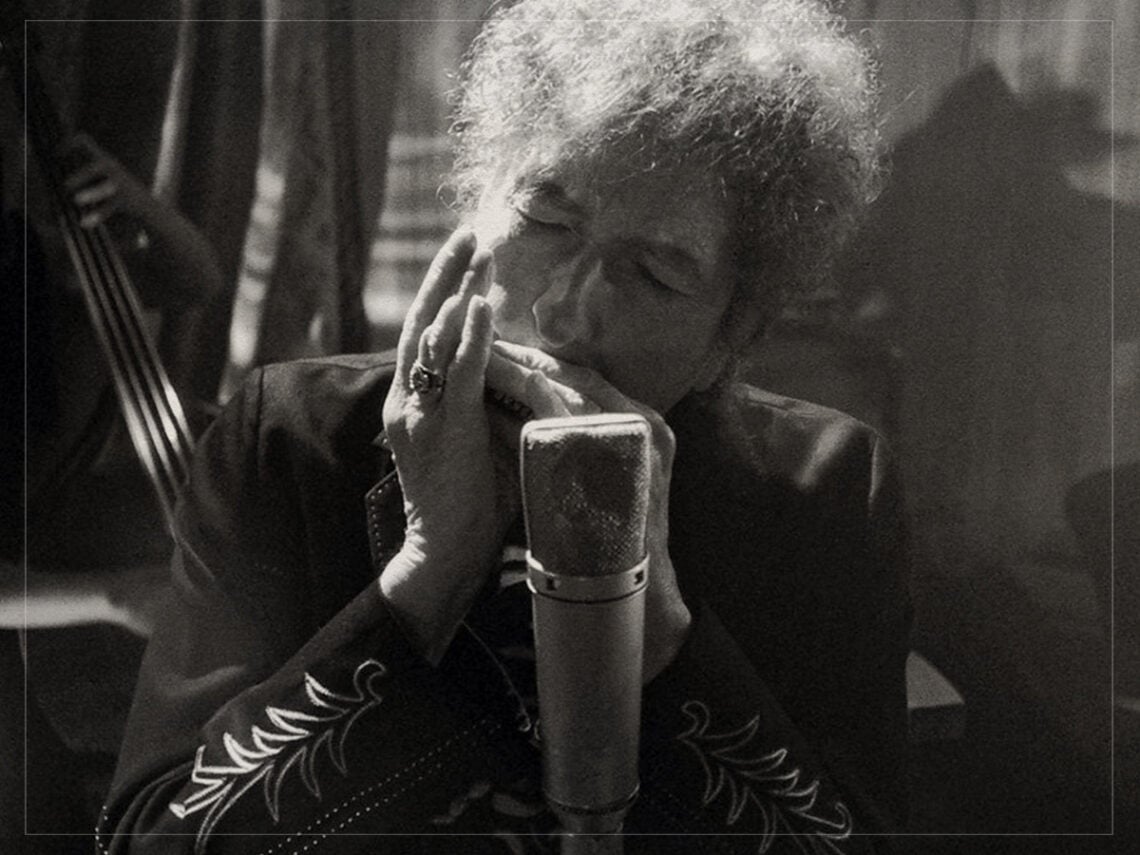
The one singer Bob Dylan knew all songwriters should hear: “Stuff that has been around for 100 years”

Any songwriter worth their salt usually has that one period where they think that Bob Dylan is one of the single greatest artists of all time.
While his voice has been hit or miss ever since his early days, Dylan was never going to pass up the opportunity to speak his mind every time he got up to the microphone. He had something to say about the greater problems with the world, but that voice that taught everyone about those problems wouldn’t have been able to get there without the folk heroes that came before him.
Because when you look at Dylan’s career, none of it would have happened were it not for Woody Guthrie. Guthrie was the one that first inspired everyone to rally against fascists through music, and even though Dylan was only doing what he was taught back in the day, some of the greatest tunes in the American Songbook didn’t necessarily have to come from people that were strictly political.
As he wrote in his song of the same name, Dylan contained multitudes, and a lot of that involved him thinking outside the box whenever homemade a new record. Everyone would have expected him to make the same kind of political material for the rest of his life, but there was no reason why he couldn’t take a chance and making a record as messy as Self Portrait or turn to religion and end up making gospel records that satisfied the kiddies once he reached the late 1970s.
The most important thing for him is for the public to not know where he was going, but at the end of the day, the song is what ruled over everything else. If he felt that he could bring something to one of his tunes by thinking outside of his wheelhouse, that was what he was going to do, but when growing up, any good tune could have been defined by what Stephen Foster was doing.
Years before the popular song was even a thought in people’s minds, Foster was laying down the blueprint for what people were supposed to do when they wrote a half-decent tune. A lot of them felt like standards years before they were adopted by the next generation, and while not all of them were the most complex tunes in the world, it was always the melody that stuck in Dylan’s brain whenever he measured his songs next to them.
Foster was long gone by the time that he picked up on what he was doing, but Dylan felt that anyone looking to get into songwriting needed to hear what he had to say, saying, “If you like someone’s work, the important thing is to be exposed to everything that person has been exposed to. Anyone who wants to be a songwriter should listen to as much folk music as they can, study the form and structure of stuff that has been around for 100 years. I go back to Stephen Foster.”


It’s not like Foster was the worst place to start, either. Considering all of the greatest songwriters that came before that idolised him, it wasn’t hard for someone like Don Henley to hear what Foster could do. ‘Desperado’ was practically a version of what Foster might have done, which probably explains why Dylan ended up gravitating towards a lot of what Eagles did when they hammered out their hits.
Not everyone needed to overtly copy Foster’s formula by any means, but if you look at the way a lot of the melodies are constructed, he was clearly going for something greater than the average pop song these days. He wanted tunes that would last forever, and considering how much Dylan’s tunes still resonate, he seemed to take every lesson Foster had to teach to heart.

Never Miss A Tale
The Far Out Bob Dylan Newsletter
All the latest stories about Bob Dylan from the independent voice of culture.
Straight to your inbox.