


Salamanca: A trip to one of Europe’s oldest universities

On an easy spring weekend, you will most likely find overjoyed families dressed smartly and with eyes beaming as they celebrate the graduation of a son, daughter, or relative at the University of Salamanca. This Spanish city, only two hours away from Madrid, might seem small and uneventful, but it is teeming with life.
Salamanca is home to one of the oldest universities in the world. To be more specific, it is the oldest university in the Hispanic world and the fourth oldest still in operation globally. It’s just a couple of ranks below the famous Oxford and Cambridge Universities. That is why students from across the country and even the world travel to attend it.
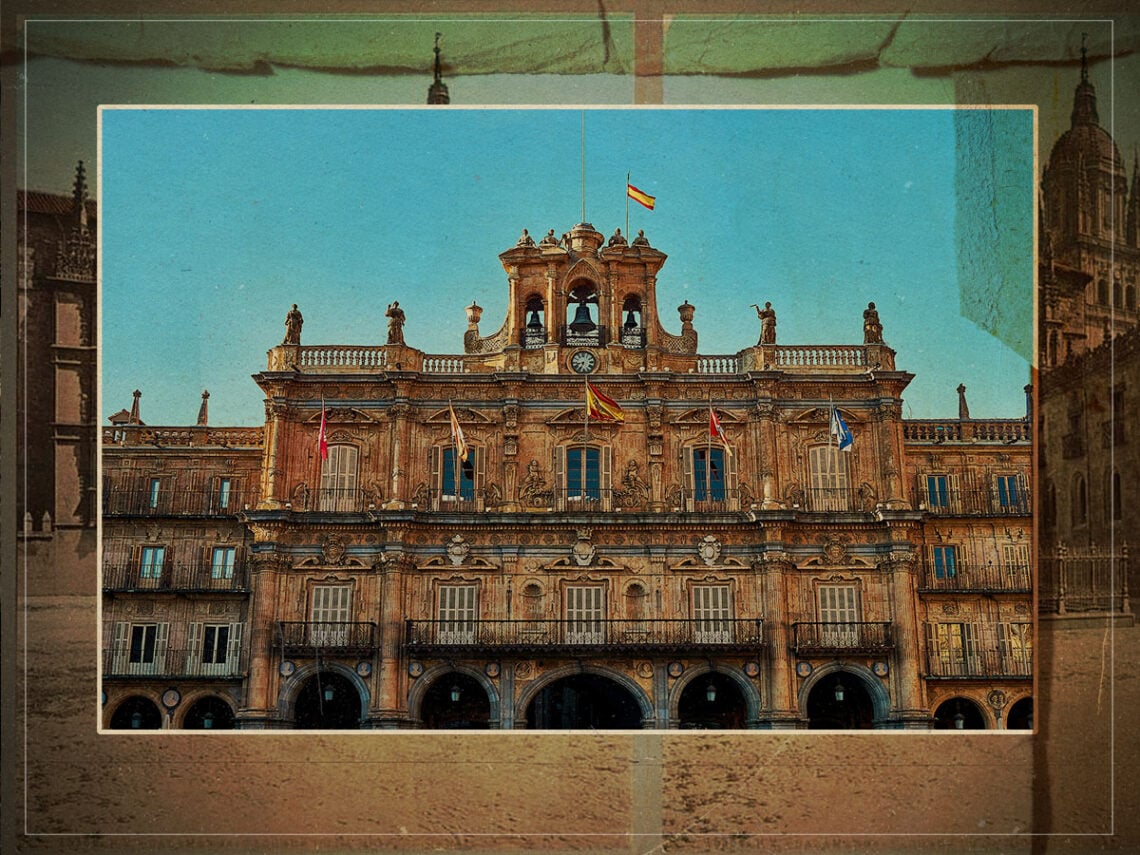
Salamanca is really one of those cities where everything revolves around the beating heart of the university campus. At golden hour, you can expect to see throngs of young people drinking in the main squares, surrounded by the champagne-coloured stone of the city’s century-old buildings washed with the last rays of sunshine. It’s a city with a truly warm atmosphere and, if you are staying in Madrid, makes for an excellent spot for a weekend road trip.
Founded in 1218 by one of the first kings of Spain, Alfonso IX, Salamanca’s university has nine teaching campuses that have spread to other nearby towns, with Salamanca being the primary headquarters. It is considered to be of medium size, with over 25,000 registered students. For reference, a large university, like Sapienza University in Rome, has 150,000 students. Although it’s not one of Spain’s more well-known cities, it nonetheless attracts many students from abroad, through the Erasmus scholarship or exchange programmes.
The sheer architectural beauty of the city, and most importantly, the university, originated in the 3rd century BC when it was conquered by the Carthaginians and then the Romans. This is why a mighty Roman bridge still stands, connecting two parts of the city across the River Tormes. In 2018, for the institution’s 800th anniversary, the university underwent major restorations, which involved employing 50 specialists undertaking a four-month cleaning process. Restoring the precious building was like building it all over again.
Since then, the city has been a canvas for the Gothic, Renaissance and Baroque movements. Outside of the Escuelas Mayores building, visitors flock to look at its facade, covered in a rich tapestry intricately carved with famous European leaders and mythological figures.
Like with many historic universities, Salamanca has several lore and myths that students swear by. For example, they must spot the famous frog hidden in the facade, as a failure to do so will mean failing to graduate. Other fascinating mysteries include the 18th-century hidden graffiti. In 1853, an architecture student from Madrid chiselled into the precious stone while on a field trip in the city. Only centuries later was the graffiti discovered and the culprit realised.
Other examples are slightly more gruesome. Centuries ago, legend has it that when a student successfully completed the demanding exam to earn a doctorate, it was cause for a city-wide celebration hosted by the student’s family, often including a bullfight. Following the event, tradition held that the student’s name would be inscribed on a city wall using the bull’s blood. Remarkably, much of this macabre graffiti can still be seen on buildings throughout the historic centre.
Overall, Salamanca is the perfect destination to soak up authentic Spanish culture and tradition. Aside from the university, the city is home to some superb hidden local restaurants where you can have a full meal of local tapas for under £20. The place feels like travelling back in time, to a simpler era. Old stationery and book shops line the high street, and children dress up for their holy communion in one of the old historic churches. All this is thanks to its ancient and well-preserved university that maintains the city’s centuries-old magical spirit.
