


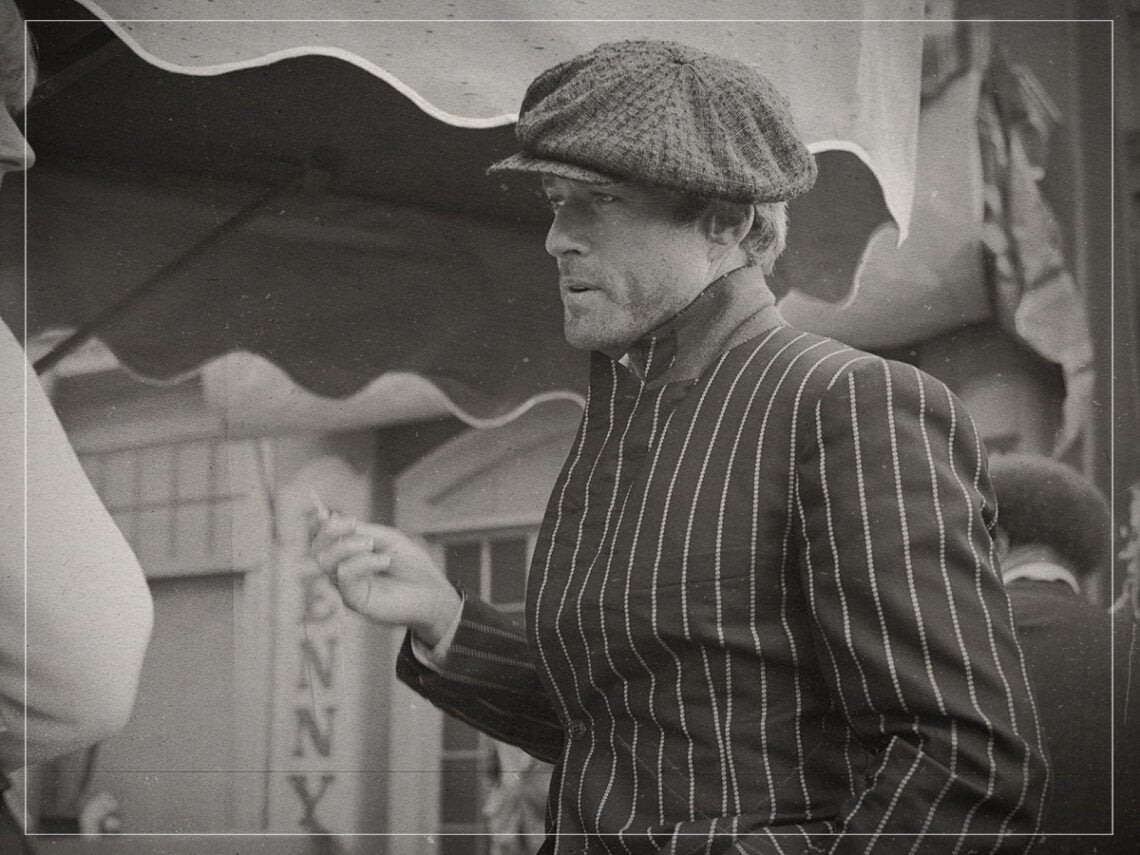
The actor Robert Redford always wanted to work with: “If his ego can handle it”

The list of actors who turn their hand to directing grows longer every year, and there’s no guarantee that a successful thespian will segue seamlessly behind the camera. That said, Robert Redford literally fared better than anyone else when he made his feature-length debut on the opposite side.
Despite his status as a ‘New Hollywood’ icon, a bankable leading man, a Hollywood A-lister, a heartthrob, and his involvement in several classic movies, Redford only landed one Academy Award nomination for his acting exploits, and going home empty-handed also meant he was the only person shortlisted for The Sting in a major category who didn’t take the stage to collect an Oscar.
However, he won a ‘Best Director’ prize for Ordinary People, which put him in rare company. At the time, he was only the third filmmaker in Oscars history to win for their first film and the first who’d made their name as an actor. In the years since, only Kevin Costner and Sam Mendes have replicated that achievement, illustrating just how impressive it was.
Actors-turned-directors are commonplace in the industry, but directors who also act are nowhere near as pronounced. Obviously, there are those who make a habit of popping up for cameo appearances in their own work, like Alfred Hitchcock and M Night Shyamalan, but lifelong auteurs who simultaneously carved out a sideline as performers have always been thin on the ground.
Among the most famous is Sydney Pollack, who helmed 21 features, seven of which starred Redford. Outside of that, he played a number of roles in productions he didn’t direct, including Stanley Kubrick’s Eyes Wide Shut, Robert Altman’s The Player, Frank Darabont’s The Majestic, and Tony Gilroy’s Michael Clayton.
A decades-long creative partnership and close friendship that encompassed This Property Is Condemned, Jeremiah Johnson, The Way We Were, Three Days of the Condor, The Electric Horseman, Out of Africa, and Havana, Redford and Pollack were never too far from each other’s orbit. And yet, despite the former directing nine movies of his own, Pollack wasn’t in any of them.
When asked if he wanted that to change, Redford answered in the affirmative but also with an addendum. “Sure,” he told Deseret. “If his ego can handle it.” Evidently, his ego could not, which is probably fair. Pollack might have been an experienced actor as well as an accomplished director, but putting the shoe on the other foot would be an understatement to describe the prospect of being directed by Redford.
They’d developed an understanding across their septet of pictures, always with Redford in front of the camera and Pollack behind it. Upending that and switching places might have been too jarring, which could explain why they never mixed it up despite the actor’s insistence that he’d love to.
