


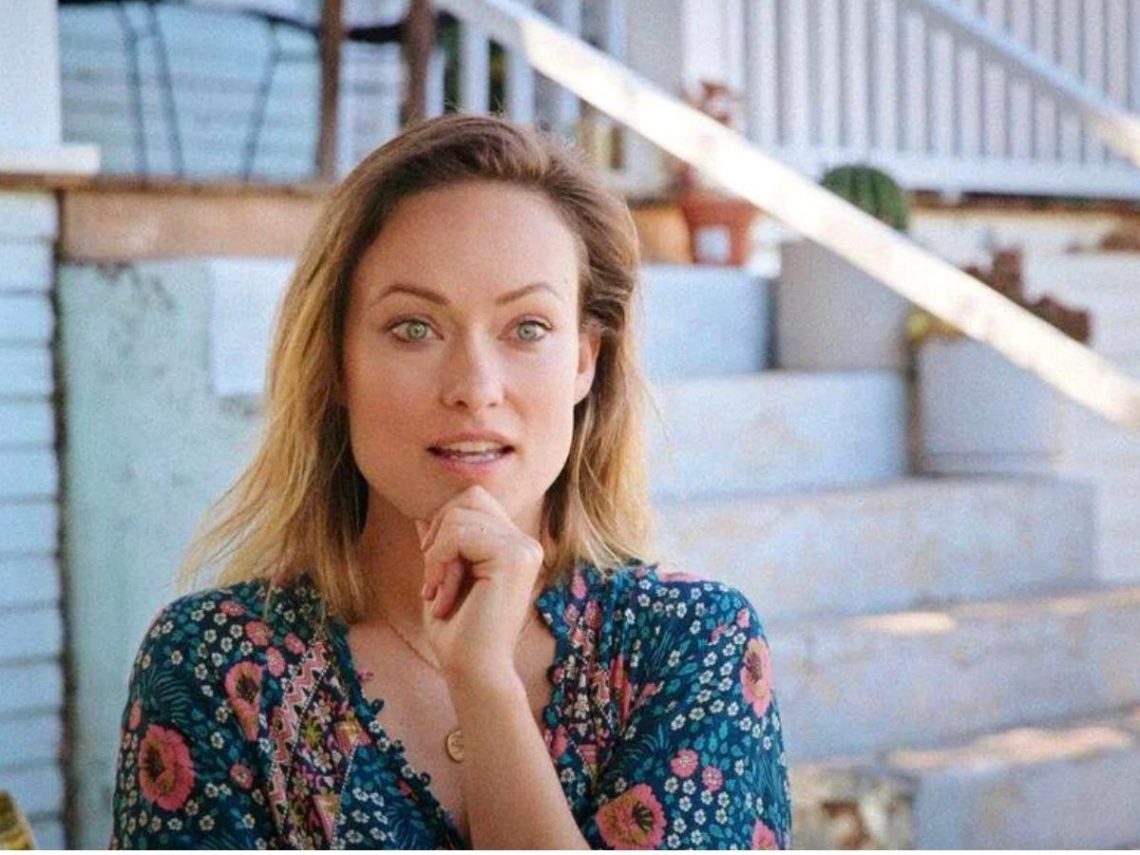
Olivia Wilde happily “stole” from one legendary director: “We only had 26 days to shoot”

They say that there’s nothing new under the sun, and nowhere is this proverb more relevant than in cinema, but for once, I’m not talking about Hollywood’s exhausting obsession with sequels and reboots, and instead about how, as with all artists, filmmakers are constantly learning from each other, borrowing techniques and sharing advice.
Cinema today is really just a patchwork of all the knowledge and ability of those who have come before, so a little stealing is common, although some are a little more willing to admit it than others. Olivia Wilde happens to be one of those directors who is OK with admitting to those who have influenced her and whose techniques she’s adopted, and according to her, she even stole from the best: Martin Scorsese. The pair worked together on the period TV series Vinyl, about a record label in the 1970s, in which Wilde starred and Scorsese produced and part-directed.
“Scorsese has a no-script rule which I stole for my set since we only had 26 days to shoot the entire film,” the actor turned filmmaker explained, “and having the no-script rule meant that everyone had to be on top of their game, and thankfully everyone was.” Despite Scorsese only directing one episode of the series, he seemingly made an impression on Wilde.
But, of course, it is a little difficult to take this seriously when you consider the film that Wilde was shooting at the time wasn’t akin to the likes of Goodfellas, Casino or even The Wolf of Wall Street, and it wasn’t even her disastrous ‘erotic’ thriller Don’t Worry Darling but her 2019 comedy Booksmart.
Look Booksmart was incredibly well-received and left us excited to see what the fledgling director had in store next. It was her first feature film, and it was a knockout in the coming-of-age comedy, a genre that is horrendously oversaturated and easy to get wrong, especially when you’re taking a girl power stance.
However, there’s something funny about her invoking the name of one of the greatest directors in film history for this project. That’s not to say that the approach to comedy or coming-of-age films shouldn’t be just as rigorous as that of a serious drama or thriller, and if Wilde hadn’t had such a swift fall from grace thanks to the on-set controversies and ultimate tepid reception of her follow-up, it might be easier to take this comment with grace.
It’s ridiculous enough to imagine a set of a wild teenage comedy being so tightly laced that the young cast aren’t allowed scripts, but it only gets worse in light of the impression Wilde has cast of herself in the years following. Whether it was the apparent on-set clashes with female co-stars or some of the frankly cringe-worthy proclamations made during the press tour for Don’t Worry Darling, but there’s something about the director’s tone that is often too self-assured.
Sometimes humility is the way forward, and not everything has to be treated as seriously as a work of art, but, then again, it’s always good to learn from the greats and carry that forward, so who am I to complain? At least she didn’t go full throttle Scorsese and ban phones.
She clarified, “He also has a no-phone rule, but since we are a fairly young cast, I didn’t steal that rule”. Although it seems like it would be a little counterintuitive, as if you want your cast to be distracted by anything, surely it would be the script, but once again, I digress.
