


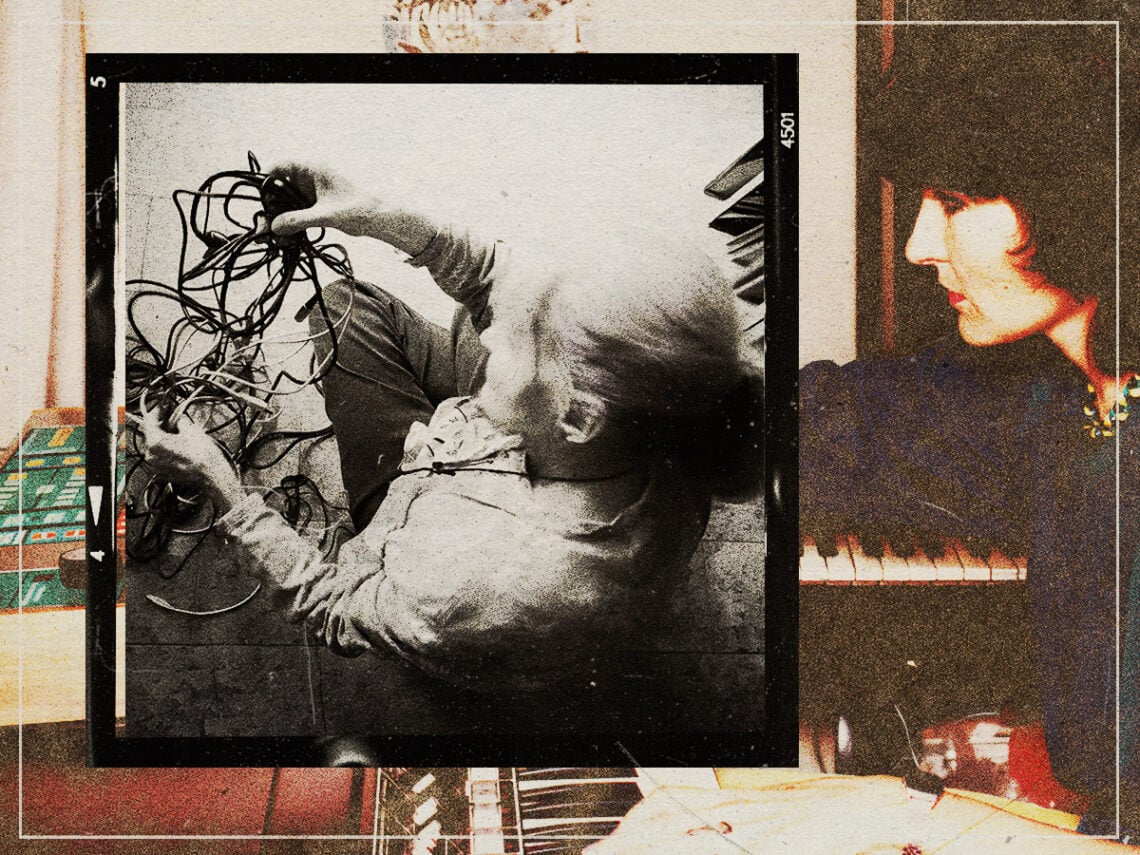
Oksana Linde: Venezuela’s forgotten scientist of synthesised music

The history of music is littered with figures who do not get the plaudits they deserve until years after their death or much later in life. The story of Oksana Linde, a scientist and pioneer of synthesiser music, fits into the latter category.
Born in 1948, Linde’s life seemed destined to take an unconventional route from the get-go. She comes from a family of Ukrainian immigrants who settled in Caracas, Venezuela. Learning piano from an early age, Linde was first seriously “impressed” by music aged just three when she heard the solo piano composition ‘The Sunken Cathedral’ by Claude Debussy. Yet, as a believer in musicians taking inspiration from a mesh of different areas, she is also a self-confessed fan of Ukrainian, Venezuelan, Italian, French, classical, baroque and popular music. Linde also mentioned the sound of the ocean’s waves leaving a significant mark on her when she was just five.
Clearly an intellectual, although she maintains that she endeavours not to intellectualise music – unless composing for a specific purpose – Linde creates work for the love of the craft. She started experimenting with making music with electronic instruments when studying for a Master of Science degree at the Venezuelan Institute for Scientific Research. However, she resigned from her position at 33, as the toxins from her work in the lab caused demyelination, seizures, and memory loss. After this moment, she turned to music in a more serious capacity. Linde started to build a home studio that included the likes of a Casio CZ-1 and Polymoog synthesisers, a TEAC A-3440 reel-to-reel machine, a Roland tape echo effect, and other classic models.
The first composition by Oksana Linde was 1983’s ‘Descubrimiento’. Quickly developing her craft, the French compilation SNX included her work ‘Mariposas Acuaticas’ only two years later. It marked the start of a fertile creative period. Between 1984 and 1986, Linde recorded over 30 works, all for different purposes, including television, radio and theatre. In 1991, she was also included as part of the third Festival of Electronic Music in Caracas, but outside of a smattering of international radio play, she remained unknown outside of her home country. Only two of her recordings were commercially released at this point.
Linde’s career would be put on the back burner for an extended period as she cared for her sick mother. Her studio was replaced with a clinical bed, and she sold most of her instruments and recording equipment. Elsewhere, other gear was either lost or stolen. In bouncing back from such a bleak time, Linde was helped by technological developments when she started creating new music on a computer using Audacity, which then made its way onto the sites Myspace and Reverb Nation alongside her archive.
Then, in 2019, Linde’s efforts would gain the plaudits they deserved when Cher-ee-lee, a Venezuelan sound engineer, and Andrea Zarza Canova, a sound archivist at the British Library, discovered them. This led to the inclusion of ‘Ensueno II’ (‘Reverie II’) on their compilation, Dream Tech. It was released in 2020 by the English label Mana.
Catching widespread attention, this release led to Luis Alvarado, the head of Peruvian experimental label Buh Records, releasing Linde’s debut album, Aquatic And Other Worlds – composed of songs recorded between 1983 and 1989. Reportedly, Buh Records plans to release a second and third album from archival recordings in the future. These contemporary releases have seen comparisons drawn between Linde and pioneering female synthesiser composers such as Wendy Carlos and Delia Derbyshire.
Speaking to 15 Questions in 2022, Linde said: “Right now, I am not making music, only once in a while. Because, as I explained, I don’t have my old equipment and the rest is damaged. I use elemental means. Of course, every day is different. Some days I am not able to do anything. The symptoms of the chemical intoxication and other conditions mean that I often have to rest. But I take some rudimentary notes for the future, and I record some sounds with my phone to employ in future projects.”
