


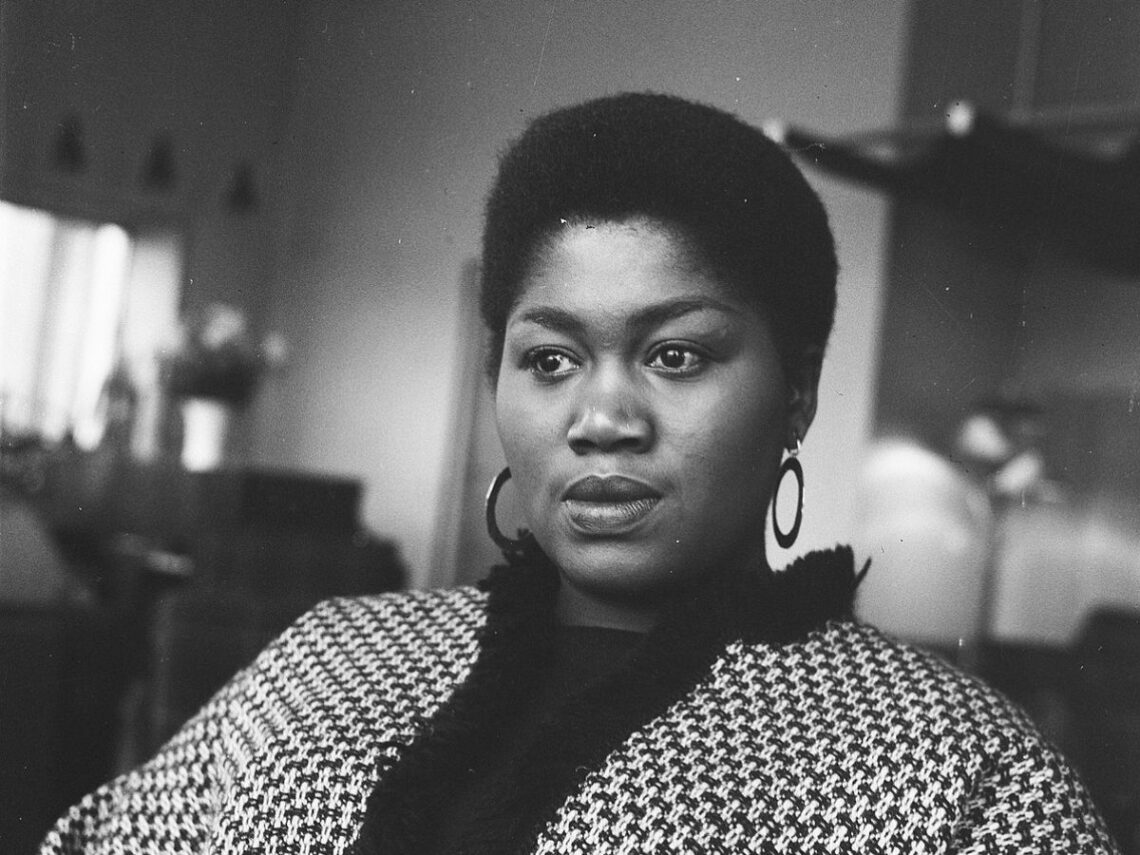
Odetta: the forgotten “queen of American folk music”

“The better we feel about ourselves, the fewer times we have to knock somebody else down to feel tall.” – Odetta
Dubbed “the queen of American folk music” by Martin Luther King Jr, Odetta was the pioneering voice of the Greenwich Village musical movement – a scene that, in turn, became central to the civil rights movement – long before Joan Baez or Bob Dylan ever began espousing messages of equality in their songs. In fact, Odetta was a personal hero that both Baez and Dylan looked up to and continued to hold in the highest regard.
Born in Birmingham, Alabama, in 1930, Odetta knew hardship firsthand when her father passed away when she was just a girl. Then, fatefully, after her family moved to Los Angeles, a teacher noticed her talent and exposed her to music. “A teacher told my mother that I had a voice, that maybe I should study,” she remembered. “But I myself didn’t have anything to measure it by.” Nevertheless, at 13, she began operatic training but sought a style that proved more connecting.
When Odetta’s path crossed with Ramblin’ Jack Elliott’s in the 1950s, she became aware of folk and blues music and turned away from the swing and spirituals that were abundant at the time. “In school, you learn about American history through battles,” she told the New York Times in 1981. “But I learned about the United States through this music, through the songs that I sing.” Her timeless folk tales then began to inspire the next generation, with Dylan citing her album At the Horn as the record that made him turn to folk in the first place and ditch rock’s more facile electric ways at the time.
Odetta would not only spawn the folk movement, but she also was a central performer at Civil Rights marches. She was also a prolific actress and put liberating equality at the forefront of everything she did. As she poetically put it herself: “You’re walking down life’s road, society’s foot is on your throat, every which way you turn you can’t get from under that foot. And you reach a fork in the road and you can either lie down and die, or insist upon your life.”
Her voice itself is one that seems to insist upon life. There is no finer example of this fervent artistry than ‘Hit or Miss’, both in its performative expression and content. She booms out, “Can’t be nobody else / I gotta be me,” as she plays and sings like nobody else ever could. As poet and writer Maya Angelou said, “If only one could be sure that every 50 years a voice and a soul like Odetta’s would come along, the centuries would pass so quickly and painlessly we would hardly recognise time.”
Thus, it is sufficient to say that Odetta has had plaudits both posthumously and in her performing heyday. Her influence is ubiquitous in both the fields where she plied her craft and society as a whole, but somehow, she never came close to breaking the top ten of anything, anywhere. Such was her zest for creative output, it would seem the success of the end result hardly mattered; it was the life-affirming journey along the way that counted. Alas, we owe it to her legacy to overcome the prejudice that befell her and rightfully champion her as one of the greatest performers of the entire era.
