


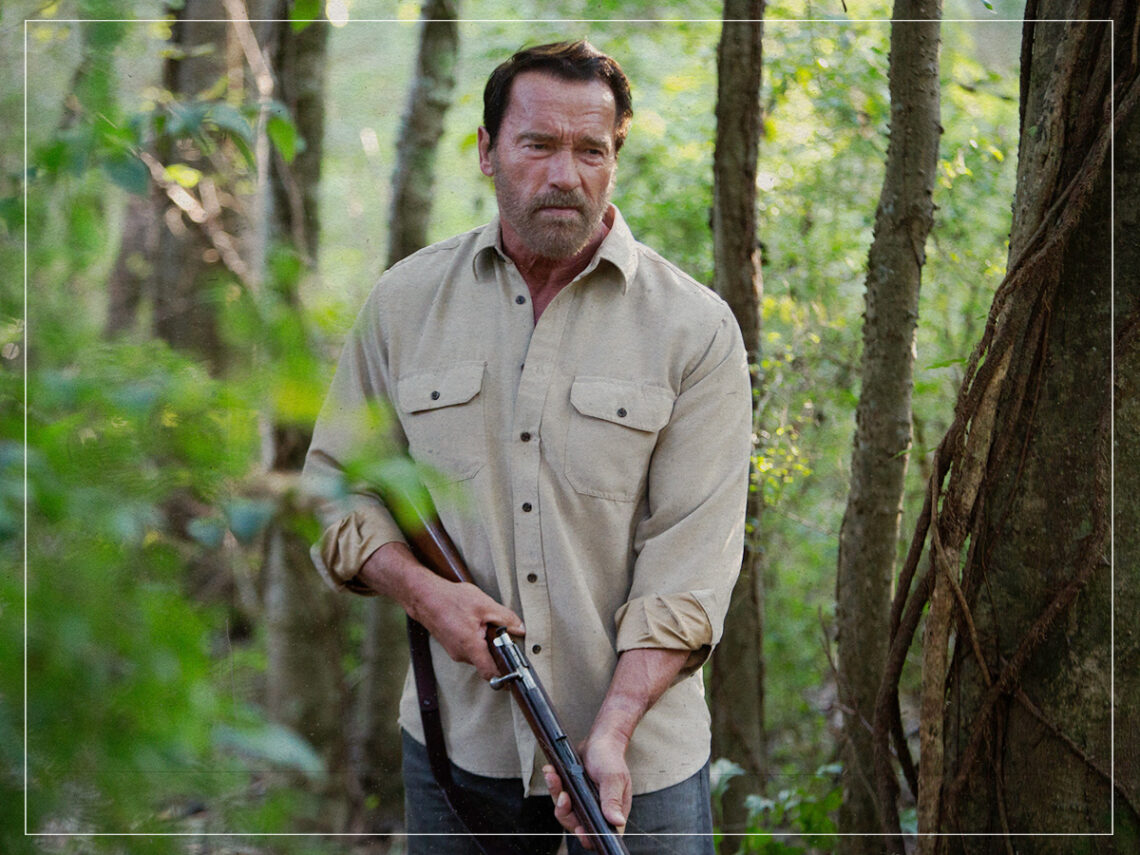
‘Maggie’: the novelty value of Arnold Schwarzenegger’s only arthouse movie

It’s hardly a revelation to say that Arnold Schwarzenegger became a superstar despite his limited abilities as an actor, which is why the prospect of seeing him take his unique talents to arthouse cinema seemed unfathomable for the longest time.
The ‘Austrian Oak’ has never been short of confidence, and having already conquered the worlds of bodybuilding and real estate by the end of the 1970s, he decided that making it to the summit of Hollywood would be the next chapter in a remarkable life story.
Needless to say, the industry wasn’t flush with international performers carrying impenetrably thick accents and surnames so lengthy it would be the scourge of poster artists everywhere, never mind a physique ripped straight from a comic book that was completely at odds with the method purveyors and relatable everymen who regularly took top billing in the biggest movies.
Thanks to his unwavering determination, effortless charisma, natural screen presence, and the onset of Reagan-era action cinema opting for bigger guns and meatier men than ever before, Schwarzenegger became the genre’s biggest and most bankable name despite the perils of suffocation if he were ever placed in a predicament where he’d have to act his way out of a wet paper bag.
When he returned from his sojourn into politics and discovered the genre he’d made his own had moved on without him when comeback vehicle The Last Stand bombed at the box office, though, Schwarzenegger opted to take some swings the likes of which he’d never taken before.
One of them came on director Scott Jobson’s post-apocalyptic horror drama Maggie, which also marked just the second time ever he’d been credited as a producer. Playing it straight as devoted father Wade Vogel, it’s a zombie flick without the chaos as Schwarzenegger’s character spends the film wrestling with his daughter’s gradual and inevitable transformation into a flesh-eating member of the undead.
An independent production costing $1.4 million was a huge departure for the actor who’d earned $30m from Terminator 3: Rise of the Machines alone a decade previously, with cinematographer Lukas Ettlin relishing in the opportunity to lens Schwarzenegger in a completely different light.
“I guess it’s an art film in a way,” he mused to Filmmaker Magazine. “I’m sure they wouldn’t want me to say that for marketing reasons, but how cool is that, to have Schwarzenegger in an arthouse movie? Of course, having Schwarzenegger in a movie like that is interesting because he’s usually in that black-and-white kind of movie.”
Fittingly, Maggie also saw Schwarzenegger deliver what’s comfortably the most accomplished performance of his lifetime from a purely dramatic perspective, not that it’s one he’s sought to either replicate or emulate in the years since. It appears to be a one-time deal, but don’t ever let it be forgotten that the action legend made a trip to the arthouse.
