


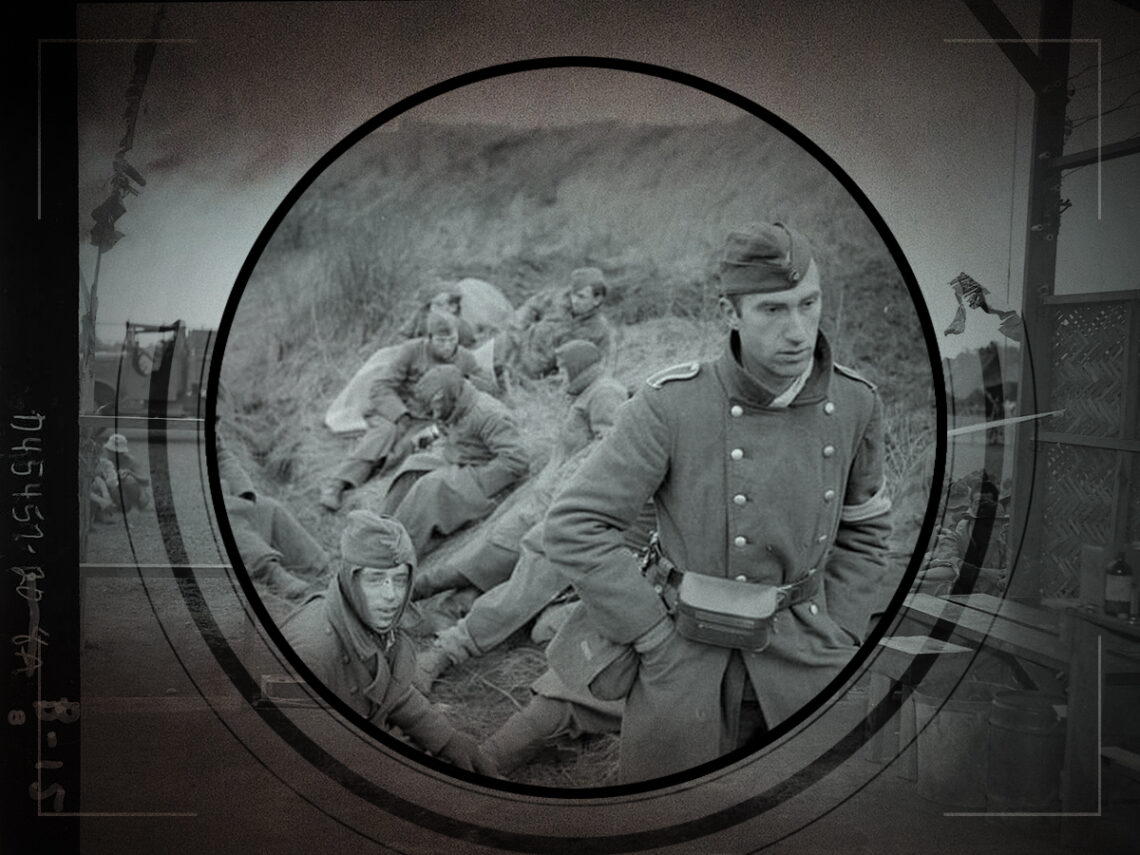
The Nottinghamshire prisoner of war who starred in one of America’s most iconic World War II movies

There was no need for one actor to go method when playing a prisoner of war in one of American cinema’s most iconic World War II movies, because they’d already lived the experience for real.
Several famous faces from Hollywood enlisted to fight for their country in the conflict, and many of them returned as war heroes. James Stewart ended his military career as the highest-ranked actor in the history of the United States Army, and he was far from alone in being decorated for his service.
He was always adamant that he wouldn’t make any movies about the war, but not all of his peers felt the same way. In fact, Donald Pleasance had no issues joining Steve McQueen, James Garner, Richard Attenborough, and fellow combat veteran Charles Bronson among the ensemble of The Great Escape, despite the overarching plot bearing many similarities to something he’d been through.
After volunteering with the Royal Air Force in 1940, the Nottinghamshire-born actor served as a wireless operator for a squadron that flew frequent bombing raids against the Nazis in occupied Europe. However, in August 1944, his plane was shot down during an assault on France, and he was caught, captured and dispatched to Stalag Luft I, a prisoner of war camp in Germany.
Pleasance would remain captive for nine months until the camp was liberated, and upon resuming his acting career when he returned, he eventually found his way to The Great Escape. At first, he kept his personal history quiet from director John Sturges, and he began offering technical advice on how to more accurately reflect the realities of life as a POW.
However, since the filmmaker was completely unaware that he’d spent the better part of a year as one of them, Sturges told Pleasance to keep his opinions to himself, at least until somebody had a quiet word in his ear and informed him that the actor knew exactly what he was talking about, after which point he was frequently consulted as an unofficial technical advisor of sorts.
Obviously, The Great Escape wasn’t beholden to accuracy or any overt sense of realism, but in the smaller, quieter character moments, it was beneficial to have a member of the cast who could use their first-hand experience to enhance certain scenes, based entirely on the knowledge that he accumulated during nine months as a German-held prisoner.
Despite that, Pleasance ended up being typecast as a genre villain. Whether it was playing Blofeld in You Only Live Twice, or his turns in Wake in Fright, Halloween, Escape from New York, Prince of Darkness, and more, he eventually became characterised for playing unlikeable, irredeemable, and often deranged bad guys. He was clearly happy to do it, but he hated being asked why.
“As long as you don’t want to know why I always play psychopathic villains and sadistic monsters all the time, ask me anything you like,” he once told Fiona Lewis. “You see, they always ask me that, and I can’t stand it.” They could have asked him about The Great Escape and how his life influenced the end results, but everybody seemed too preoccupied with his villainy to bother.
