


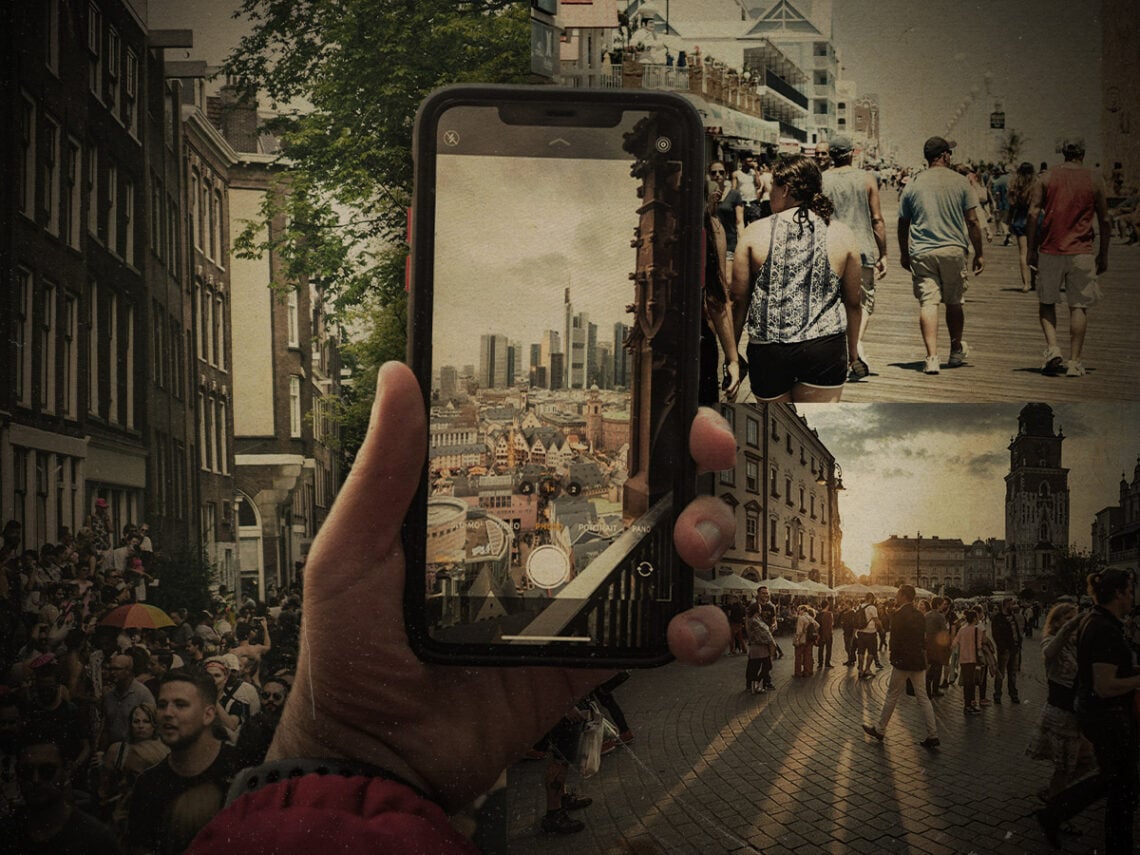
Nothing kills a ‘hidden gem’ faster than calling it one

If you’re an avid travel content consumer, then you’re familiar with the very worst type of creators, the one who leans in at the start of a video and whisper, ‘I can’t believe more people don’t know about this place’.
That is the death rattle for whatever venue they’re talking about, and before the video has already finished, people will be adding it to their Google Maps. Within days, they’ll be queues inside, and within weeks, those will be snaking down the street, with ring lights galore and everyone talking into their front-facing cameras. The prices soon triple, the extra staff lack the passion of the originals, and soon the charm that made it so special is gone: This is the ‘hidden gem’ industrial complex.
There was a time when ‘hidden gem’ actually meant something. It was a piece of info passed between people who trusted each other and felt they deserved the knowledge. You’d speak to a mate about your holiday, and they’d tell you about some beautiful restaurant they found down an alley somewhere, that was full of locals and didn’t even have menus.
Alternatively, it was something you’d hear on your holiday itself. You’d be sitting in a craft beer spot in Barcelona, and the barman would tell you about a place where he and his friends go when they’re off work, a long way from La Ramblas and its bustling crowds.
The notion of a ‘hidden gem’ was a wink-wink, nudge-nudge for people who would fit the vibe of the place. It wasn’t a secret, but that word of mouth would only reach dozens, maybe hundreds, and in wild cases, across years, thousands, which ensured the right people found these places and the wrong people were kept away.
That drip feed of information has now turned into something more like a fireman’s hose, with hidden gem now a content category in its own right. It’s an SEO term, something your gran would search for on Facebook, and in many ways it’s even become a tone of voice.
When you’ve got influencers like EatingWithTod describing somewhere as a hidden gem, it’s fair to say that the horse has already bolted the stable. The word hidden might signal authenticity, but to have been discovered by an influencer, it’s unlikely to truly be that. On the rare occasion that it is a hidden gem, it won’t be for long, with their millions of followers soon in the know too.

The algorithm rewards keeping eyeballs, and these creators will often use suspense and hyperbole to keep you watching, thus increasing the virality. Then, before you know it, you’ll see hundreds of people recreating the same video in the same bar or restaurant. In a world that increasingly feels traversed, the hidden gem industrial complex is something that sells us the fantasy of being an explorer. The whole planet is basically mapped at this point, and even the most remote places have been covered extensively on social media, meaning that any opportunity to be first is something people crave.
This is something we’ve seen from small street food vendors to entire cities, as seen in the online phenomenon of Chongqing, the huge China’s cyberpunk city that exploded on social media almost overnight. It’s a fascinating place with a rich history, but what we see on YouTube are the same places and restaurants in every video.
You won’t see a video on Chongqing without seeing the bright lights of the Hongya Cave, but visit in real life, and you’ll hate it; you’ll hate the crowds, you’ll hate the noise and being bumped into every ten seconds, and you’ll hate the tat being sold. However, if you step further out into the city, you’ll find so much more worthwhile than this hidden gem.
This obsession with finding the next hidden gem just causes hyper commodification. We see places full to the rafters one day, and then closing up shop within a year because they can’t make money with all the new overheads that they were forced to install. There’s also the unspoken element of exclusivity about discovering a hidden gem, but while this sort of travel content can position itself as being countercultural, the reality is the exact opposition. You’d think from the way these creators speak that they’re anti-tourist, looking to keep places as idyllic as they find them, but their videos function to do the exact opposite.
While hidden gems will often have a short-term bounce in income, they’re also going to have to deal with all of the teething problems of that, while the creators are taking in the ad revenue and leaving without having to roll their sleeves up and do the hard yards. Then they’ll be into the next street food stall, which they claim changed their lives, all to keep the never-ending cycle of content churning.
This isn’t to say that you shouldn’t write about, or create content around, places that aren’t well known, but we need to do better. Let’s frame it for what it is, rather than creative narratives around it.
If you look at the best travel content, then it tells the stories, the sights and the sounds of the places that it talks about, whereas the hidden gem industrial complex views places as material and renewable. While somebody like Anthony Bourdain can make a place go viral, he does so by explaining the story, the characters, and the importance to the community, rather than just selling these spots as ‘hidden gems’ that every visitor must see.
