


‘The Promised Land’ movie review: Quite possibly the greatest film about potato farming ever made

Seven years after his Hollywood debut went disastrously awry, Nikolaj Arcel returns to directing to offer a stark and powerful reminder that the dismal adaptation of Stephen King‘s The Dark Tower won’t be given the opportunity to tarnish an otherwise stellar reputation.
Mercifully much more in tune with his Academy Award-nominated breakthrough A Royal Affair than his ill-fated Stateside sojourn, The Promised Land is an unmistakably unforgiving Scandinavian tale. It nonetheless carries the influence and fingerprints of the classic western through its shot composition, cinematography, vast landscapes, and a grizzled protagonist played with understated relish by Mads Mikkelsen.
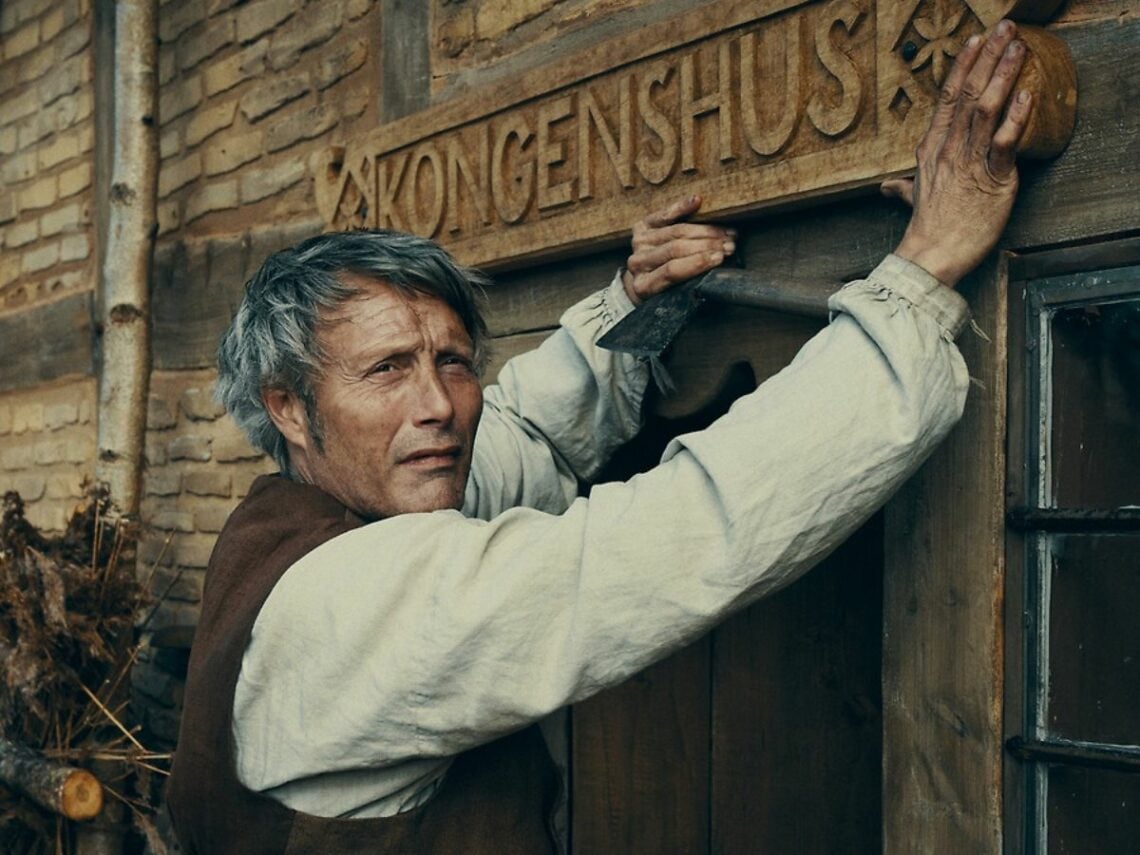
Despite his status as an international superstar, local cinema has always been the home of Mikkelsen’s best work, and that’s proven true yet again through his performance as Ludvig Kahlen. An enigmatic figure unwilling to give much away about his life beyond the goal that drives him narratively, the actor nonetheless makes every movement and flickering glance mean something, ensuring that as blank as he may have appeared on the stage, The Promised Land leaves no doubt as to his motivations, emotional standing, and unrelenting desire to do exactly what he said he was going to do.
The story begins in 1755, with Kahlen attempting to rebuild his life after serving in the German Army, even though he’s barely got two pennies to rub together. Sensing an opportunity, he sets his sights on doing that which has been deemed impossible by cultivating the isolated Jutland Heath into a hospitable area that can be farmed and play host to a sprawling community of workers and their families.
Naturally, he’s borderline laughed out of the building by the powers-that-be who serve at the King’s behest, but their tune changes when he says he’ll fund it himself. Suiting both parties, they don’t have to spend a penny to put him there, but when he fails – which they believe he inevitably will – the ruling monarch can’t claim his underlings aren’t going out of their way to tame the untameable heath.
The biggest obstacle – bar the harsh wilderness, of course – is Simon Bennebjerg’s Frederik de Schinkel, an egotistical and self-centred member of high society who views Ludvig as a threat to not just his dominion over the surrounding territory. He is also irked by Ludvig’s desires to marry his own cousin, Kristine Kujath Thorp’s Edel Helene, an issue he seeks to resolve through charm, bribery, and, ultimately, violence.
With Morten Hee Andersen’s Johannes Eriksen and Amanda Collin’s Ann Barbara joining Ludvig on his quest, having fled der Schinkel’s barbarism, the trio set out to try and accomplish the near-impossible. Along the way, Melina Hagberg’s orphan, Anmai Mus, becomes a part of the unlikely family unit, setting the stage for an exploration of not just their ever-changing and constantly shifting interpersonal dynamics but a testament to the grit and determination of human nature at large.
There’s admittedly a recurring bleakness to The Promised Land, and not just in relation to its sparse setting. Ludvig faces setback after setback to the point where it never seems as if he’ll ever catch a break, but Mikkelsen’s steely turn gives off the impression that this is a man who’ll never give up until he’s done precisely what he said he was going to do.
It would be easy to paint Ludvig in broad strokes as a plucky underdog battling against the forces of nature and wealth, but Arcel and Mikkelsen wisely aren’t interested in telling that version of the story. Instead, the struggles of an existence that would cause lesser people to abandon all hope create an alluring feeling of positivity amongst the oppressive means of their work, with welcome cracks continuing to appear in Ludvig’s emotionless façade the longer he spends in the company of his inner circle.
It’s a delicate balancing act, especially when it’s intimated repeatedly that he’ll sacrifice anything and anyone for his own hubristic gain. The Promise Land does tick the dreaded box marked ‘inspiring’, but never in a way that feels cloying, unearned, or even remotely saccharine. In fact, it’s utterly engrossing from beginning to end, with the mercilessness of their endeavour juxtaposed by the constant hope success is lurking just around the corner.
Haunting, melancholic, moving, brutal, uncompromising, and complicated as it moves from scene to scene, The Promised Land refuses to sand down its harder storytelling and character-driven edges. It ends on a note that offers an answer to one question while posing an even bigger one for audiences to chew on after two hours of callous confidence, displaying the resolve of the human condition. The competition is hardly fierce, in fairness, but it might just be the greatest film about potato farming that’s ever been made.
