


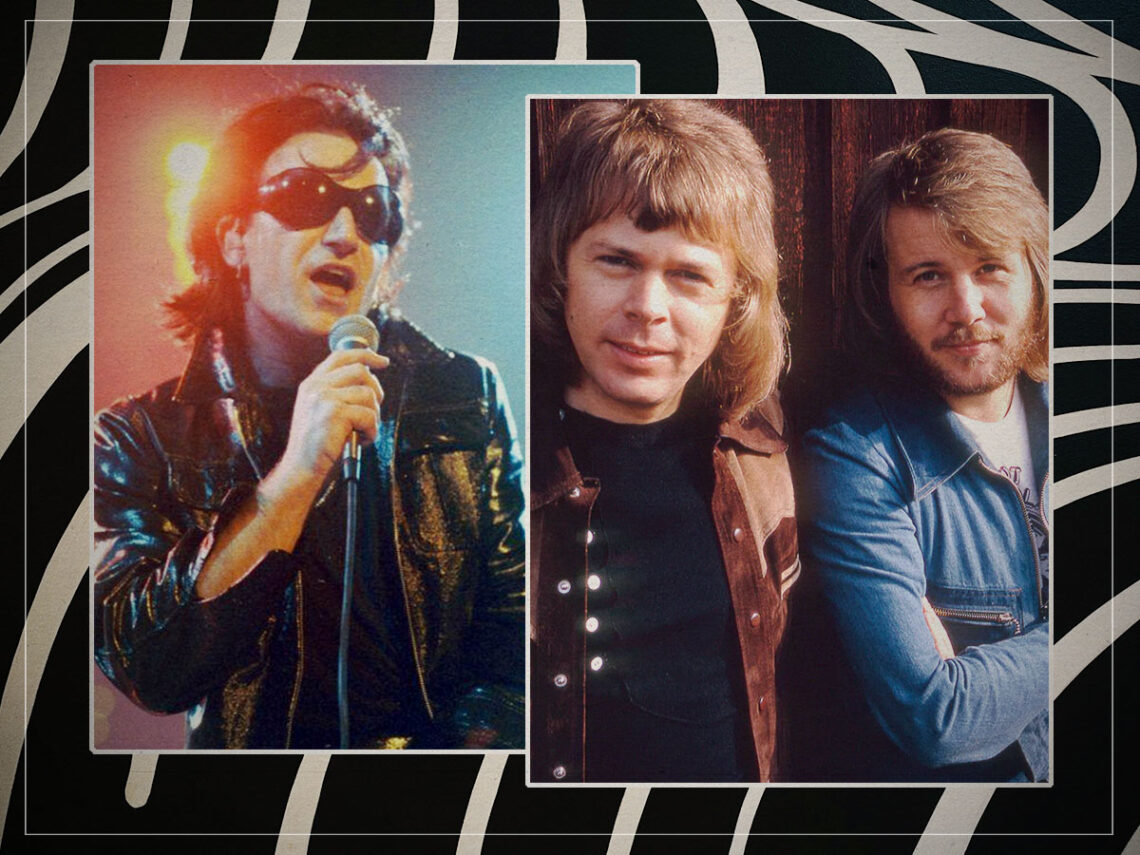
“We are not worthy”: the night U2 performed with ABBA

The term ‘Ascended Fanboy’ refers to someone growing up a fan of something before going on to become a key part of that thing in adulthood. Think die-hard Spider-Man fan Andrew Garfield growing up to play Peter Parker. Now, you might think that when it comes to music, surely everyone is an ascended fanboy? Who becomes a legend of rock ‘n’ roll without any childhood love for the genre? Well, it’s a slightly different feat, one I think is embodied by U2.
U2 are fanboys good and proper because it’s never been enough to simply be the biggest band in the world. Ever since the beginning, they haven’t wanted to merely be a big deal; they’ve wanted to be a part of rock history. They’ve wanted their names in that upper echelon of rock legends, and to get there, they’ve consistently associated with their key influences. More often than not, this means bringing them out to play songs with them at their live shows.
This really began during The Joshua Tree Tour. On April 20th, 1987, the band brought Bob Dylan onstage at the Los Angeles Memorial Sports Arena to play ‘Knockin’ on Heaven’s Door’. Bono pre-empted this cover by saying, “I usually make up my own words to Bob Dylan songs, he says he doesn’t mind.” Charmingly, Dylan responded by saying, “I do it too!”
Clearly, this went down so well that the band made it a regular feature of their shows on the following Lovetown tour. To open the encore of every show, supporting act BB King would join them onstage to perform their collaboration, ‘When Love Comes to Town’. Ever since then, their duet list reads like a murderers’ row of musical talent: Noel Gallagher, Chris Martin, Lady Gaga, Patti Smith, Jay-Z, New Voices of Freedom gospel choir, among dozens of others.
So, how did U2 play with ABBA?
However, arguably, the biggest get of them all… is one they probably don’t want to spend much time talking about. Picture the scene. It’s the Zoo TV Tour, June 11th, 1992. The previous night in the same venue, they’d played a slightly ramshackle cover of ABBA’s ‘Dancing Queen’ during the acoustic set on the B-stage, stretching out into the audience. Turns out this was a dress rehearsal for the main event the following night.
After ‘Angel of Harlem’ finishes up, Bono points at The Edge, who belts out that immortal opening melody. One of the great middle eights ever written for a pop song rings out before the strangest thing happens. That glorious descending piano hook that heralds the first verse starts playing, but no one onstage is playing the keys. Bono gestures towards the stage and introduces the men responsible—Björn Ulvaeus and Benny Andersson.
Since the two pop geniuses don’t quite look the way they used to, it takes a moment for their hometown crowd to truly understand what they’re watching. Then it sinks in. The creative hub of their greatest export, performing live for the first time in a decade. The noise that follows builds and builds until it totally dwarfs the band. It’s an incredible moment. One that completely overshadows the fact that Benny and Björn have absolutely no idea what key the band are playing in.
This is clearly a spur-of-the-moment type thing with minimum rehearsal, and the camera, firmly trained on the ABBA legends, catches them in a moment of genuine confusion. They exchange slightly baffled looks as Benny leans in, testing out some slightly dissonant piano chords as Björn frets any barre chord handy. However, they did write the damn thing, so eventually, they figure out what exactly is going on and click with the band about halfway through the first verse.
The moment that Benny and Björn catch up is what makes this moment utter magic. Benny, in particular, is the star. The camera catching him singing along while his piano playing, clear as day in the mix, brings the whole thing to life. Bono finishes the song, turns to the two legends, and, ever the fanboy, says what we’re all thinking: “We are not worthy.”

Never Miss A Tale
The Far Out Bob Dylan Newsletter
All the latest stories about Bob Dylan from the independent voice of culture.
Straight to your inbox.