


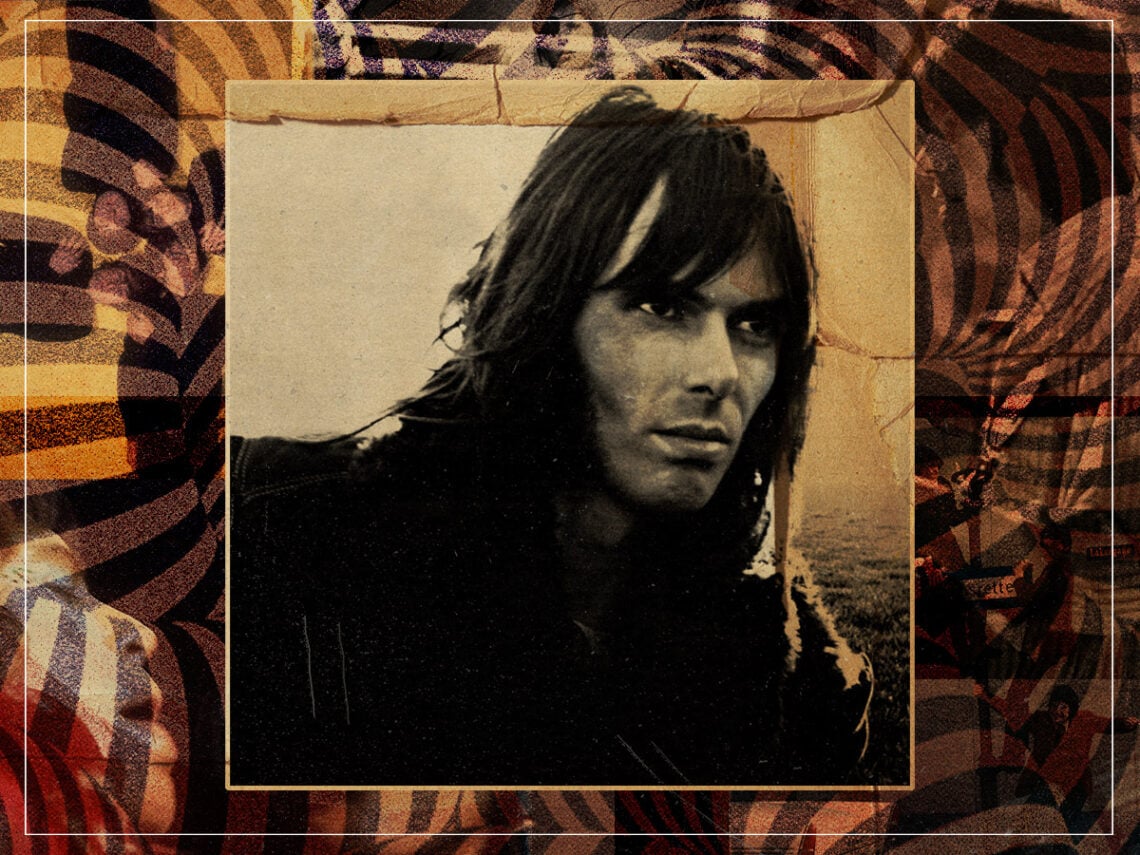
Nicky Hopkins: the secret weapon of rock ‘n’ roll

“Nicky Hopkins’ playing on ‘Jealous Guy’ is so melodic and beautiful that it still makes everyone cry, even now,” Yoko Ono once said, her words summarising the musician’s appeal in just one sentence. Hopkins might have been one of the most prolific talents in the 1960s and 1970s music scene, and yet many of his contributions are still overlooked despite him gracing the sounds of some of the world’s biggest bands.
In the 1960s and ’70s, Hopkins was so sought-after as a session musician that he was more often than not the first name suggested whenever anyone was looking for a helping hand. Hopkins wasn’t just a massive name in the business; his artistry was genuinely a tour de force, and industry figures – from rising stars to established pioneers – wanted their sound to benefit from his magical touch.
What’s particularly interesting about Hopkins’ style is that it was influenced by both his classical upbringing and his interest in rhythm and blues. Unlike many at the time who believed in the importance of siloes, Hopkins wanted to break down barriers and allow his affinity for rock ‘n’ roll to infiltrate his more traditional leanings.
Fusing together all of his neatly crafted sensibilities meant that he could deliver a fresh sound free from convention but without the alienation of experimentalism. His melodies were simple and tuneful, but they were also imbued with a certain technical brilliance that made even the rawest of sounds seem more accomplished and refined.
By the 1960s, alongside names like Jimmy Page, Hopkins gained prominence due to his efficiency and professionalism. He could often pick up anything that was put in front of him, making him a massive asset to other musicians and producers who needed a pianist to transform a great song into one with more nuance. Hopkins delivered a diversity that enabled a future-gazing track to maintain its resonance with audiences of the time.
Above all, despite being incredibly adept at the art, Hopkins was never flashy, resulting in a sound that enhanced the music without distracting from the more important or intricate segments. The Rolling Stones’ ‘Monkey Man’, for instance, demonstrates this perfectly. In this song, which is about heroin addiction, Hopkins delivers a graceful and delicate piano inclusion to an otherwise gritty and dark composition.
However, Hopkins, along with Ian Stewart, contributed significantly to The Rolling Stones’ sound but were never credited as official members. It’s difficult to see why that would be the case, especially considering tracks like ‘Monkey Man’, in which Hopkins effectively keeps the entire score together while the rest of the band runs wild.
Similarly, ‘Loving Cup’ showcased Hopkins’ modesty and musical nature as someone who rarely enjoyed the spotlight. Instead, Hopkins injected his gospel, soul, and country tendencies into an otherwise more straightforward rock song. Throughout the song, Hopkins’ excellence is highlighted without any lick of egotism, which just goes to show the sheer magnitude of his monstrous piano playing and the unfiltered authenticity with which he delivered it.

Aside from The Rolling Stones, Hopkins probably boasts a more impressive roster than perhaps any musician before or after him, lending his hand to outfits like The Beatles, The Kinks, Jeff Beck, Ella Fitzgerald, Cat Stevens, Joe Cocker, David Bowie, and solo albums by all four members of the Fab Four, to name a few.
An artist with so many contributions should, theoretically, be just as established as those he worked with, and yet the vast majority of audiences of his musical partners likely aren’t familiar with his name, which is even stranger when you consider the rock ‘n’ roll nature of his personal life and his journey to fame. Like many of those in the spotlight, Hopkins developed a reliance on alcohol growing up, which impacted any pre-existing health conditions he already had at the time. Living close to a brewery likely didn’t help either.
In spite of this, Hopkins studied at London’s prestigious Royal Academy of Music after winning a piano competition at the age of 12, but his talent started to capture the attention of many in the rock scene at the time, which distracted him from the Academy’s classical teachings. As Shel Telmy explained, “Nicky Hopkins is the most promising pianist/arranger on the music scene today; that goes for both sides of the Atlantic!”
What transformed Hopkins from a talented kid with promise into the most desired session musician in the business was his skill set – not only did he possess unparalleled intuition, but he also understood music theory and knew how to read music, which, according to guitarist Mick Vickers, was “a powerful thing”.
Although the musician himself would liken himself to jazz greats like Albert Ammons, he also knowingly became an amalgamation of each and everybody he played with and used it to his advantage. While The Beatles were reigning supreme, he brought the artistry he had contributed to their sound to others with an unspoken promise of heightened greatness.
Still, Hopkins was rarely credited, and even then, his talent wasn’t hugely spoken about or discussed, not in the same way that many musicians were. One of the most obvious reasons why this might have been the case was the nature of celebrity at the time and, to an extent, even today. When it came to groups like The Beatles, for instance, all eyes were on The Beatles, and no one or nothing else.
Even though the band had a manager, producer, stylist, sound engineer, session musicians, and so on, the only names that anybody regarded as important were John Lennon, Paul McCartney, George Harrison, and Ringo Starr. Similarly, in outfits like The Rolling Stones, it was all about Mick Jagger and Keith Richards. The odd music gear aficionado might have regarded someone like Hopkins as a necessary piece of the puzzle, but generally, he existed a little like a ghostwriter.
As a result, Hopkins only received recognition in the liner notes, if he was mentioned at all. He never received royalties and didn’t gain the traction he needed as both a session musician and soloist to ever go the full nine yards. Although Hopkins’ talent as a pianist was never disputed, translating this capability into a well-rounded solo musician proved to be somewhat difficult.
What’s left of Hopkins’ legacy, therefore, are the remnants of a true unsung hero, a secret weapon that enabled the sound of the ’60s and ’70s to thrive. In truth, Hopkins’ contributions deserve to be celebrated as much as his peers, and there’s no doubt that one day, his name will be uttered in the same sentences as many of his more well-established contemporaries.
