


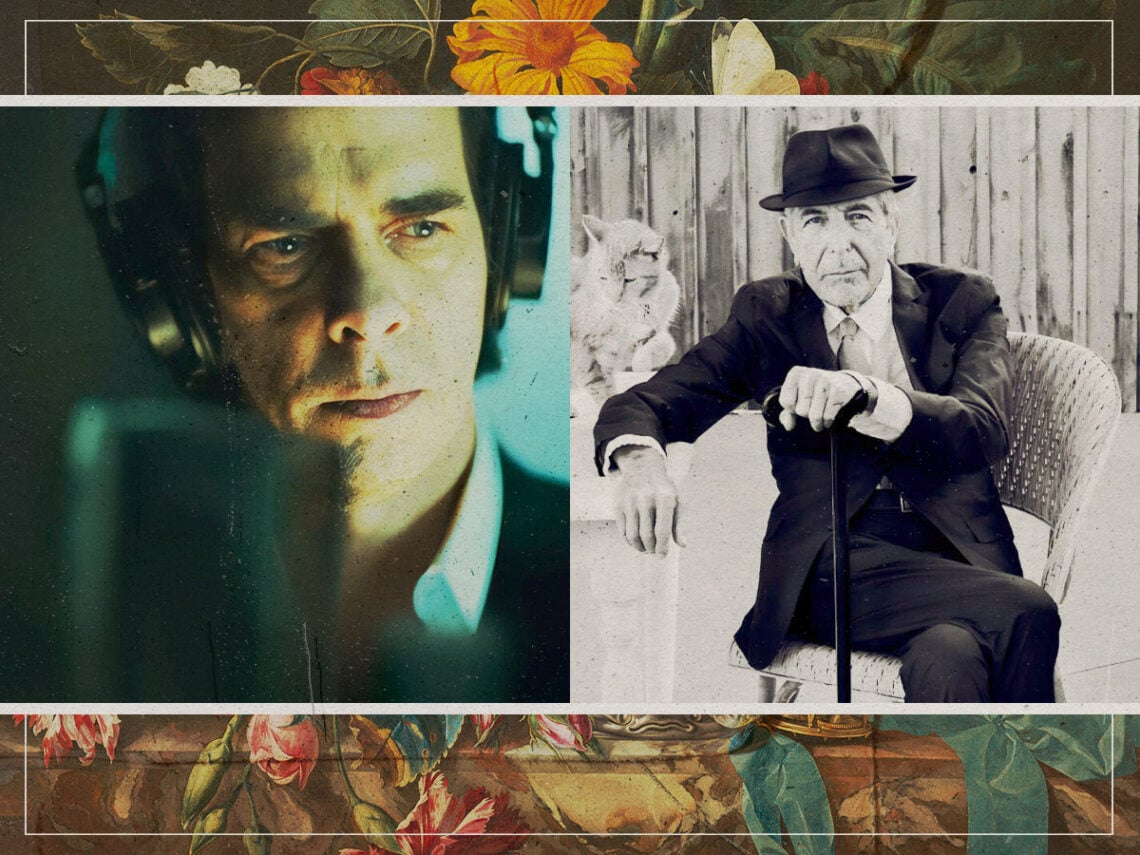
The Leonard Cohen song that changed Nick Cave’s life forever: “I saw how powerful that could be”

If you’re captivated by Nick Cave, the enigmatic singer-songwriter of The Bad Seeds and the spookiest man in rock, it might be difficult to picture him as a doe-eyed 11-year-old boy. Yet, as surprising as it may seem, he was indeed once that young and innocent. Even at that age, though, it’s clear that the literary mind that would later shape his legacy was already beginning to take form.
It was at this age that Cave first heard the song that would change his life and set him on course to become the loving stepfather of rock and roll he is today. The artist behind such a victory for music and inspiration to Cave’s outlook? The esteemed poet, writer and songwriter Leonard Cohen.
Cave’s admiration for Cohen has never been understated, and he has, on many and any occasion spoken of his appreciation for him. When Cohen passed away in 2016, Cave led the tributes by suggesting that Cohen was truly one of a kind. “For many of us, Leonard Cohen was the greatest songwriter of them all,” he said, before adding that Cohen was “utterly unique and impossible to imitate no matter how hard we tried. He will be deeply missed by so many.” It’s a challenging proposition to argue against and one that very few would take on in the company of Cave.
One of the many people deeply upset by Cohen’s passing in 2016 would be Cave himself, who not only held Cohen up as the idol of the ultimate songwriting legend but also a teacher of sorts. The Aussie rocker also did his best in covering some of his most iconic songs, delivering them with a baritone verve that may have pleased Cohen, despite him once proclaiming Cave “butchered” a classic track of his all the while placing his tongue firmly inside his cheek. Taking on 1967’s anthem ‘Suzanne’, as well as ‘Avalanche’ and ‘I’m Your Man’, Cave has always done his best to pay homage to the Canadian poet.
However, one song in particular would change Cave’s life. Seeing him evolve from a young boy in Wangaratta into the current daddy of rock and roll would likely never have happened if it wasn’t for one song. Speaking with ABC‘s Richard Kingsmill in 1994, the singer revealed the impact Leonard Cohen’s 1971 album track ‘Famous Blue Raincoat’ had on him as a kid and how it showed him the way to the purest form of songwriting.
“I remember listening to this song when I must have been 11 or 12,” he said. “I lived in Wangaratta and I had a friend called Anne Baumgarten, she was quite a morbid kind of creature,” explains the equally morbid creature, Cave, who has never been afraid to show his darker side. “She used to play Leonard Cohen in her room with burning candles and all that sort of stuff. She’d listen to Songs of Love and Hate over and over again. I started to that myself and became kind of infatuated with the lyric at that point. I saw how powerful that could be.”
Lyrics would become and have since been critical to any Cave composition. Whether they are telling an old yarn spun in a new direction or reflecting on some of the most troubling times of his life, Cave has used his tracks as a journal of his life. But it was the brutal honesty with which it appeared Cohen sang his track that really captured Cave’s attention at a young age. He added: “This song [‘Famous Blue Raincoat’] to me just seemed like a true kind of confessional song. It just seemed to be so open and kind of honest in some way. Whether it is or not, I don’t really know”.
“It just had that effect on me and it really kinda changed the way I looked at things. He had a tendency to air his linen in public in a way,” admired Cave. “I thought that was all very impressive at the time. I still do, of course.” Cave has never shied away from a ‘warts and all’ approach to his art, and it’s clearly influenced by Cohen.
In the liner notes of the 1975 The Best of Leonard Cohen record, the poet puts the record straight on whose coat it actually was: “I had a good raincoat then, a Burberry I got in London in 1959. Elizabeth thought I looked like a spider in it. That was probably why she wouldn’t go to Greece with me. It hung more heroically when I took out the lining, and achieved glory when the frayed sleeves were repaired with a little leather. Things were clear. I knew how to dress in those days. It was stolen from Marianne’s loft in New York City sometime during the early ‘70s. I wasn’t wearing it very much toward the end.”
It’s a point that Cave has taken into all his work. Without a doubt, Cave has always put his heart on the paper when it comes to songwriting. No more so can this be seen than in his heartbreaking record Ghosteen in which Cave addresses the loss of his son Arthur and the exploration of grief that comes with it. It is a piece so delicately positioned within the heart of the writer and the minds of his audience that it is likely to change the lives of future songwriters for generations to come.
