


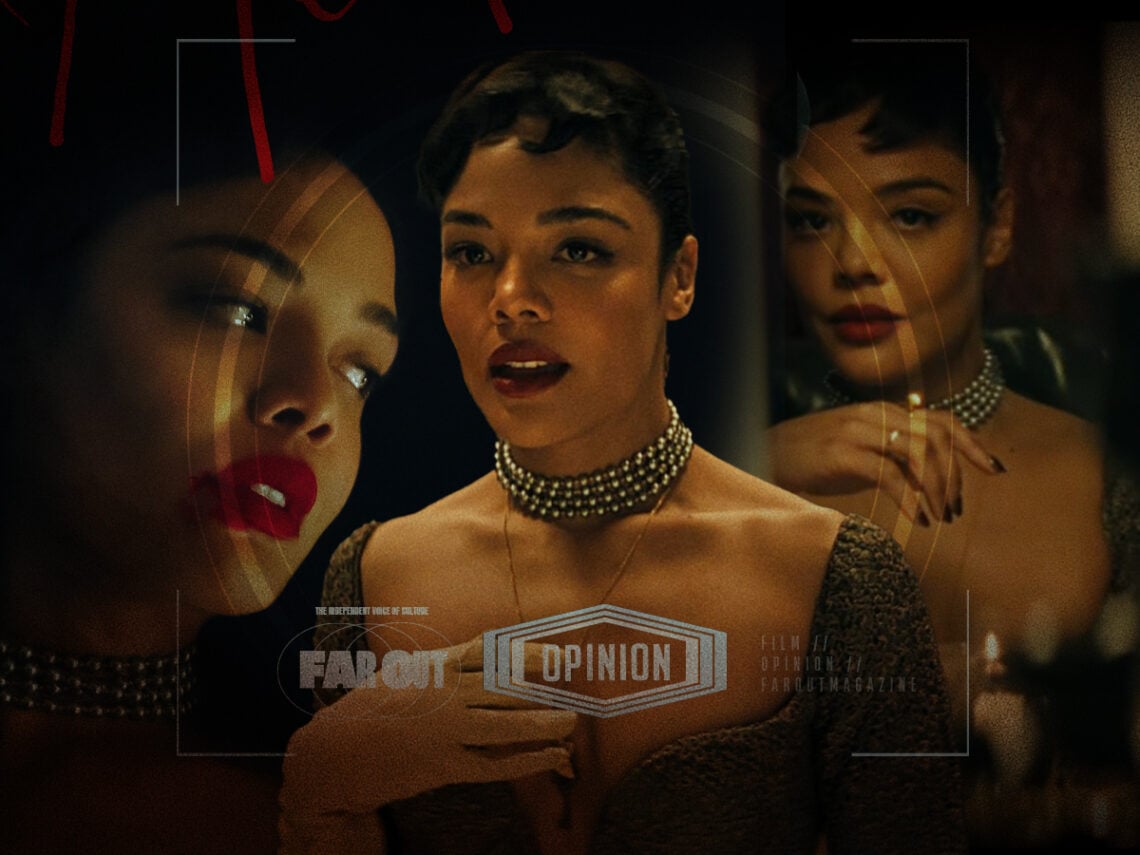
Nia DaCosta’s ‘Hedda’ is a queer, chaotic masterclass in adapting a classic

What makes a good adaptation? Faithfulness to the source material? Contemporary relevance? The brazenness of the director?
There is no definitive answer, but with her 2025 adaptation of Henrik Ibsen’s play Hedda Gabler, Nia DaCosta makes a strong case for all three. Moving the story from 1890s Norway to 1950s Britain and transforming the title character from a repressed, straight white woman to a repressed, queer mixed-race woman, DaCosta turns simmering tensions into a pressure keg of alienation, jealousy, and sex.
Tessa Thompson plays Hedda, the dissatisfied wife of earnest academic George Tesman (Tom Bateman). They live in a manor house they can’t afford and are preparing to throw a party for his colleagues that he hopes will lead to a prestigious promotion. Hedda oozes elegance, imperiousness, and disgust, and when she informs Tesman that she’s invited some of her friends to liven things up, we recognise that his trepidation is justified.
One of the guests is Eileen Lovborg (the magnificent Nina Hoss), a brilliant academic who has reformed from her checkered past of heavy drinking and debauchery and is now vying for the same position as George. She is also, it turns out, Hedda’s former lover. As the evening kicks off, it’s clear that lives will be destroyed by the morning.
Hedda Gabler has often been described as the holy grail character for female actors, in the same way that Hamlet is often described as the holy grail for male actors. Even if you believe that Shakespeare was the greatest playwright to ever live, however, there is no denying that Hedda is even more fucked up and self-destructive than the suicidal Dane. She hates her husband, her house, her status, and her social set. She is bored, intelligent, ruthless, and beautiful, a combination that fuels her rampage of manipulation during the fateful party.
Such a character would be transgressive even by modern sensibilities, but DaCosta found an ingenious way to make Hedda even more psychologically compelling. In this version of the story, she is the illegitimate child of a white general, at once born into a high social status and excluded from it. Entitlement flows from every muscle twitch and exhale, but so too does jealousy and longing. She is not of the world that she inhabits, and her startling beauty, poise, and vindictiveness betray a need to overcompensate for her perceived shortcomings.
These narrative alterations provide jet fuel to the sexual tension underpinning her destructiveness. In Ibsen’s play, Lovborg is a male rival of Tesman, but in DaCosta’s film, the character is a female symbol of everything Hedda forfeited when she married. Lovborg is a rival of both Tesman and Hedda. She is a rival for his job and his wife, and a reminder to Hedda that she gave up on the chance to live openly with another woman and pursue a life in which she could use her intellect to be professionally creative instead of personally destructive. Both Tesman and Hedda are fascinated by Lovborg and repelled by her, for very different reasons.
Of course, making Lovborg a woman rather than a man and setting the story in the 1950s rather than the 2020s makes her a much more complex character, too. She is the only woman in the sea of sharp-suited, greying academics. She might have the physical presence to mesmerise them, but their contempt is lurking just beneath the surface, ready to pounce and eviscerate the moment she shows a chink in her armour.
In this light, Hedda’s cruelty towards Lovborg is even more complicated and irredeemable than it would be in a more faithful adaptation. A woman who destroys a man is one thing; a woman who destroys another woman, especially one who is courageous enough to be openly gay in such a hostile environment, is something else entirely. DaCosta worships Thompson’s beauty with the camera, showing her face from every angle and lingering over every feline movement. We, like everyone in the film, are captivated by Hedda, but much of that captivation stems from our desire to catch a glimpse of the conflicting multitudes she is concealing.
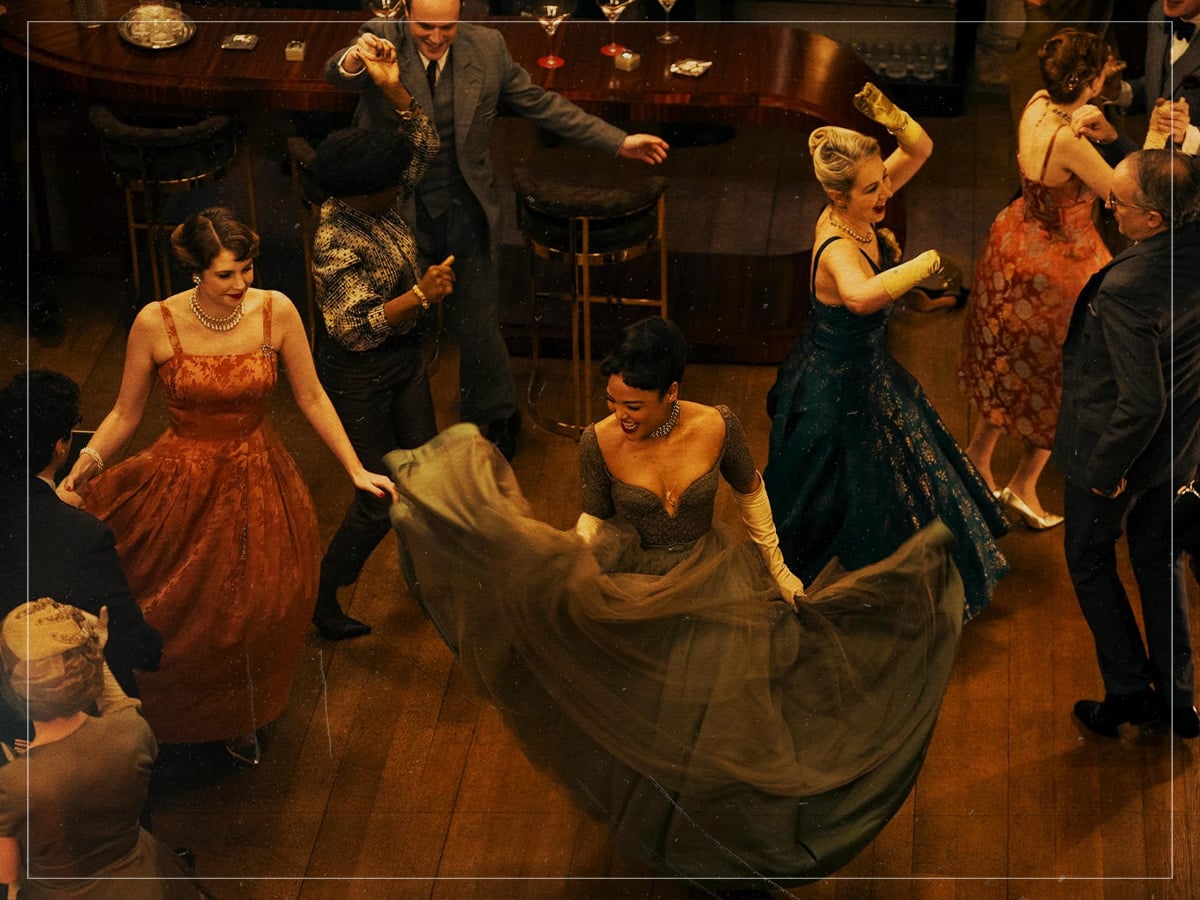
Perhaps the best thing about Hedda, however, is that it is not a morality tale. There is no hand-wringing over women’s lib run amok or the tragedy of being queer in the ’50s. It is gloriously messy, verging on camp at times, a celebration of those dizzying, half-crazed all-night house parties in which sex and drugs and swimming and champagne and music and bonfires collide in wave upon exhilarating wave of sensuality and abandon. You don’t leave Hedda shaking your head sadly over the cruelty of social mores. You leave wishing that you could have been there, too.
This deliciously chaotic reimagining of Ibsen’s play goes several layers deep in its creative liberties, but DaCosta’s vision is as faithful to its source material as it is sharply idiosyncratic. Where Emerald Fennell’s retelling of Emily Brontë’s Wuthering Heights projected shallow spectacle onto the original story but failed to approach its dark strangeness, DaCosta’s Hedda is steeped in reverence for Ibsen and is therefore able to heighten the original story rather than paper over it with pseudo-transgressions.
For whatever reason, Hedda was one of those near-misses that happen every year during awards season, deserving of recognition but never quite making it. It would be a mistake to perpetuate that omission, especially for a story that has remained relevant for over a century. DaCosta’s filmography has covered everything from neo-westerns to horror movies to superhero juggernauts, but this one feels particularly personal.
As an adaptation, it sets a high watermark and demonstrates how writer/directors can take a highly subjective approach to a hallowed classic without compromising the source material.
