


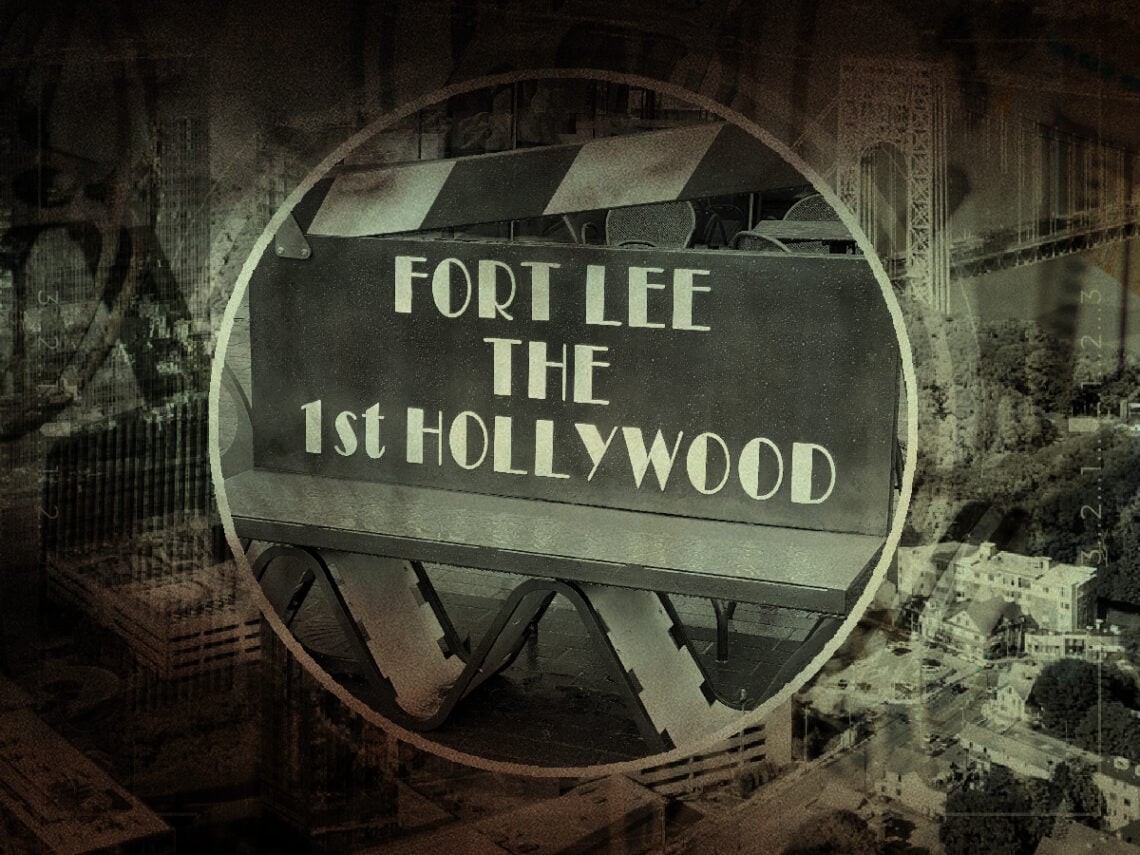
Before Hollywood, there was Fort Lee: How New Jersey became the birthplace of the American film industry

Call it La La Land or the ‘Land of the Lotus Eaters’, Hollywood has been so synonymous with filmmaking for more than a century that casual fans of the medium may well assume that American cinema was born there.
Part of the reason this myth has felt so accurate is that it looks the part, with that former orange grove bordered by nothing but ocean on one side and desert on the other, displaying an Edenic, far-flung quality that makes it shimmer with storytelling potential, especially when that story is about itself.
The truth is much less glamorous, though, as American cinema was born in a place that might delicately be referred to as humble. Fort Lee, New Jersey, which faces Upper Manhattan across the Hudson River, does not have any of the glitz of Tinseltown, but it was the hub of the industry for more than two decades.
Thomas Edison was the man to blame (or thank), who had spent years trying to do for the eyes what the phonograph had done for the ears, and due to the work of the Lumiére brothers in France and several inventors in the US and Britain, he was able to create his own versions of the technology. New Jersey was a shrewd place for him to do business, compared to the land just across the river, as its real estate was dirt cheap while still being easily accessible to the entertainment folk of Manhattan.
At its peak in the 1910s and ‘20s, Fort Lee was the home of all the major production companies, including the precursors to MGM, Universal, and Fox. Such early luminaries of the silver screen as Mary Pickford and DW Griffith were based there, making this nondescript town on the wrong side of the river the focal point of American cinema.
The problems with Fort Lee were myriad, however, as, for one thing, the weather and scenery were not particularly conducive to creating visual art. Filming outside was out of the question for most of the year due to rain, cold, and general gloom, and it wasn’t exactly majestic on sunny days, either. On the other side of the country, you could shoot in the great outdoors more than 300 days out of the year, and it had a wide variety of natural backdrops to work with, plus labour was cheap, and, crucially, Thomas Edison wasn’t there.
By the 1910s, Edison had formed the Motion Picture Patents Company (called the Trust), which licensed his equipment to the filmmakers who were willing to work under his thumb, such that anyone who used other equipment was hauled into court. His patents were eventually overturned, but in the meantime, Edison got a head start over his would-be competitors, with one of his preferred methods for enforcing his monopoly was to hire gunmen to shoot holes in the unsanctioned cameras, which, unsurprisingly, was a pretty effective way of subduing enthusiasm.
Although Hollywood was nothing more than a patch of sparsely populated land in the 1910s (it didn’t even have electricity), it became a magnet for a host of filmmaking pioneers, including Cecil B DeMille, Griffith, and Samuel Goldwyn. Even then, thousands of miles away, Edison was a threat. DeMille, who arrived in Hollywood in 1913, claimed to have been shot at twice and slept in his studio with a shotgun to guard his film.
Everything started to cool off soon after, when Edison’s patents began to expire, and the Motion Picture Patents Company was found to be in violation of antitrust law. Hollywood was already building an infrastructure by then, and without the constant threat of Edison’s legal team (and hitmen), it was allowed to thrive, while, in contrast, the Fort Lee filmmaking scene faded into a historical landmark.
