


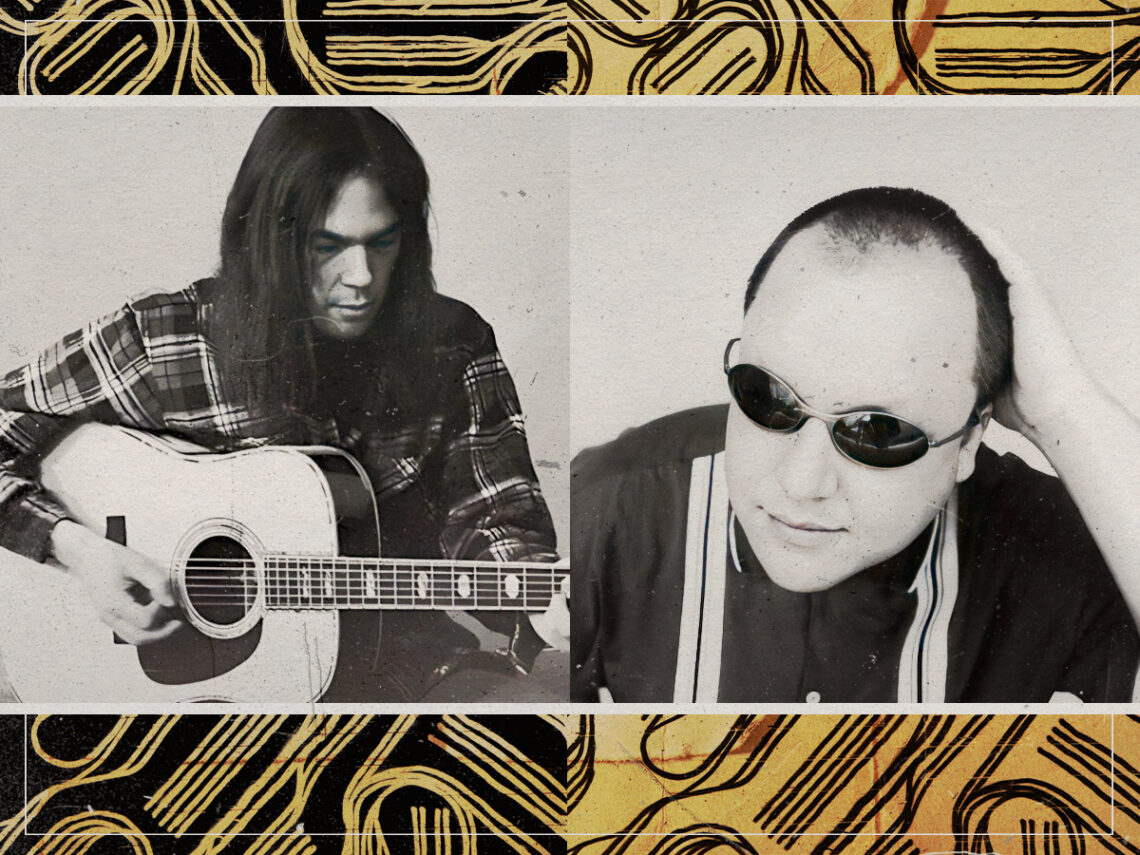
The transformative Neil Young song Frank Black wishes he’d written

From ‘Monkey Gone to Heaven’ to ‘Here Comes Your Man’, Pixies leader Frank Black has had a big say on the complexion of alternative rock. From ageing grungers of his own generation to long-haired rookies in grassroots venues, many wish they possessed the songwriting power that he does. He is so essential that even Kurt Cobain pilfered from his arsenal on his route to the top. Yet, for Black, Cobain and the rest of their generation, one man started it all years before them: Neil Young.
Bringing to focus how vital the Canadian musician has been in developing guitar music and alternative rock, he is widely dubbed ‘The Godfather of Grunge’. It all started on 1969’s Everybody Knows This Is Nowhere, his first effort backed by Crazy Horse. On this release, Young and the group put a completely different spin on the established rock formula by way of their searing, distorted guitars, Young’s emotional approach to his six-string, lyrics and vocals, and Billy Talbot and Ralph Molina’s hard-driving rhythm section.
These heavy grooves tapped into the soul in a way that was utterly distinct from the earlier hard-hitting expressionism of Jimi Hendrix and Peter Green’s Fleetwood Mac, with the blues not necessarily front and centre of their sonics. ‘Cinnamon Girl’, ‘Down By The River’ and the title track are the highlights, distilling a formula that took rock down a much darker, heavier, melancholic route. It opened the doors for everyone from The Smiths to Pixies and Nirvana.
Following the 1969 release, Young would continue to expand his recipe with releases such as the exhaustively heartbreaking On the Beach and Zuma, which firmly asserted him as the progenitor of all things alternative rock. On them, his guitar solos were textural and dissonant, his lyrics profound, and his delivery more impassioned than any of his peers. His work was not affected like that of other pioneers of heavy music, such as Black Sabbath, Deep Purple, or Led Zeppelin; it was a simple, honest extraction of his complicated emotions.
It says everything that Young was able to survive the classic rock onslaught of punk and, despite the odds, provided a fitting opus to close out his era with 1979’s Rust Never Sleeps. The most notable composition on the album is ‘Hey Hey, My My (Into the Black)’, which bookends the release and is an alternative version of the acoustic opener ‘My My, Hey Hey (Out of the Blue)’ with slightly distinct lyrics.
The closing song clarifies Young’s thoughts on how the musical environment had changed due to the advent of punk and how musicians of his generation had become outdated. Of course, this wasn’t true. Young showed this with Rust Never Sleeps, a resonant release for post-punk, indie, and later, alternative rock artists, but at the time, he fully believed the end was nigh. In the track, he refers to Sex Pistols frontman Johnny Rotten as ‘The King’ in an ironic reference to Elvis Presley’s nickname. He later explained that the album title concerned the “corrosion” of his career in light of the rising younger competition and the central question of whether he could “expand” and keep the sea change at bay.
The melancholy number is most famous for being inextricable from the tragedy of Cobain’s 1994 suicide. In his departing note, he included the line, “It’s better to burn out than to fade away,” which broke Young’s heart so intensely that he committed to never playing it again until he eventually changed his mind at the behest of surviving Nirvana members Dave Grohl and Krist Novoselic. For Young, the worst part of this chapter was that at the time of Cobain’s death, he had been trying to reach him to offer advice on how to escape the mire was in. He explained: “I, coincidentally, had been trying to reach him. I wanted to talk to him. Tell him only to play when he felt like it.”
Cobain’s use of the line in his suicide note speaks to how significant ‘Hey Hey, My My’ and Rust Never Sleeps were for Generation X, who were equally indebted to the punk movement. The song and album provided them with an example of how to make hard-hitting but authentic music, which is something Black Francis also notes. While he was one of the most original songwriters that the 1980s produced and directly influenced many, through Kurt Cobain appropriating his style, his efforts became ubiquitous.
When speaking to Rolling Stone in 2016, the Pixies leader offered insight into how his classic style formed by listing the songs he wishes he had written, with ‘Hey, Hey, My My’ included. An “iconic” track wherein Young delivered a life-changing sermon, it galvanised him. He said: “It sounds iconic from the first moment. It’s like he’s standing on a mountain peak delivering a sermon that’s 100 years old.”
Listen to ‘Hey Hey, My My (Into the Black)’ below.
