


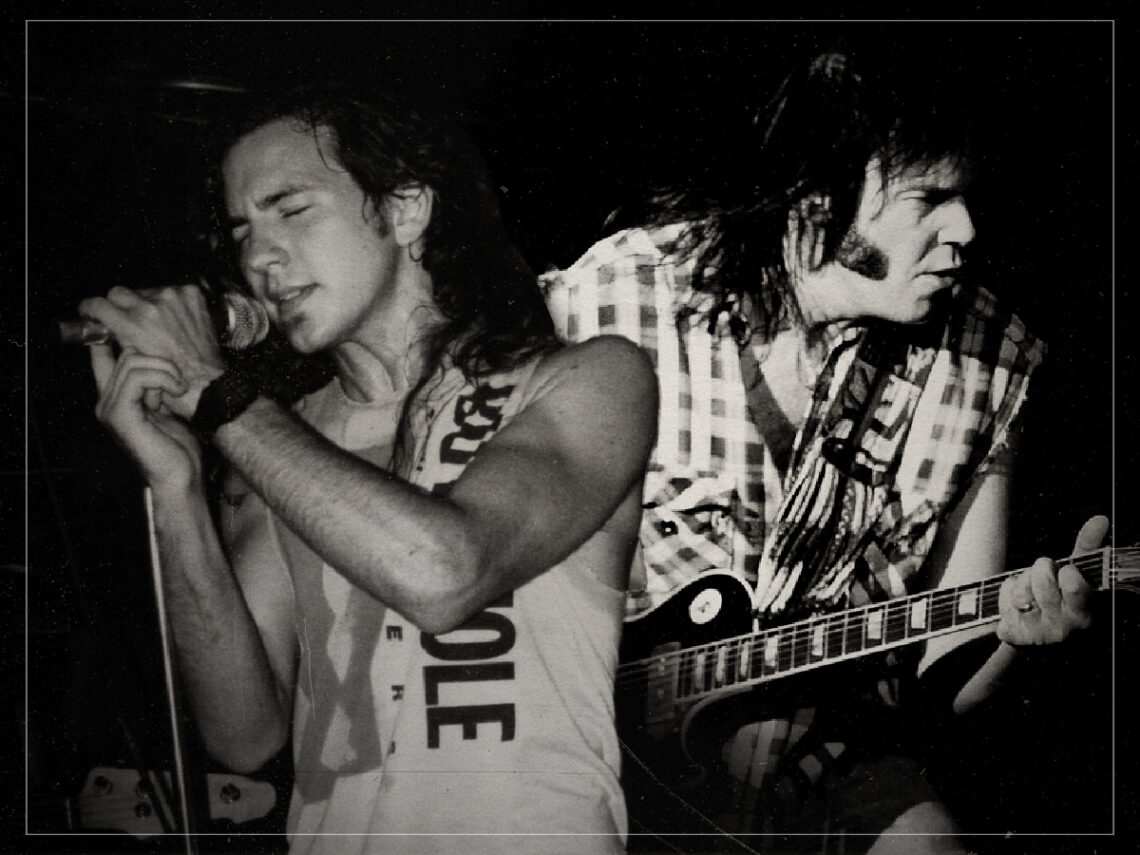
The story of how Neil Young saved Pearl Jam from imploding: “It’s just music”

Mike McCready was certainly a little bit intimidated about the thought of recording with Neil Young in 1995. “I think he’s a genius,” the Pearl Jam guitarist said at the time. Once they’d actually gone to work in a Seattle studio that winter, though, the vibe quickly switched from tension to chill.
“[Neil] is really laid back,” McCready told the Detroit Free Press. “We’d just rip through the songs and then move on to the next one. It might have been more thought out on his part, but for us it was just the excitement of doing it and being in the studio with him.”
The much-anticipated collaboration of grunge rock’s biggest surviving band and the ‘Godfather of Grunge’ himself resulted in the successful Young album Mirror Ball, a loose and energetic collection of songs recorded over just four days. At the time, Young was approaching his 50th birthday but remained thoroughly disinterested in becoming a “classic rock” act, preferring to keep pushing forward as he always had.
“I listen to Mirror Ball, and to me it’s sort of like a big, new sound,” Young said in 1995, noting that he’d bonded with Pearl Jam both musically and politically before the sessions; Pearl Jam were in the middle of their war with Ticketmaster at the time. “[This album] sounds more like a band than it does Neil Young. . . . It’s not some big voice up front and some little band behind it.”
One big voice not deeply involved in the project was Pearl Jam frontman Eddie Vedder. While he was very close with Young, and even inducted him into the Rock and Roll Hall of Fame earlier that same year, Vedder was dealing with what he would later describe as a “pretty intense stalker problem” in 1995, and was thus hesitant about being out in public in Seattle.
Vedder’s stress over his personal safety and growing disconnect from his bandmates, combined with the ongoing Ticketmaster saga and Mike McCready’s own battles with substance abuse, had put Pearl Jam in the most difficult stage of their existence up to that point. It seemed likely that the band might be headed in the same direction as fellow Seattle Sound pioneers Soundgarden and Alice in Chains, both of which would effectively break up by 1997.
Instead, the unexpected side project with one of the band’s musical heroes served the bonus purpose of shaking them out of their doldrums and reconnecting them to what they loved about making music in the first place – away from the expectations of being Pearl Jam.
“It couldn’t have come at a better time for us,” bassist Jeff Ament recalled in the book Pearl Jam Twenty. “We were feeling the pressure of being a big rock band at the time, and, in some ways, we probably put that pressure on ourselves. He made us realise it wasn’t that important. It’s not life-or-death stuff – it’s just music.”
Guitarist Stone Gossard agreed, saying, “I think [Neil Young] probably has been instrumental in why we’re still a band, for sure.”
Pearl Jam, back with Vedder, reconvened after Mirror Ball to record 1996’s No Code, their third straight number one album. There were still tensions and creative imbalances, but the band appeared to have freed itself from any further pressure to produce another stadium rock record like their debut Ten, and had wisely acquired more of the adventurous instincts of Young – good ingredients for a longer, more interesting career.
