Writer and director Natasha Kermani on ‘The Dreadful’: “If I’m watching independent cinema, I want to be challenged”

From Guillermo del Toro’s Crimson Peak to Francis Ford Coppola’s Dracula, via Robert Eggers’ The Witch and Nosferatu, all the way back to Jack Clayton’s The Innocents and Ken Russell’s The Devils, period-set gothic horror has been the backdrop for some spine-chilling, subversive, and shocking stories, with Natasha Kermani happily throwing her hat into the ring.
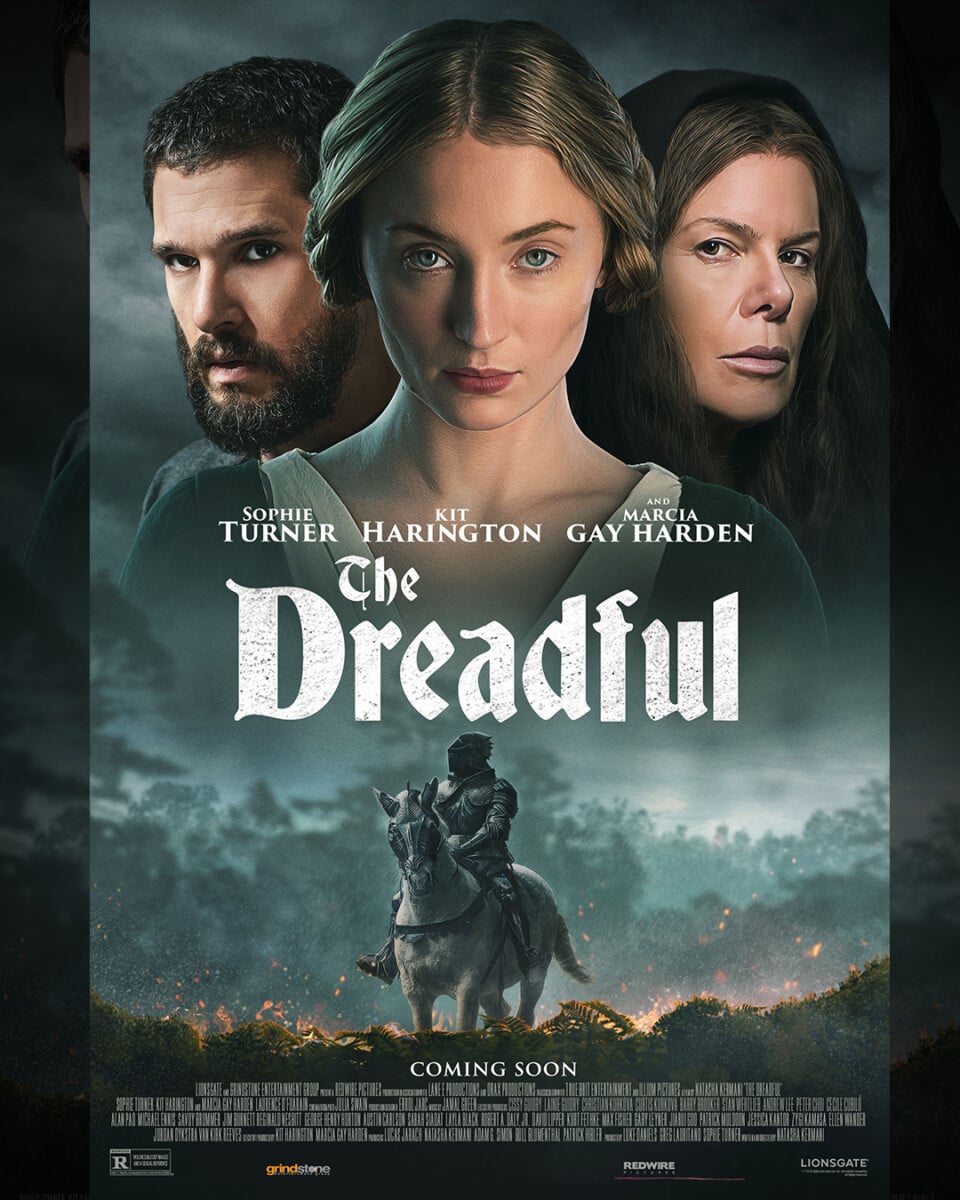
The writer and director’s latest feature, The Dreadful, is set for release on February 20th, 2026, and unfolds in 15th-century England during the Wars of the Roses, with star and producer Sophie Turner’s Anne and her mother-in-law, Marcia Gay Harden’s Morwen, doing everything they can to get by.
Shackled by the societal and cultural norms of the time, the latter resorts to increasingly drastic measures to ensure their ongoing survival, all while Kit Harington’s Jago, someone Anne has a long history with, re-enters her life to bring news of her absent husband’s whereabouts, setting off a chain of events that will change her life forever.
Coincidentally Kermani’s second period-set horror in a row, after 2025’s Abraham’s Boys, an adaptation of Joe Hill’s short story that exists as a quasi-sequel to Bram Stoker’s Dracula and follows the married Abraham Van Helsing and Mina Murray and their two sons, The Dreadful was first announced in February 2024, but she’s been working on it for a long longer than that.
“The journey on this movie has been way longer than 2024, as you can imagine; these things take a long time,” she told Far Out. “The first version of this was actually written in 2017, so it’s been a long, long, long path.” Turner was on board as far back as early 2023, but with the actors’ strike, it wasn’t until afterwards that principal photography began.
The Dreadful also carries shared DNA with one of the greatest horror movies ever made; its origins begin with the same Shin Buddhist parable that inspired Kaneto Shindō’s 1964 classic, Onibaba. However, while there are some overarching similarities, Kermani has put her own spin on the source material and adapted the parable to feel like its own distinct entity.
“What I really held on to was the idea of two women living in isolation who are dependent on each other,” she explained. “So this sort of stark landscape, and this idea of an older woman, specifically an older woman and a younger woman, who really rely on each other. And then that dynamic is destructed by outside forces. In this case, the son and husband not coming back, and the fallout from that happening.”
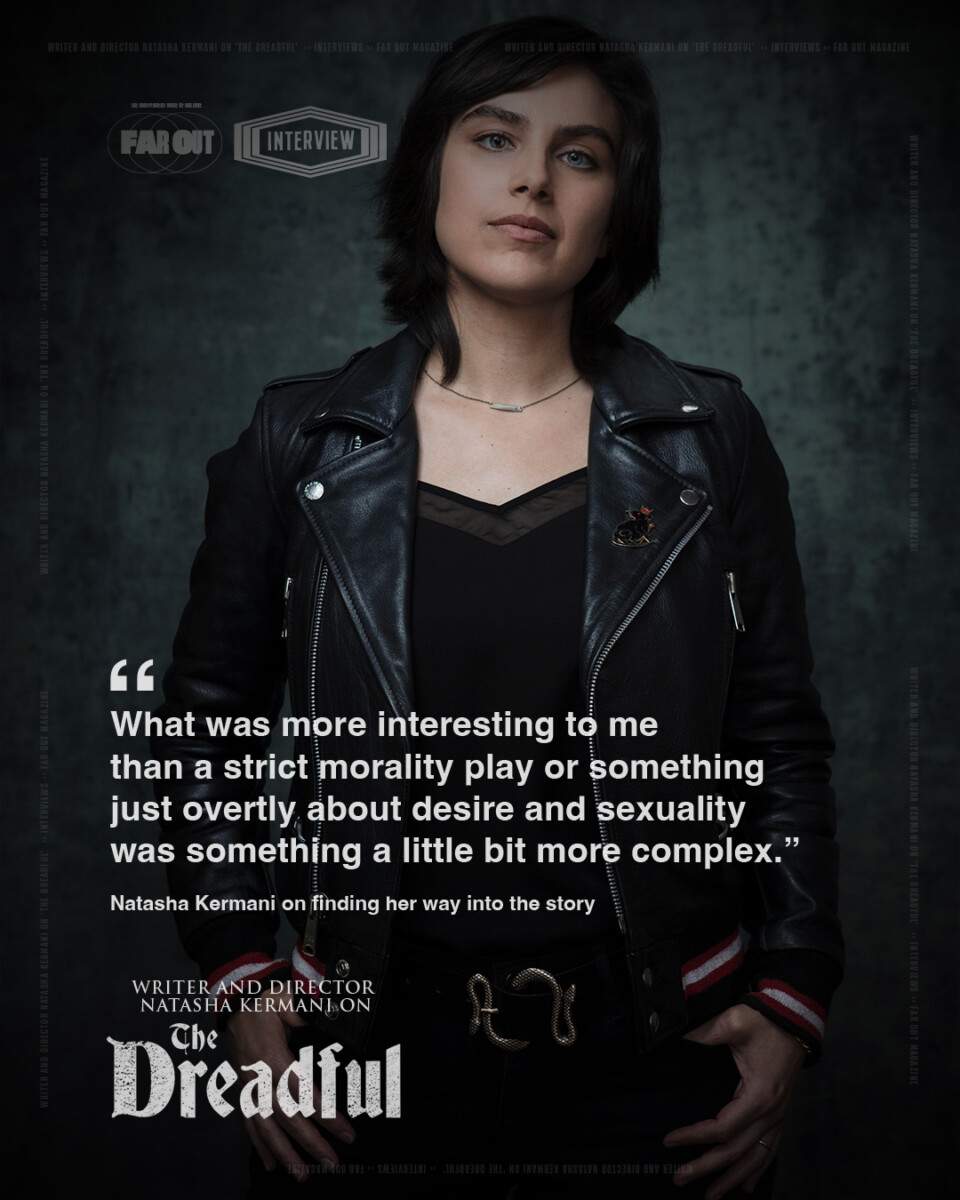
“What was more interesting to me than a strict morality play or something just overtly about desire and sexuality was something a little bit more complex,” Kermani elaborated. “Where it’s this young woman who comes to realise that the people around her, who are the most important people in her life, are not who she thought they were.”
That was behind the decision to introduce several overlapping timelines into the narrative; there’s the present day, of course, but The Dreadful also flashes back to Anne’s childhood and the earliest stages of her relationship with Jago, as well as his position as the unreliable narrator filling in the gaps about what happened to her husband and why.
It was by design, with Kermani using that structure to show “how these stories become weaponised, really, in order to manipulate her, and that she has to navigate that and find her own way forward.” There are elements of horror, for sure, including an ominous knight in black armour of potentially supernatural origins, but more than anything, the filmmaker treats the film as “this grounded character drama more than anything else.”
As mentioned, Turner is both number one on the call sheet and one of the picture’s producers, and the collaboration between the two was key. “It was really a story of liberation, and so she loved that from the beginning,” Kermani offered. “She really didn’t want to mess around with that too much.”
“That was really her approach, that it’s this young woman who is liberated from these different relationships, and ultimately has to move forward on her own terms,” the director continued. “That was really what she was creatively most excited about. And then from that point forward, filling out the cast was the next big question, right? Like, who was going to play opposite her?”
That led Kermani and Turner to Harington, and it goes without saying that the two actors are more than familiar with each other, having co-starred on Game of Thrones for eight seasons as Sansa Stark and Jon Snow, and they’ve stayed close. Throw in the Academy Award-winning Harden, “who is not British,” she pointed out, despite her impeccable accent in the film, and it was off to the races.
Harden brought “a completely new dynamic to the trio,” and finding the right combination was key for Kermani, who “didn’t want to mess with the story too much.” Obviously, Turner and Harington are friends and long-time colleagues, but their dynamic in The Dreadful is much different from what it was in Westeros.
Anne and Jago are lifelong friends and, this isn’t a spoiler, ultimately lovers. As you’d expect, their offscreen bond was hugely beneficial for both Kermani and her movie, since the chemistry between the characters is instant, authentic, and something that didn’t need to be worked on behind the scenes.
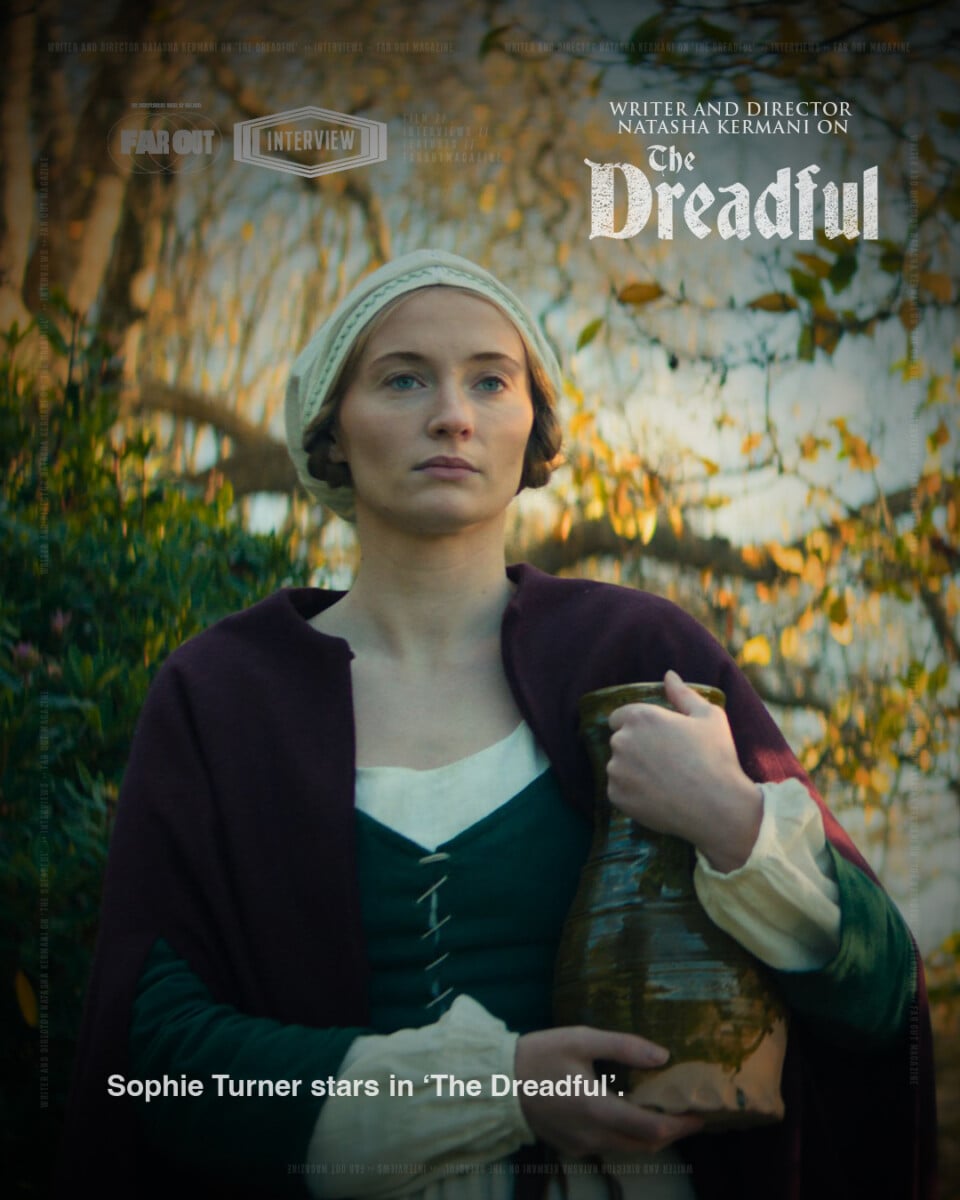
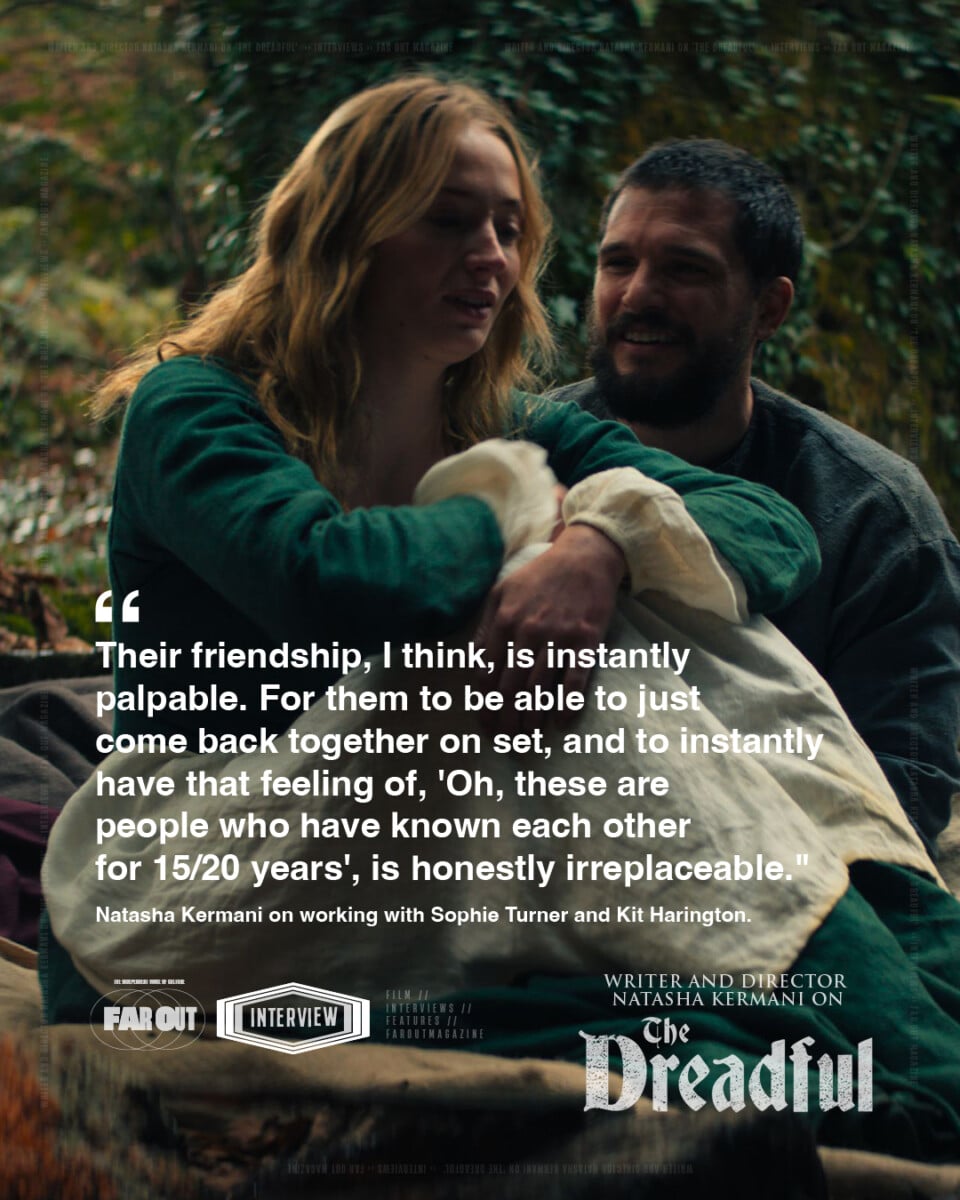
“Their friendship, I think, is instantly palpable,” she agreed. “And that’s such a great sort of shortcut for me as well. Because, on a film like this, we’re truly an independent film, so we have very limited time, very limited resources, and for them to be able to just come back together on set, and to instantly have that feeling of, ‘Oh, these are people who have known each other for 15/20 years’, is honestly irreplaceable.”
“To have that joy on set and that comfort is also just great when you’re in the middle of mud and rain and all the joy of being outside in an English winter.”
Natasha Kermani
Even though she’s an Oscar winner, a Tony winner, and a four-time Primetime Emmy nominee, you could still make the argument that Harden is underrated, something Kermani wholeheartedly agrees with. While The Dreadful doesn’t have a villain in the conventional sense, Morwen is the closest thing to an antagonist.
That said, like all worthy villains, everything she does is completely justified in her own head, no matter how cold, bloody, or barbarous it may be. “I mean, Marcia is completely devoted to authenticity, and keeping the audience in the scene, that is really the most important thing for her,” the director added.
“From our very first meeting, she was honestly, really grilling me: she wanted to understand every line, every action that Morwen takes,” Kermani shared. “And of course, we ended up making a few little tweaks here and there to make sure it made more sense for Marcia, but she does not want to ever be the reason that the audience is taken out of the moment or the scene.”
Naturally, that’s a filmmaker’s dream, and “that total commitment is part of what makes her so great.” Even though Morwen is calculating and occasionally terrifying in The Dreadful, though, Harden wasn’t exactly taking the role home with her, after Kermani, calling her a “total mensch,” revealed that “she was out at 2am buying shots for the crew.” The rest of the cast shared that commitment, except without the shots.
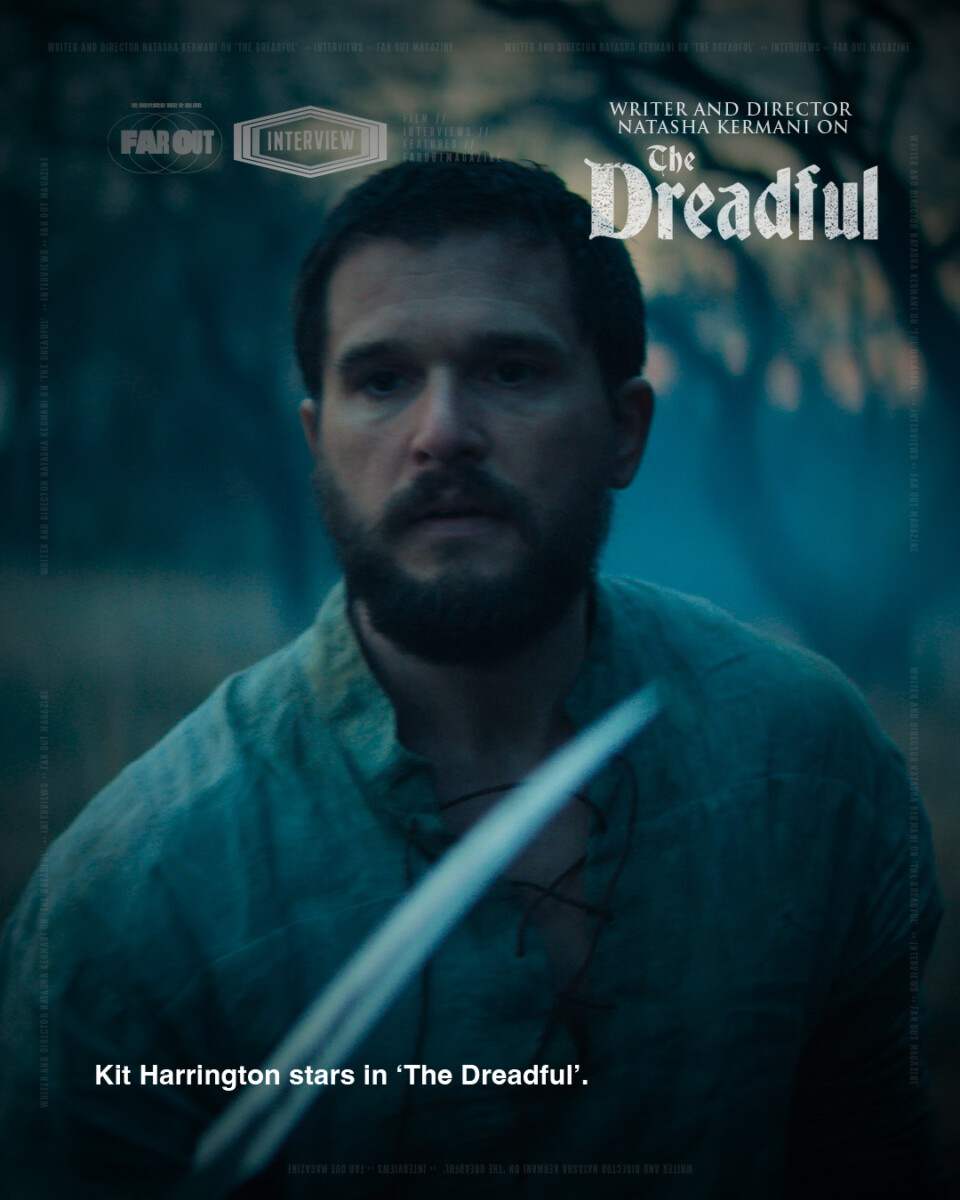
“Really, a movie like this can live or die on the enthusiasm and optimism of your lead,” Kermani acknowledged. “You know, your number one, your number two, your number three, and we just got really lucky that everyone was just down to make this work, in the mud, in the rain.”
You get a good sense of what The Dreadful is about from its opening scene, which does a solid job of laying the groundwork, easing the audience into the time period, and introducing a sense of underlying dread and foreboding that permeates the rest of the film. When asked if what she called her “pseudo-Lord of the Rings open” was always part of the plan, Kermani answered honestly: it wasn’t.
“We realized that we needed to start with a little bit of mythology,” she proffered, so as not to make things too jarring for the viewer, based on what comes next. “There are very, very tiny amounts of mythology in this film, but we did feel that we needed to start in that space, so at least the audience knows what to look out for once it shows up. So yes, that’s a very astute observation. We did tweak that beginning.”
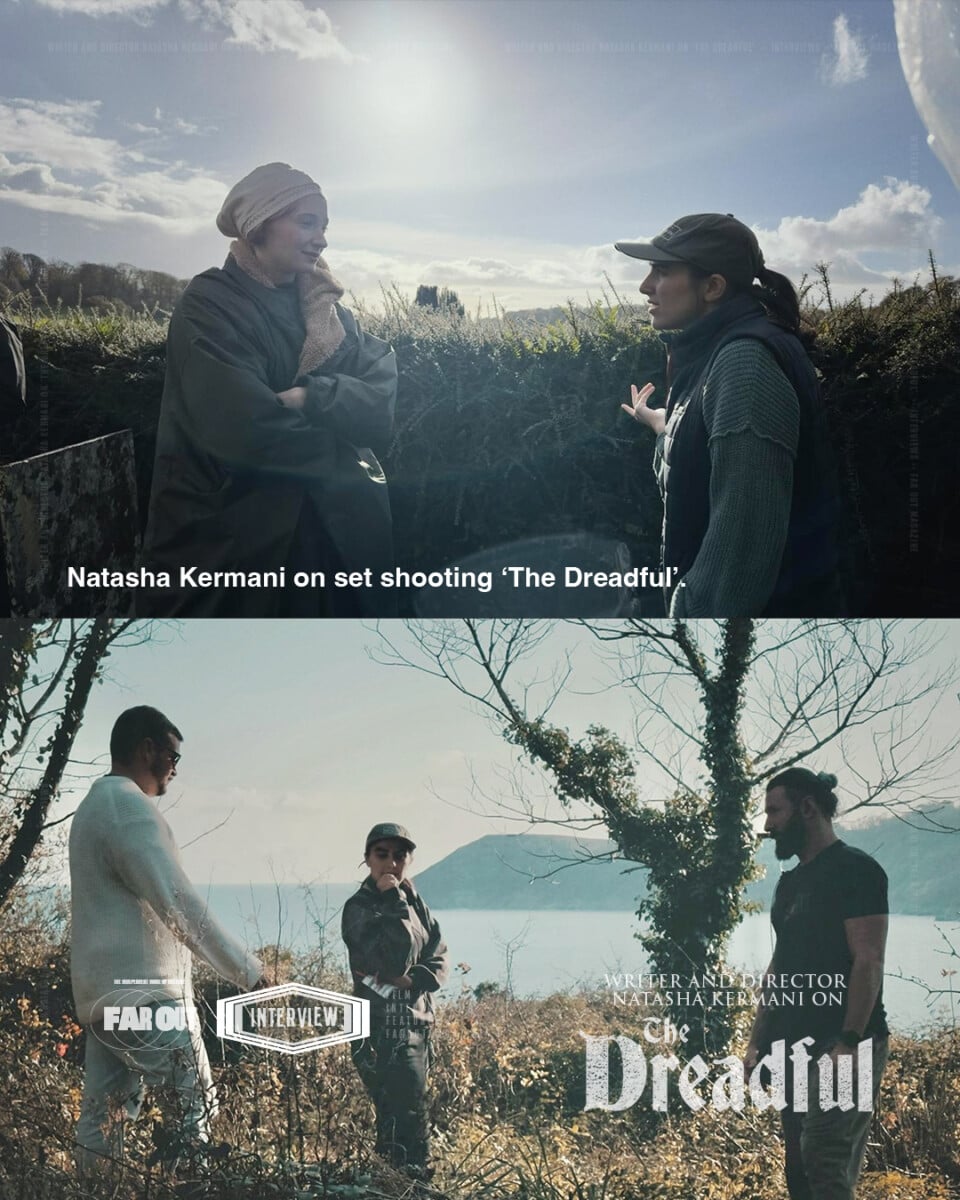
As she said, it was helpful to have a cast who were game to tackle the elements. With the vast majority of The Dreadful being shot on location and outdoors amid the famously unpredictable and frequently terrible weather, Kermani’s background as an independent filmmaker came in handier than you might think when they were confronted with the risk of the elements and other things she couldn’t control.
“My DP, Julia Swain, and I have worked in pretty much every condition you can imagine,” she declared. “It’s funny, we were coming off a movie that we shot in Simi Valley, California [Abraham’s Boys], so it was like the absolute opposite, it was very hot, high temperatures, and dusty Western hills.”
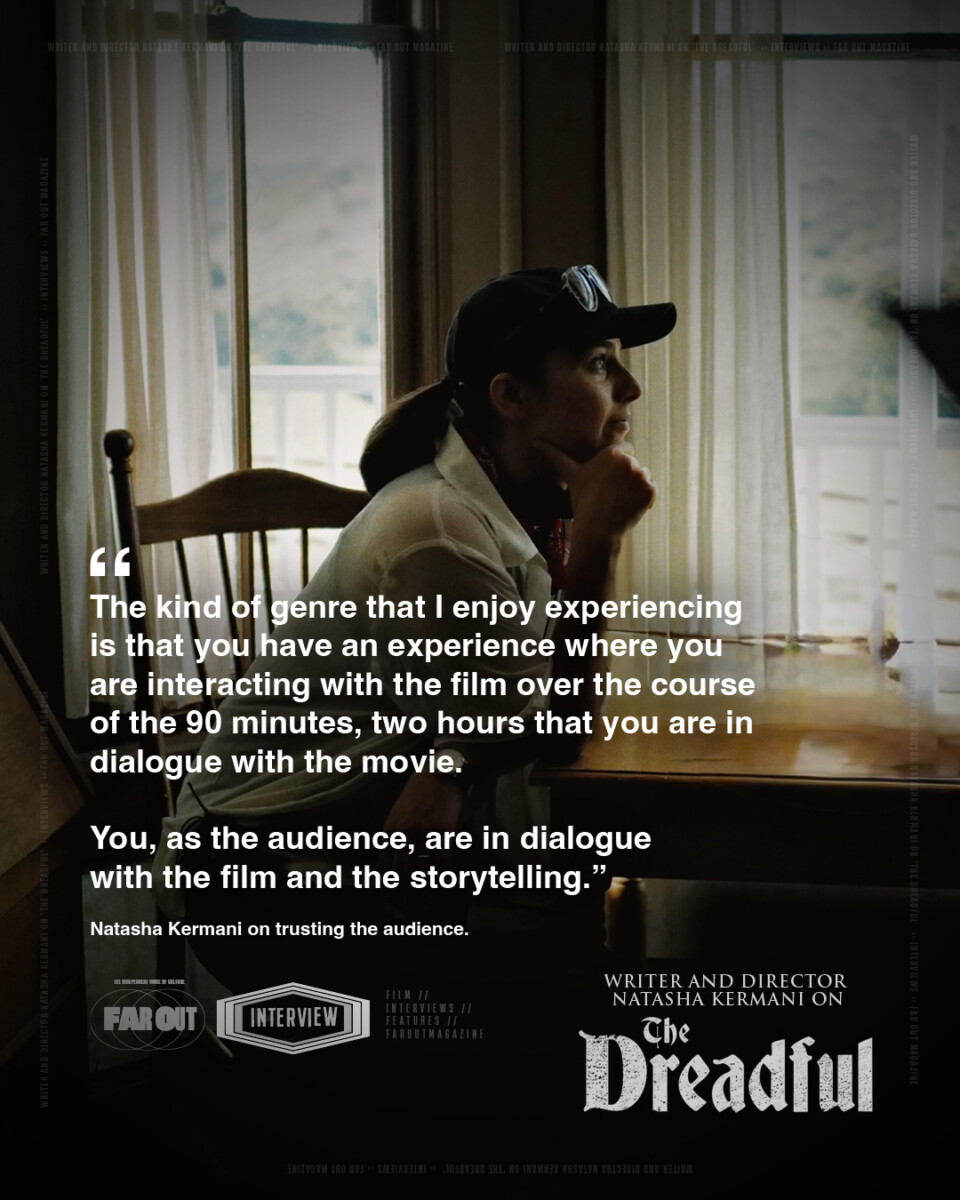
“I think we always have a certain amount of flexibility in our shot list and our prep,” Kermani noted. “We’re very clear on, ‘OK, well, these are the tenets of exactly what we need to get’, as we’re getting that story stuff in and that creative thrust of the visuals, then we can be malleable and flexible within that.” Still, it wasn’t completely without incident, with that pesky weather causing a drastic change.
“We had an entire location that was supposed to be filmed at night that just got completely rained out,” which shouldn’t come as a surprise to anyone aware of British weather, regardless of the time of year. “So we had to go home early that day and come back and reimagine the entire scene during the day, and that’s indie!”
“It was all worth it for us to be on location and have those real cliffs, the mist, the fog, all of that feeling so real, the moss and the woods, all this stuff that you just wouldn’t get if we were on a soundstage in California.”
Natasha Kermani
As Kermani alluded to earlier, there’s mythology in The Dreadful. There’s also world-building, hints of otherworldly goings-on, a few deaths, and a central love story that’s been lingering for decades. One thing she didn’t want to do was stop, drop, and spell everything out for the audience, with that slow-burning of the various backstories, revelations, and fates born from a desire to trust the viewer, and her own personal preferences.
“The kind of genre that I enjoy experiencing is that you have an experience where you are interacting with the film over the course of the 90 minutes, two hours that you are in dialogue with the movie,” she concurred. “You, as the audience, are in dialogue with the film and the storytelling. I just think that is ultimately a much more satisfying experience, especially in genre, when we are so used to, again, being delivered all the information on a platter.”
It’s not a non-negotiable for Kermani as an audience member, though; it just depends on the film. “If I’m watching an Avengers movie, right? Fine, tell me exactly what’s going on. I want to know what planet this guy is from, whatever. But if I’m watching independent cinema, I want to be challenged a little bit. I’m going for a different experience than I am from an Avengers movie.”
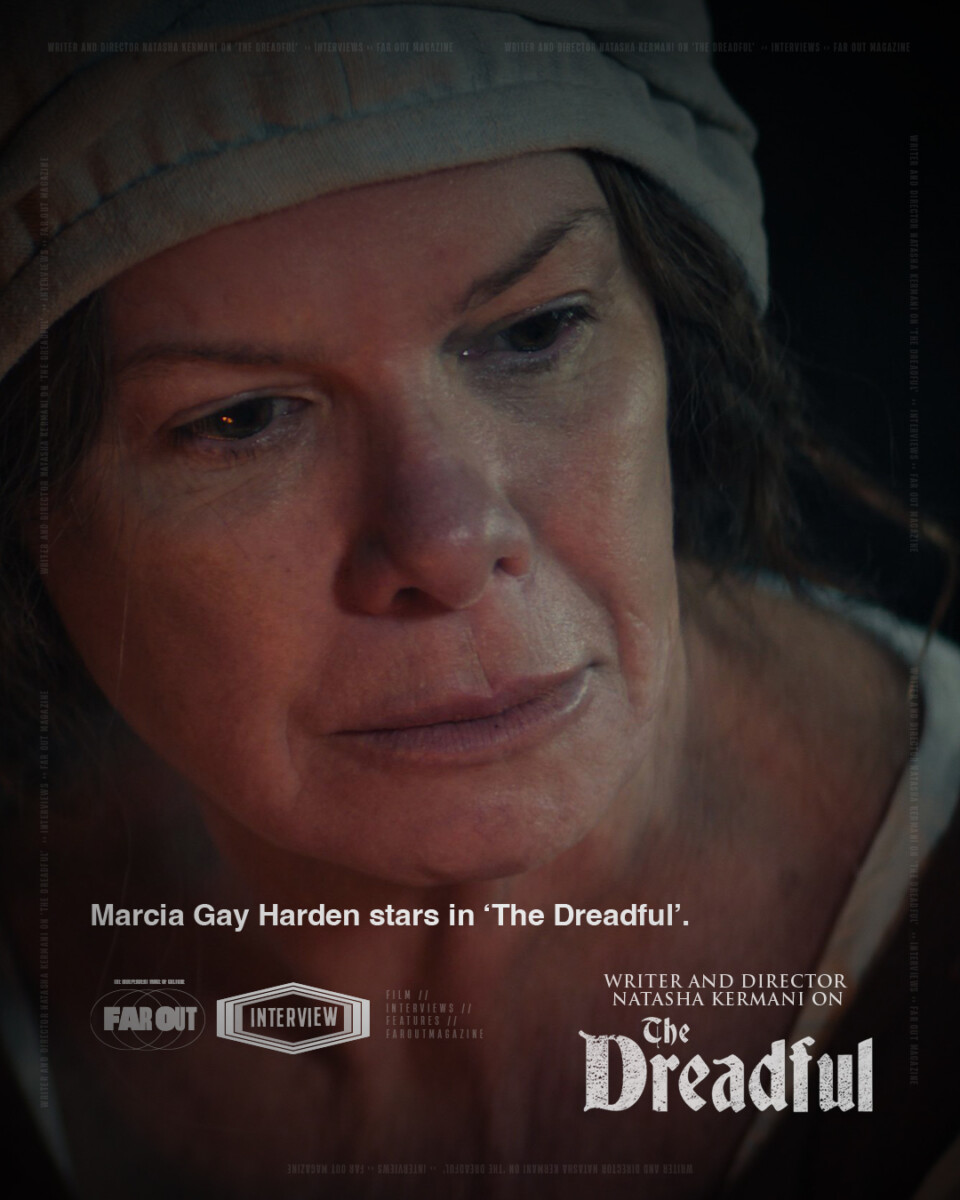
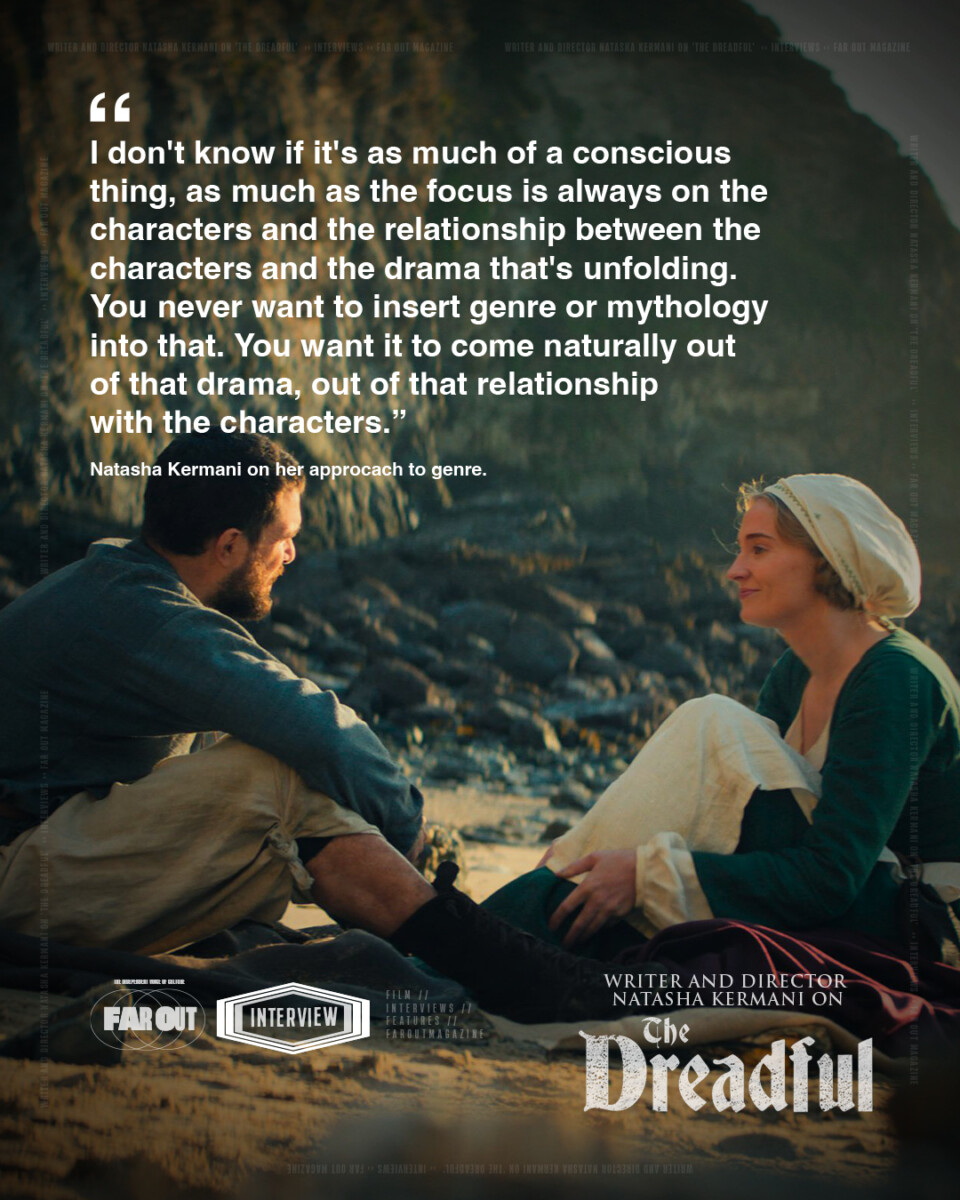
Nobody expected Marvel to become part of our conversation about a 15th-century character piece that doubles as a gothic horror, but here we are, and it makes perfect sense. “For me, that’s inherent in every page of the screenplay, even as you’re putting it together,” she detailed. “I don’t know if it’s as much of a conscious thing, as much as the focus is always on the characters and the relationship between the characters and the drama that’s unfolding.”
“You never want to insert genre or mythology into that. You want it to come naturally out of that drama, out of that relationship with the characters. So the reveal that Jago is not telling the truth comes at an organic point in Anne’s experience of that, right?” she asked, rhetorically. “So I think that it’s just a question of the chicken or the egg. Where are you starting the storytelling from, and then letting the genre and the mythology and the horror naturally unfold out of it, rather than being forced in.”
It’s a compelling mission statement and sage advice for any aspiring auteurs out there. Along the same lines, The Dreadful is a period piece, a horror movie, a family drama, a love story, a tale of survival, a film about Turner’s Anne breaking free from the societal and familial restraints that she’s spent her life under, and more besides. These elements are often at play within the same scene, and it’s enough to make you wonder how Kermani pulled off such a delicate tonal balance.
“That’s a really good question,” she pondered, before issuing a fascinating reply. “I hope that we achieve that. The goal is that you are with this character, and that all of that is part of the world-building. You’re being dropped into that world and again, not force-fed. We talked about, ‘Oh, do we have a title card that comes up at the beginning that says the 15th century, right before Martin Luther and the separation of the church in England?’ No, it’s just there, it’s in the material. And then it’s up to the audience if they want to expand outwards.”
With that in mind, Kermani had a specific example to illustrate her point further: the accents the characters speak with in the film aren’t historically accurate. In fact, it doesn’t even exist. Working with a historian, they developed “a very specific design that we put together for our film,” without ever giving an “explicit explanation of why they sound the way that they sound,” which was the goal.
“We’re just being dropped in with these people into this kind of fairy tale, folk tale world, and then people can extrapolate what they like from that world,” she added, reiterating her desire to have the audience invest in The Dreadful, its setting, its character, and its mythology without resorting to the kind of expositional spoon-feeding that’s blighted many modern genre films.
In the interest of averting spoilers, what we can say is that Kermani’s latest ends on an ambiguous note, one that allows everyone to draw their own conclusions as to what happens next. On the other hand, it continues the movie’s recurring sentiment that some things are impossible to resist despite better judgment saying otherwise. Vague? Yes, but a potential point of discussion nonetheless.
“That was always the end,” the director confirmed. “I don’t think there’s any specific resolution. I think, in my mind, hopefully, people have the sense that she will charter her own path, whatever that path is, and she won’t necessarily fall prey to the same mistakes that the other characters did.”
The Dreadful is the latest picture from Kermani to operate in the space between genres, something that was present and accounted for in Abraham’s Boys, a vampire horror and generational family story, Lucky, a horror-tinged thriller about a woman who can’t seem to convince anyone her nightly stalker is real, and Imitation Girl, a sci-fi tale about a woman who materialises in the desert and discovers she has a doppelgänger.
Using a familiar genre to explore something unfamiliar might be a recurring theme, but it’s not an intentional one. “I really don’t think it’s an ‘outside-in’ process,” she said. “I don’t think it’s like, ‘Oh, well, this time I want to do vampires’. It comes from the journey the character is taking, and then I’m simply allowing myself to break the rules of our reality.”
“If this character is going through this experience of feeling split, for example, my first film, Imitation Girl, this character is feeling like she’s not herself. And so in the story, I allowed myself to make it a doppelgänger movie, right? And now there’s literally a second version of her,” an approach to genre that has informed everything she’s made since.
“It always comes from the experience, the challenge, the mountain that this character is trying to climb, and then simply saying, ‘OK, well, what happens if we take off the restraints of this having to exist in our real, observable world, and I allow it to live in a world of horror or fairy tale or science fiction, or whatever it is?'” Kermani detailed. “But always, it’s an ‘inside-out’ process, instead of, you know, putting, ‘Now it’s a vampire movie, now it’s a doppelgänger movie, now it’s a, you know, haunted helmet movie.'”
A haunted helmet movie is nothing if not a novel way of describing The Dreadful, although she did add that in addition to that fantastic logline, it’s also “a little bit of a monkey’s paw.” Armed with that knowledge, then, the filmmaker didn’t need to explain that it wasn’t a strategic move to make two period pieces in a row, three if you count her V/H/S/85 segment, ‘TKNOGD’, but she did, armed with more salient points.
“I mean, same as the rules of genre, period is just another paintbrush,” she mused. “It’s another colour that you can choose to paint with. And so it’s really a question of, ‘Is it enriched by being placed in a different time period?'” If the answer is yes, and the creative inspiration strikes her, then it’s fair game, although those of a certain age might want to look away now, because she’s working on another one.
“I’m developing my next project right now, and it is set in 2011, so it’s still period, but we’re taking the time machine a little bit less distance this time,” she teased. That’s right; we’ve unfortunately reached the stage where a movie set in 2011 technically counts as a period piece. “I know, it’s terrifying,” Kermani agreed. “But it’s true! It is period!”
That’s what’s coming next, but what’s the dream? Say, for example, that Kermani was handed a blank cheque to make whatever she wanted, however she wanted to make it, what would it be? Hypothetically speaking, once Denis Villeneuve wraps up his trilogy and moves onto James Bond, who’s to say Warner Bros will be ready to abandon Arrakis alongside him?
“Probably Children of Dune, the Frank Herbert, I guess, sequel to the Paul Atreides story,” she spit-balled. “The Dune books were a huge part of my childhood growing up. It’s science fiction, sort of space epic, medieval warfare. It embodies this melange of periods in a way that I love, and, culturally, it’s very satisfying for me. I’m Middle Eastern. My father is from Iran, and so I’ve always loved the Dune books for existing in a Middle Eastern space.”
“To play with that would be excellent,” she fantasised. “The Children of Dune series has actually been more the dream than the Dune movies themselves, which Denis Villeneuve absolutely started an incredible series, and to pick up where he’s leaving off would be the dream.”
Well, if Warner Bros wants to continue the Dune saga once Villeneuve rides off toward a 007-shaped sunset, there’s one writer, director, and lifelong fan of the source material who’s willing to answer the call: “Well, I’ll make myself available.”