


Nannerl Mozart: How to vanish a female composer

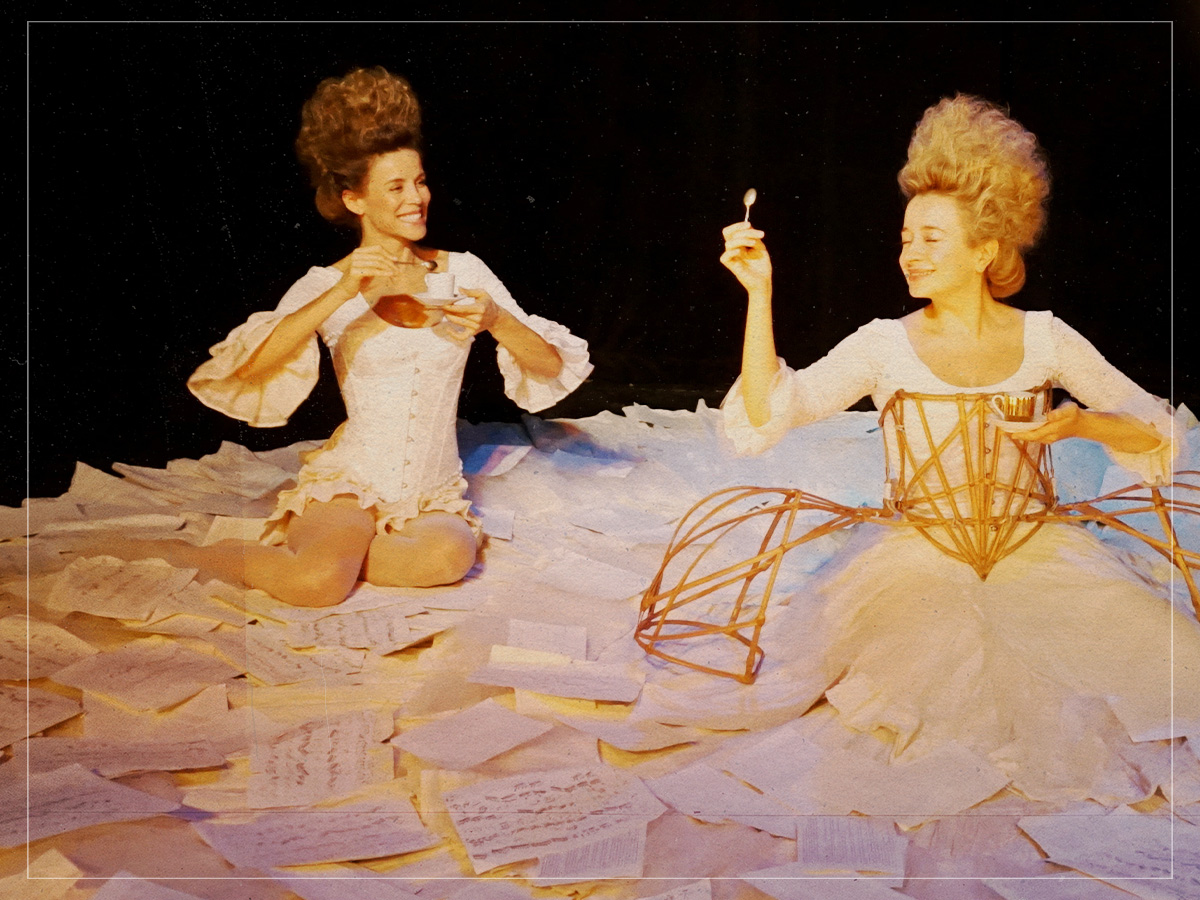
Editor’s note: Sylvia Milo is the creator and performer of the play The Other Mozart, a renowned stage show which chronicles the little-known story of Nannerl Mozart, sister of Wolfgang Amadeus.
Despite the disparity in the column inches that they have attracted in the centuries since, in her childhood, Nannerl was considered equally as prodigious as her famed brother. Milo walks us through how an icon of equal measure was lost in the annals of history.
“None of her music survived”.
“Her music was forgotten”.
“Although well known in her time, she disappeared”.
“Her music is lost or was destroyed”.
This is how biography entries usually end for women composers from the past; their work, and they themselves, vanish.
Growing up, training to become a classical musician, I was only given pieces to play composed by male composers. In my music history class in college, no woman was ever mentioned. I didn’t even question it. There were no women Mozarts. But then, I saw her. She was seated next to Wolfgang, at the piano, their hands intertwined, playing together, and she had an enormous, fabulous hairdo. The Portrait of the Mozart Family, read the title underneath the painting. There was a woman Mozart, an actual Mozart! Maria Anna (Nannerl) Mozart. A child prodigy, keyboard virtuoso and composer. If there were two Mozarts, why wasn’t anybody telling this story?
So I did, I do. In the last 12 years, I have told her story over 360 times through my play, The Other Mozart, in front of audiences across the US, Europe and Asia. Because history is made of stories we choose to tell. This August, the play will be shown at the Edinburgh Festival Fringe.
Her story is important today because it is not a tale of a singular villain thwarting and oppressing a female genius. It is but one example of a systematic tragedy repeating innumerable times throughout the ages.

How to vanish a woman composer
1. Invent “reputation”
Maria Anna (Nannerl) Mozart was a child prodigy alongside Amadeus. The children toured performing together at the biggest courts of Europe, as wunderkinder. It was the two of them, astonishing the world. There are reviews praising her performances, with one reading: “It was a source of wonder to many”. She was even billed above Amadeus on those tours.
However, that all stopped once she turned 18—it wasn’t proper for a woman to display herself in such a manner, she couldn’t risk her and her family’s reputation, therefore risking her marriage prospects and her financial security. She had to stay at home with her mother and learn the skills necessary to become a proper wife. She never toured again.
2. Limit her education
Nannerl’s education was unusual and exceptionally proper. Leopold, her father, chose to educate both of his children well in music and the liberal arts, and he was a brilliant, educated man himself. The family travelled throughout Europe, saw the greatest art, heard the best music, the children learned to speak five languages, and they witnessed the greatest minds of Europe discussing politics, science and philosophy.
She was taught composition, but only in those early years. Once she was a teenager, Wolfgang continued composition lessons with their father, but Nannerl transitioned to study the Arts of Housekeeping with their mother.

3. Limit encouragement
In 1770, while Wolfgang and Leopold were off for the first time on tour without Nannerl, she sent them a piece she composed. Wolfgang wrote, “Cara sorella mia! I was truly amazed that you can compose so well; in one word, the piece you wrote is beautiful. You should compose more often.”
But her father—her teacher and mentor—didn’t write anything about it. We don’t know if she composed anything else after that, but that composition is lost.
4. Place her works in a library to gather thick dust, and don’t look back
During her tour to Vienna, little Nannerl met Marianna Martines, whose life must have looked like a dream to her. When they met, Martines was already a highly esteemed musician, singer, keyboardist, and accomplished composer. She held music salons in her grand apartment, performing her own compositions, small and large pieces, even for an orchestra. The difference between Nannerl and Marianna is that the latter came from nobility and had money; therefore, she didn’t need to make money and could choose to never marry, and she never did.
But Nanerl had to maintain her reputation and modest image. She rarely published her compositions or appeared in public performances, except for her family home and at the court in Vienna, in private performances for the Empress Maria Theresa and her daughters. She never received any payment for her work, as it would have been unseemly and a scandal. She was a protege, since childhood, of the court poet, Pietro Metastasio (the leading operatic librettist of the 18th century), who recognised her brilliance and guided her career and reputation, carefully and wisely.
To seal her modesty, she called herself a dilettante. She composed more than 200 works, including two masses, which were performed in Vienna, until the Emperor Joseph II forbade women to “speak”, that is to sing, in church. She was the first woman admitted into the famed Accademia Filarmonica di Bologna. She died in 1812, and already, in 1869, Viennese music critic Eduard Hanslick claimed that all of Martines’ pieces were lost.
He must have tried hard not to look for them, as they were all in Vienna, at the Gesellschaft der Musikfreunde. Experts repeated his claim until the 1980s, when somebody finally looked and easily found them, and musicologist Eva Weissweiler accused Hanslick of deliberate historical falsification in a bid to diminish women’s compositional achievements.
5. Have her publish her best music
After Marianna Martines, the second woman ever invited into the famed Accademia Filarmonica of Bologna was Maria Rosa Coccia. She decided to publish the fugue she composed for her examination. This was apparently a no-no for a woman to exalt her own talents that way..
Marianna Martines wisely didn’t publish her own fugue as other musicians publicly attacked Coccia, claiming she didn’t deserve the honour. Her reputation never recovered, and she seemed to have stopped composing thereafter.

6. Throw away her work or have her throw away her own work
In the new documentary film on Nannerl Mozart inspired by my play, Mozart’s Sister, Dr Eva Neumayr, musicologist at the International Mozarteum Foundation, relates, “I have seen that as an archivist, that an older archivist would say, ‘Oh, it’s a female work’, and just throw it away. That happened a lot”.
We don’t know what happened to Nannerl Mozart’s compositions. Perhaps they were not viewed as important and were not preserved; perhaps she didn’t feel them worthy, since she wasn’t encouraged to write and could have felt very insecure about them and discarded them herself.
Many women musicians joined convents so they could receive music education, play music and compose (Lucrezia Vizzana, Claudia Sessa, Maria Anna de Raschenau, Caterina Assandra). Usually, their works were only performed inside the monasteries and were not open to the public. Some convents encouraged modesty by the ego-destroying practice of women deliberately destroying their own compositions.
7. Have her marry a self-centred man
Prior to marrying composer Gustav Mahler, Alma Mahler had to agree to give up composing, at his request. Amy Beach’s husband strongly preferred that she limit the number of her concerts. Nadezhda Rimskaya-Korsakova stopped composing, as her husband, Nikolai, strongly discouraged her. Clara Schumann had to limit her practising and composing to times when it would not disturb her husband, Robert Schumann’s, creative time.
Nannerl kept hoping to join Wolfgang and have a happy musical life in a major city. But finally, resigned at 33, she married a twice-widowed baron with five children and moved to a backwater village. Her fortepiano was placed in the smallest room of her husband’s house, but she kept playing every day for three hours, for herself. In winter, her instrument was destroyed by the dampness, yet she kept playing.
8. Attribute her compositions to her brother
Fanny Mendelssohn was born 50 years after Nannerl. The times were a little different, but still the same. She was given the same music education as her brother, Felix Mendelssohn, including composition. She was a brilliant pianist, a virtuoso, but she was only allowed to perform for guests at her family’s home. Unlike the Mozarts, the Mendelssohns were well off.
She was encouraged by her parents to compose, but publishing was forbidden as it was deemed not ladylike and would threaten their reputation. Her father wrote, “Perhaps music will be his [Felix’s] profession, whereas for you it can and must be but an ornament”. Felix, of course, was publishing. He was publishing so hard, he was even publishing Fanny’s works under his name and performing them as his own. Thankfully, Fanny married a man who encouraged her to compose and insisted she publish her music.
She composed over 450 pieces of music. Her ‘Easter Sonata’ was lost for 140 years, found in 1970, and immediately attributed to Felix. The manuscript was signed “F Mendelssohn”. Only in 2010, a musicologist, Angela Mace Christian, questioned the attribution, recognising Fanny’s musical voice. The collector who found the manuscript insisted it couldn’t have been Fanny’s as it was “a masterpiece…very masculine”. It was hard to argue, as the person in charge of the archives in Berlin, which held all of Fanny’s other manuscripts, wouldn’t allow anybody to study them, dismissing Fanny as “just a housewife”.
Finally, access was given, and it was determined that the ‘Easter Sonata’ was indeed Fanny’s.
Some of the early compositions attributed to Wolfgang may be Nannerl’s, or a collaboration of the two children, as with the ‘Symphony No 1’, which is still only attributed to Wolfgang, but the way Nannerl modestly told the story of its creation later in life strongly suggests a collaboration. The family was staying in London and the father fell deathly ill. The children were to keep quiet in the house and couldn’t play any music. So they decided to compose something. Nannerl was 13, ‘Wolfi’ was eight years old. The piece was written down by Nannerl and orchestrated by her, with ‘Wolfi’ admonishing her to “give something good to the waldhorn”.
In 2010, a fragment of music manuscript, a composition exercise attributed to Wolfgang, was being auctioned at Sotheby’s. Able to see it at last, experts determined it was actually Nannerl’s. There may be many other such misattributions in private collections, if only the collectors were willing for them to be examined.
Until then, she composed, but none of her music survived.
The Other Mozart will be performed at the Edinburgh Fringe Festival this Summer, in Assembly George Square Studios (Studio Two) from 30th July–25th August (not 12th)
For tickets and more information, visit the Assembly website.
