


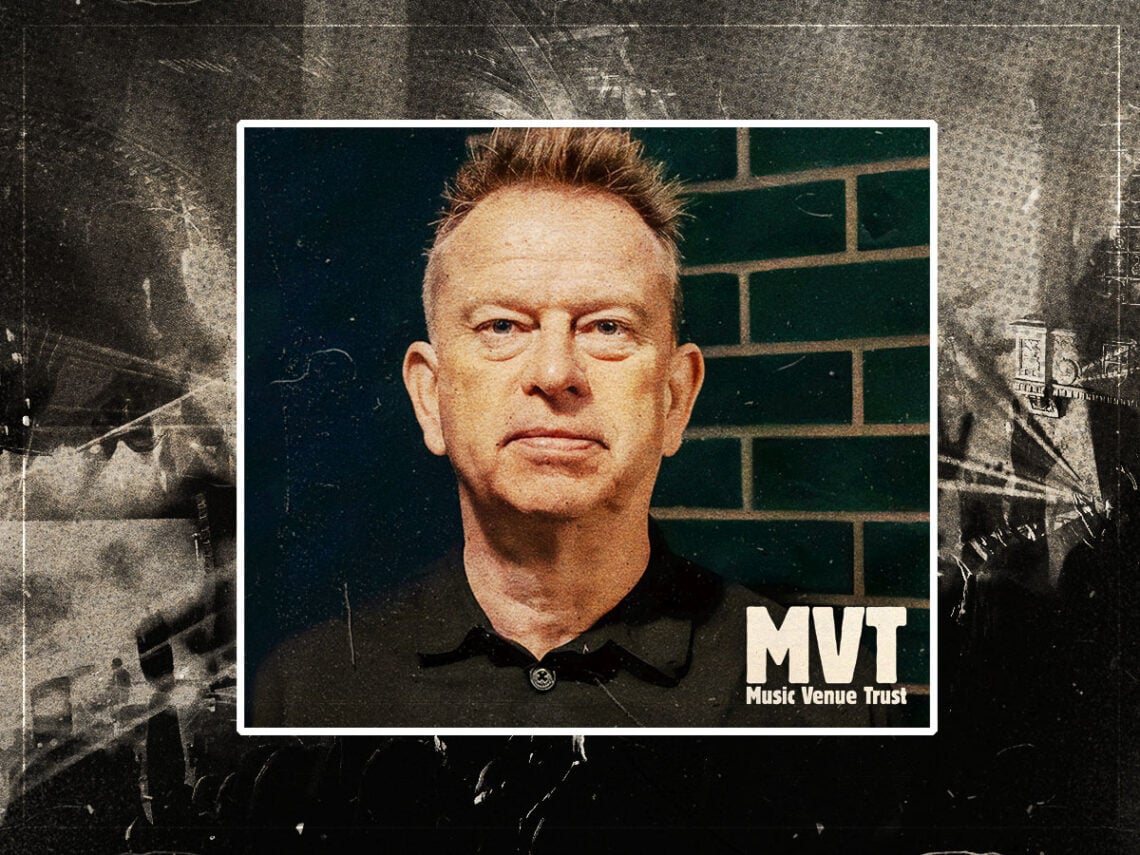
Music Venue Trust CEO Mark Davyd urges people to support local venues and musicians

Founded in January 2014, the British charitable organisation Music Venue Trust (MVT) set out to protect small, independent music venues from industry pressures. The long-term plan is for the MVT to acquire as many small venue freeholds as possible, but in the meantime, fundraising has proven a vital source of alleviation. Over the past decade, mounting stress from Covid-19 lockdowns and the cost of living crisis has made the organisation increasingly invaluable.
“Throughout my career, I’ve been lucky enough to play in venues of all different shapes and sizes, from tiny clubs to massive stadiums all over the world,” Paul McCartney, one of many notable patrons, announced in support of the movement in 2016. “Without the grassroots clubs, pubs and music venues, my career could have been very different. I support Music Venue Trust because artists need places to start out, develop and work on their craft, and small venues have been the cornerstone for this. If we don’t support live music at this level, then the future of music, in general, is in danger.”
As small venues and smaller artists fall at the feet of giant arenas and a small minority of stratospheric pop stars, we encounter unprecedented inequality within the industry. The music business reflects the unequal distribution of wealth in society in an almost comically exaggerated manner.
For most industries, 2022 marked a year of repair following the plight of the Covid-19 pandemic. However, for some, including grassroots music venues, there was no light at the end of the tunnel. Compounded by the Russian invasion of Ukraine, the dawning cost of living crisis kept the screw turning on vulnerable businesses.
Thankfully, the MVT raised over £1million to ease around 1000 Music Venues Alliance (MVA) embers in 2022, but the battle is far from over. Far Out recently contacted Mark Davyd, the co-founder and CEO of the MVT, to discuss the findings of the charity’s 2022 report and understand how we can back the cause.
Addressing the 2022 report, Davyd cited “rapidly increasing costs and an inability to increase income” due to the “cost-of-living crisis” among would-be audiences as the central cause for concern post-Covid-19.
“Audiences initially bounced back, then faltered a little, now attendance and the ability to tour are both under severe pressure from the cost-of-living crisis,” he added. “The most notable impact of the pandemic is the level of debt being carried by the sector – essentially, the grassroots sector operated almost without access to finance, and therefore debt, prior to the pandemic. Coming out of the pandemic, the sector was carrying £90million in new debt. That’s obviously a very serious situation when interest rates rise as dramatically as they have recently.”
While venues struggle to remain open, touring performers must face the prospect of net losses, let alone slim profits. Noting the soaring cost of touring, Davyd explained that “everything from van hire through hotel prices down to basic food needs” has “risen so dramatically”, making “touring unaffordable”.
“If artists cannot demonstrate the ability to sell tickets because they cannot afford to play, they cannot create the data which demonstrates that larger promoters should take a chance on them and move them up the pipeline,” Davyd added, noting a distinctly greasy pole.
“Larger promoters are risk-averse; they want evidence that a band has sold enough tickets to indicate they can headline a larger event or move up the festival bill. That evidence isn’t being created because artists simply aren’t able to get out there and produce it.”
The live music industry has seemingly struck a nadir of sorts, but Davyd notes that growing support for the cause is encouraging. “Despite everything, there were still hundreds of thousands of chances to perform, hundreds of places determined to take risks with their programming and being prepared to give new and emerging artists a chance, and still over 30,000 jobs in the sector.”
“It would not take much to kickstart the sector back towards profitability and increase the already impressive number of events and performances,” he continued, offering a glimmer of hope. “There are still over 900 venues, which presents a massive opportunity to increase every output: more shows, more performances, more jobs, more artists breaking through.”
With a scent of optimism in our nostrils, we were all ears to hear what advice and encouragement Davyd and the MVT folks could offer aspiring performers. “A really heavy focus on building up a local crowd, then expanding that to a region or across a city,” he advised. “Artists are sometimes too eager to take what they have and present it somewhere where they are completely unknown”.
“A local buzz can go a long way towards a regional promoter finding you a slot,” he continued. “Find the local venue that most aligns with your vision for your music, and don’t just ask them for a gig. Go there often and build up an understanding of how the venue works; befriend every regular you can; move your act up from the very grassroots to the point where, in your selected venue, you are a natural headliner for the promoter or the in-house booker.”
Venues and musicians would get nowhere at all if it wasn’t for you, the consumer of entertainment. It’s become all too easy to fall into a routine in the modern day: perhaps slipping into your pyjamas after dinner and cosying up to the warmth of that latest true crime documentary on Netflix. Such habits were proliferated under the draconian measures of deepest, darkest lockdown, and many of us are in a hangover phase, so to speak.
With this in mind, it doesn’t take a rocket scientist to divine what we, the music lovers, can do to support our local venues and musicians. That said, Davyd observed how easily people stray from the path of salvation in favour of the Netflix series or smartphone screen and set a challenge for our readers.
“It’s the one piece of advice I’ve given more than any other in the last nine years: Go to one more show. Take a chance,” he implored. “Don’t just sit there at home messaging people about how much you love live music; walk out of your door to your nearest venue and go and see something you weren’t going to go and see. If everyone reading this did that just once a month extra, the whole economics for artists and venues would change. And really importantly, if you do that twelve times in a year, I guarantee you that you will see a band you absolutely love and will want to be part of their story for many years to come.”
A problem shared is a problem halved. Will you accept the challenge? You can access the MVT ‘Gig Guide’ here.
