


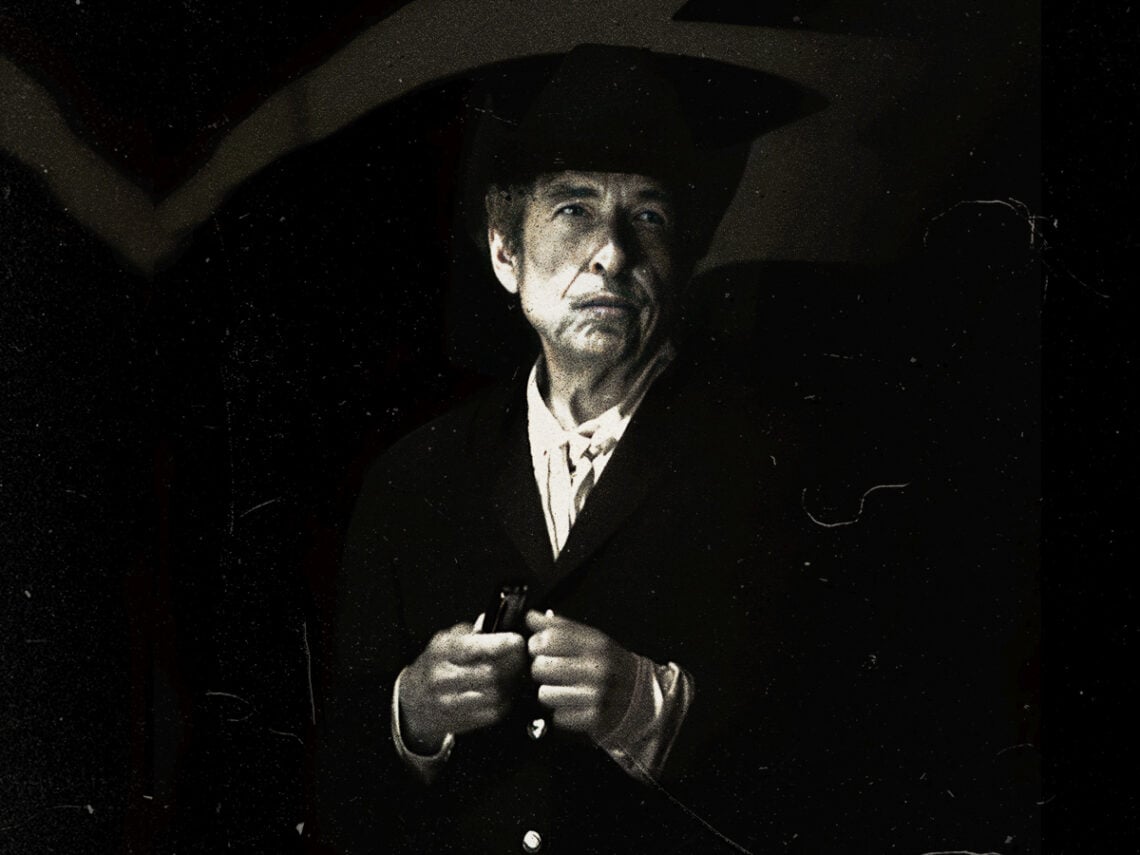
Many roads walked: The musicians who saved Bob Dylan’s career

A legacy is an interesting thing. It’s easy for us to look at Bob Dylan now and see the bigger picture. We see the folk icon, the poet, the man who could write about his surroundings and put observations to melody better than anyone else. We see everything that there is to know about him because it has happened; not only that, but the ripples in the water that occurred from his sinking stone have settled, and the lake has shifted because of it. In other words, we don’t only see his work but the influence his work has had on music as a whole.
When so much time has passed, and we have a clear view of his music, and where that has cemented itself in the history of sound, it’s easy for us to gloss over the number of difficulties he had when creating that legacy. The fact is, Bob Dylan’s road to success wasn’t straightforward. If it had not been for several influential musicians effectively saving his career, our perception of Bob Dylan might be very different.
There are a lot of sliding doors moments throughout the music, which is incredibly interesting. Most of the time, those responsible for making or breaking someone’s career, whether they intend it or not, are other musicians. Influence is less linear, and more circles are constantly overlapping, and those circles are made up of other artists. It means that many musicians’ lives are intertwined, and it’s where so many good stories surrounding music emerge.
Though a lot of people impacted Bob Dylan’s career, there are five in particular who could be credited with completely saving it. These are the five.
Musicians who saved Bob Dylan:
Woody Guthrie
If it were not for Woody Guthrie, then there is a chance that Bob Dylan’s career might have been over before it started. On a cold night in January, Dylan decided to leave Minnesota, dropping out of university with the desire to go to New York to perform on stage and try to meet his idol. When he arrived in New York and made his on-stage debut, Bob Dylan approached the mic and said, “[I’ve] been travellin’ the country, followin’ in Woody Guthrie’s footsteps.”
Bob Dylan performed for Woody shortly after arriving in New York. Woody’s health was steadily deteriorating as he battled Huntington’s disease, but after the performance, he managed to pass a card to Dylan that simply read, “I ain’t dead yet”. Dylan went on to write ‘Song to Woody’, one of two original tracks on his debut album. If it had not been for Guthrie, it’s likely that Bob Dylan would have never made folk music in the first place. No matter what part of Dylan’s career you are trying to analyse, it all begins following in the footsteps of his idol.
The Beatles
There are a lot of musicians who would credit their career somewhat to The Beatles. Many of the trends we see in modern music come from something The Beatles did, and as such, they come up a lot when people cite their influences. With Bob Dylan, though, it’s not that they influenced him musically – outside of embracing the very notion of pop music – more that they taught him how to deal with his new fame.
Though the two shared concurrent success, their relationship was relatively one-sided as The Beatles were happy to admit they were fans of Dylan’s, but Dylan rarely reciprocated. Given that Beatlemania occurred about a year after Dylan found mainstream success, he viewed the band’s attitude and used it to embrace being a mainstream artist. He has since admitted he was always a fan of The Beatles, “I just kept it to myself that I really dug them,” he said.
Tom Petty
Though Dylan is massively credited with his songwriting ability, like all great artists, he was susceptible to a creative lull, and this came for him in the 1980s. During this period, Tom Petty came to the rescue, offering Dylan a safe place to battle his tremendous writer’s block. Dylan found a home touring with Tom Petty and The Heartbreakers while he tried to reignite his creative spark. He wrote in his memoir, “I had no connection to any kind of inspiration. Whatever was there had all vanished and shrunk.”
This same tour also introduced him to musicians with whom he would form strong relationships. He was able to view music in a new light because Tom Petty welcomed him on the tour, and if it hadn’t been for their time on the road together, Dylan would have likely packed in music altogether.
Grateful Dead
On that same tour, the Grateful Dead performed four shows with Petty and Dylan. A year later, when Dylan’s spark was extinguished once again, before retiring completely, he decided to do another tour with the Grateful Dead after enjoying watching them on tour with Petty. That tour with Grateful Dead reignited a fire in Dylan’s belly, who found himself writing music again.
Dylan isn’t the only musician inspired by Grateful Dead, either. They have a musical ability that seems to go off of what is happening in the room and around them instead of adhering to the strict parameters that many artists set for themselves during a live performance. It is inspiring to be a part of, and it’s unsurprising that Dylan was particularly moved by it, sharing: “With most bands, the audience participates like in a spectator sport. They just stand there and watch. They keep a distance. With the Dead, the audience is part of the band-they might as well be on the stage.”
The Travelling Wilbruys
Finally, Dylan’s love for performing is enhanced when he hits the road with The Travelling Wilburys. What initially came about because George Harrison needed to record a B-side and used Dylan’s garage studio to do it ended up being one of the highlights of all four members’ respective careers.
The fact of the matter is that it is easy for us to look at Bob Dylan and just see Bob Dylan; however, it is a lot more complicated. Dylan walked many roads throughout his career, and only a few would lead him to where he is now. Without those above showing him the way, who knows where he might have ended up?

Never Miss A Tale
The Far Out Bob Dylan Newsletter
All the latest stories about Bob Dylan from the independent voice of culture.
Straight to your inbox.